Twelve finalists have been picked for their ideas about how to spend $1 billion in funding to fix transportation in the Bay Area.


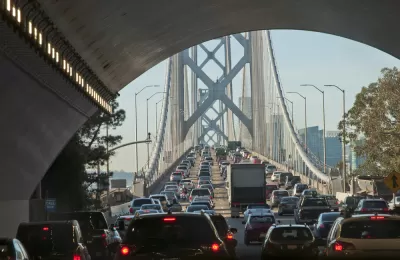
Erin Baldassari provides an update on the status of the Request for Transformative Projects undertaken by the Metropolitan Transportation Commission (MTC), the regional transportation planning agency in the Bay Area.
The Request for Transformative Projects was announced in June 2018 as part of the Horizon initiative, which explores the challenges and opportunities likely to face the Bay Area between now and 2050. "The reason for the contest, an MTC spokesman told this news organization in July, is that public agencies often get tunnel vision when it comes to thinking about what’s possible. They’re constrained by what’s politically feasible, the funding available and what’s achievable in the short-term," writes Baldassari.
The MTC received more than 500 proposals, eventually settling on 12 finalists [pdf], but Baldassari takes the opportunity to call attention to the most outlandish ideas left on the cutting room flow of the proposal process. Included among the ten most outlandish proposals identified by Baldassari are ideas for gondolas, flying cars, and a conveyor belt.
Read the full story: 10 of the craziest, most futuristic ideas to fix traffic, transit in the Bay Area
Poll: Bay Area Voters on Transit Funding Sources
Voters in Northern California indicated support for higher taxes on the wealthy and big companies, rejecting increased property or sales taxes to support transportation projects.
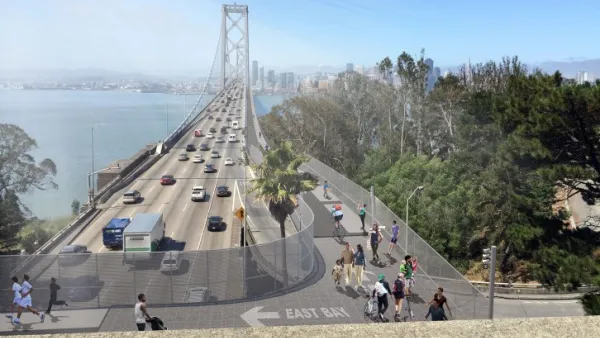
Planning Underway for New Bay Bridge Bike Path, and a Second Transbay BART Tube
In a distant and expensive future, there are two new ways to get across the San Francisco Bay without a car. One will have a much better view.
A Dissenting Take on the Bay Area's Proposed $3 Bridge Toll Hike
Beware of transportation officials promising traffic reductions, according to this opinion piece.

Planetizen Federal Action Tracker
A weekly monitor of how Trump’s orders and actions are impacting planners and planning in America.

California plans to bury El Niño’s downpour
If the state plays its cards right, it may be able to store a billion acre-feet of El Niño’s water in aquifers.

Desperate measures: Advocates weigh draining Lake Powell to fill Colorado River
Draining the reservoir could reduce evaporation losses by a couple hundred thousand acre-feet.

In Texas, data centers are swallowing promised parkland
Residents who moved to Taylor, Texas for a rural community now have to contend with three data centers in their backyard.

How a Chicago-sized wind farm beat the odds and powered on
The project spanned five presidential administrations and a standoff with a U.S. military base.

MTA gives itself 30 days to transform pit into basketball court
The site has been under construction since 2022; the city originally estimated it would finish the court in 2024.

FREE Course: Walkable City 1: Why Walkability?
After describing his path towards focusing on walkability as the essence of good planning, Jeff Speck marches through his five principal reasons for making more walkable places.
Reinventing Malls: Planning Alchemy—Turning Gray Fields Into Gold
The course focuses on the opportunities and imperatives that shape reinvention of mall sites.

City of Rosemead
Rutgers University, Edward J. Bloustein School of Planning and Public Policy
One Hundred Miles
Hunter College, City University of New York (CUNY)
The Architects Foundation
University of Cincinnati Online
City of Cambridge
Montrose County
The Pocatello Development Authority