Mayors from 15 cities in the Boston region want to add 185,000 new units by 2030 in response to the housing shortage driving up prices in the region.



The Metropolitan Area Planning Council, the regional planning agency for the Boston region, has announced a target for 185,000 new units by 2030 in the 15-city area represented by the Metro Mayors Coalition.
An article by Elise Harmon explains more:
The Metro Mayors Coalition (MMC) – a 15-municipality coalition of cities and towns representing 1.5 million people – has worked since last December to establish housing targets and to agree on a set of 10 principles to guide future housing development and preservation. The cities and towns in the coalition include Arlington, Boston, Braintree, Brookline, Cambridge, Chelsea, Everett, Malden, Medford, Melrose, Newton, Quincy, Revere, Somerville, and Winthrop, and the coalition is staffed and convened by MAPC.
Since 2010, the 15 cities and towns of the Metro Mayors Coalition have added almost 110,000 residents and 148,000 new jobs while permitting only 32,500 new housing units. MAPC projects that the communities will add 235,000 new jobs from 2015 to 2030. This economic growth and the retirement of baby boomers will bring hundreds of thousands new workers to the region.
Harmon provides more data and projections on economic growth for more context on the announcement.
Read the full story: Metro Mayors Announce 185,000 Unit Production Goal

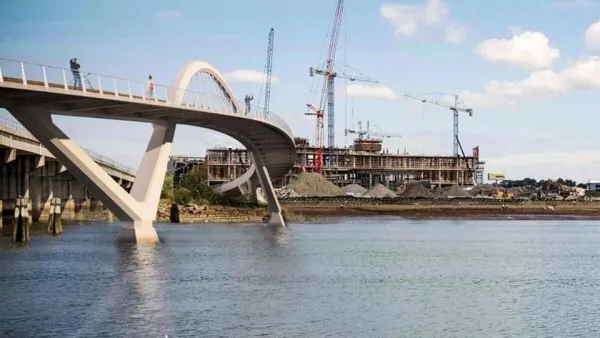
15 Cities, 1 Mission: Build More Housing
A coalition of 15 cities in the Boston area agreed to rapidly build new housing to relieve pressure on the regional housing market.
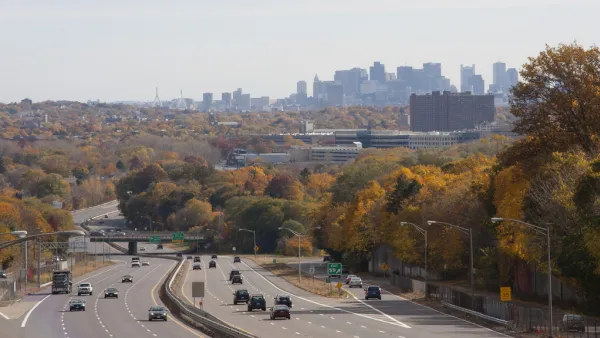
Prescriptions for the 'Broken' Massachusetts Multi-Family Market
The Metropolitan Area Planning Council (MAPC) is taking a strong stance in support of zoning regulations that enable new multi-family housing developments.

Boston Approves 700 ft Tall Buildings Downtown
A new rezoning plan raises height limits in some areas for buildings that are mostly residential.

Planetizen Federal Action Tracker
A weekly monitor of how Trump’s orders and actions are impacting planners and planning in America.

California plans to bury El Niño’s downpour
If the state plays its cards right, it may be able to store a billion acre-feet of El Niño’s water in aquifers.

Chicago breaks ground on $3 billion megadevelopment
The new neighborhood, titled Foundry Park, will one day host 3,700 residences.

California High-Speed Rail Authority CEO resigns after $600,000 scandal
Under Ian Choudri, the authority used taxpayer dollars to fund first class flights and trips to nightclubs.

Want to study the Missouri River? Soon, you may need unanimous approval from 10 states
Legislation would require 10 governors’ permission to study or build projects moving water outside the basin.

Desperate measures: Advocates weigh draining Lake Powell to fill Colorado River
Draining the reservoir could reduce evaporation losses by a couple hundred thousand acre-feet.

FREE Course: Walkable City 1: Why Walkability?
After describing his path towards focusing on walkability as the essence of good planning, Jeff Speck marches through his five principal reasons for making more walkable places.
Reinventing Malls: Planning Alchemy—Turning Gray Fields Into Gold
The course focuses on the opportunities and imperatives that shape reinvention of mall sites.

City of Rosemead
Rutgers University, Edward J. Bloustein School of Planning and Public Policy
One Hundred Miles
Hunter College, City University of New York (CUNY)
The Architects Foundation
University of Cincinnati Online
City of Cambridge
Montrose County
The Pocatello Development Authority