TEXRail, a commuter rail line connecting Dallas/Fort Worth International Airport to downtown Fort Worth, is scheduled to begin service in several months. With it has come a surge of investment in transit-oriented development.


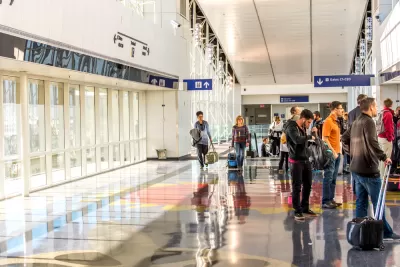
TEXRail will stretch about 27 miles and serve nine stations in the cities of Fort Worth, North Richland Hills, and Grapevine. Marice Richter writes, "With the maiden voyage of the long-awaited commuter rail line from downtown to the airport only about three months away, Fort Worth and other Tarrant County cities are planning and preparing to reap the benefits of this economic development windfall."
So far, the rail line has garnered $336 million worth of investment in transit-oriented development, and symbolizes ongoing interest among some North Texas civic leaders to break free from sole dependence on highways. "In addition to other benefits," Richter says, "TEXRail's intended function as commuter line is expected to have the biggest economic impact in connecting thousands of employees to job centers, including the airport, which have not been easily accessible by public transportation."
In downtown Forth Worth, TEXRail is expected to bolster redevelopment of the area around the Intermodal Transportation Center (ITC). And projects like the $94.2 million Katy Station Lofts development, which incorporates market-rate and affordable housing, retail, and a child care facility, may represent the wave of the future.
FULL STORY: Station-to-Station: Fort Worth prepares for transit-oriented development

Delayed Opening for TEXRail Blamed on Federal Shutdown
Trinity Metro ended up delaying the opening of the new TexRail line for five days—from Saturday, January 5, until Thursday, January 10.
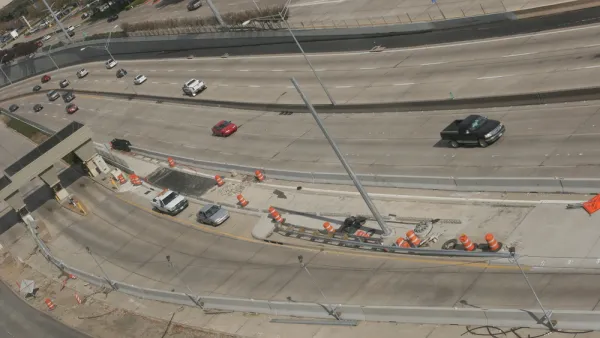
Hints of a North Texas Freeway Rebellion
At the helm of a movement to think beyond concrete solutions to transportation challenges in North Texas are the mayors of Fort Worth, Grapevine, and Arlington.
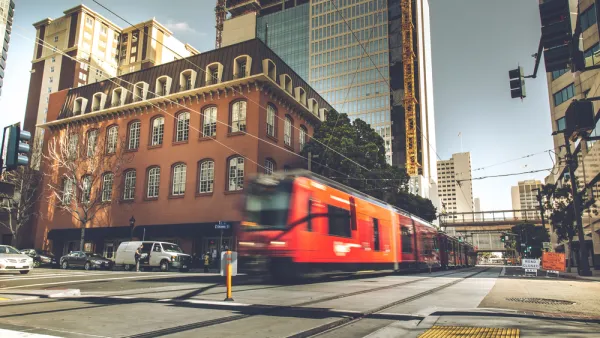
San Diego High-Speed Rail Plan Counts on Future Density
Despite slowing population growth statewide, officials believe the region will "grow into" the new rail system if cities promote dense development around transit stations.

Planetizen Federal Action Tracker
A weekly monitor of how Trump’s orders and actions are impacting planners and planning in America.

The state-sanctioned urbicide of Austin
People don’t kill cities. Freeways do.

US to reduce Colorado River water deliveries to Mexico
A new Colorado Treaty amendment reduces Mexico’s Colorado River water allocation by 250,000 acre feet.

Mamdani overhauls NYC's Vision Zero plan with 100 new policy goals
The overhaul aims to reduce traffic deaths and make streets safer for pedestrians, cyclists and drivers through lower speed limits, new safety infrastructure and more.

Amtrak not solely to blame for New Jersey commuter rail's unreliability, report finds
A new study from the Garden State Initiative found that NJ Transit’s budget grew 20% across a 4 year period, but reliability declined significantly over the same period.

EPA erases limits on planet-warming pollution from power plants
Under Monday’s plan, power plants would still have some limits on how much mercury, arsenic and other contaminants they can emit.

FREE Course: Walkable City 1: Why Walkability?
After describing his path towards focusing on walkability as the essence of good planning, Jeff Speck marches through his five principal reasons for making more walkable places.
Reinventing Malls: Planning Alchemy—Turning Gray Fields Into Gold
The course focuses on the opportunities and imperatives that shape reinvention of mall sites.

Eagle County Government
Harvard University Graduate School of Design
Nashville Planning Department
The Architects Foundation
University of Cincinnati Online
The Pocatello Development Authority
The Urban Renewal Agency of the City of Pocatello
Journal of the American Planning Association