Given a recent dire report on climate change from the IPCC, Laura Bliss underscores the point that those who have the ability to do so should make changes to how they get around, and pronto.


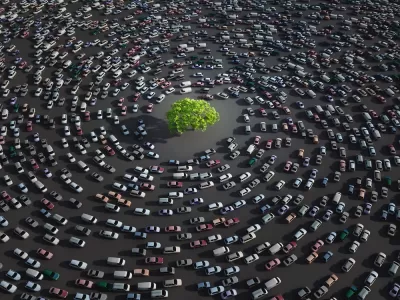
The UN Intergovernmental Panel on Climate Change recently released a report effectively laying out the small odds we'll manage to avoid extreme effects of climate change. In light of those findings, Laura Bliss makes the case that individual action can still make a difference. She writes, "the IPCC also makes clear that no action will make things far worse. And it describes critical areas where habits and individual decisions—'demand-side mitigation and behavioural changes,' in the words of the IPCC report—can make an difference."
In the U.S., Bliss says, the current healthy economy is driving up transportation emissions, even as they decline from other sectors. "Even at the local level, where some of the most promising action of carbon emissions have emerged in the era of Trump, the arrows are not pointing in the right direction. Transit use is declining and new vehicle-based modes increasingly populate the roads."
Given that state of affairs, "those with the ability to decide whether to drive, walk, scoot, hail an Uber, take the bus, or book a flight are the critical agents in the mode shifts the IPCC describes."
Read the full story: The Planet Can't Survive Our Transportation Habits

How Cities Can Curb Climate Change and Protect Vulnerable Residents
A new U.N. report urges cities to upgrade their infrastructure to bolster climate resilience and build more sustainable, climate-friendly places.
FTA Kills ‘Social Cost of Carbon’ in Transit Grant Criteria
The Capital Investments Grant program will no longer factor in the future impacts of carbon emissions.
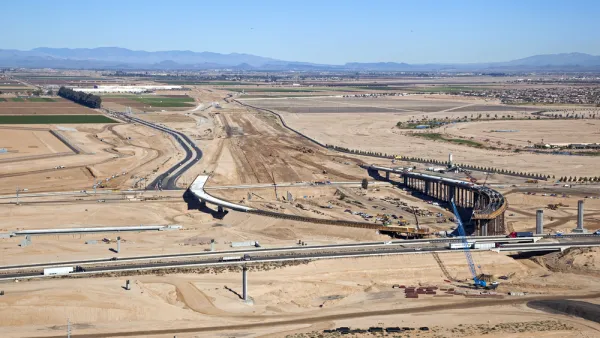
Infrastructure Funding Could Lead to Higher Carbon Emissions
Billions in federal infrastructure funding slated to go to states with few strings attached could fund roadway construction and widening projects that will raise greenhouse gas emissions and worsen climate change.

Planetizen Federal Action Tracker
A weekly monitor of how Trump’s orders and actions are impacting planners and planning in America.

California plans to bury El Niño’s downpour
If the state plays its cards right, it may be able to store a billion acre-feet of El Niño’s water in aquifers.

Chicago breaks ground on $3 billion megadevelopment
The new neighborhood, titled Foundry Park, will one day host 3,700 residences.

Satanic place names
From streams and lakes to valleys and canyons, I mapped more than 1,000 places named after the Devil.

California High-Speed Rail Authority CEO resigns after $600,000 scandal
Under Ian Choudri, the authority used taxpayer dollars to fund first class flights and trips to nightclubs.

Want to study the Missouri River? Soon, you may need unanimous approval from 10 states
Legislation would require 10 governors’ permission to study or build projects moving water outside the basin.

FREE Course: Walkable City 1: Why Walkability?
After describing his path towards focusing on walkability as the essence of good planning, Jeff Speck marches through his five principal reasons for making more walkable places.
Reinventing Malls: Planning Alchemy—Turning Gray Fields Into Gold
The course focuses on the opportunities and imperatives that shape reinvention of mall sites.

City of Rosemead
Rutgers University, Edward J. Bloustein School of Planning and Public Policy
One Hundred Miles
Hunter College, City University of New York (CUNY)
The Architects Foundation
University of Cincinnati Online
City of Cambridge
Montrose County
The Pocatello Development Authority