Germany's automotive industry and Chancellor Angela Merkel are increasingly worried about the economic effects of court-sanctioned diesel driving bans to improve air quality, as enacted in Hamburg last May. Four more cities are likely to enact bans.



Germans are serious about mitigating air pollution, especially nitrogen oxides and particulate matter, by-products of diesel combustion. Hamburg was the first German city to enact a driving ban for all but the newest diesel cars in parts of the city on May 31. Düsseldorf and Stuttgart, Aachen, and Frankfort are not far behind.
A landmark ruling by the Constitutional Court last February, stemming in part from the diesel emissions cheating scandal first discovered in the U.S. in September 2015, enabled cities to prohibit the operation of diesel cars to protect public health. As posted March 2:
The court further found that when emissions exceeded the allowed limits, banning all vehicles with diesel motors older than those approved in 2014 and gasoline-burning engines older than those approved in 2001 was the only way for the municipal authorities to ensure air quality.
"From May 31, the city of Hamburg is banning all but the most modern 'Euro 6' diesel vehicles from sections of two busy streets in the city," reported Arthur Sullivan for DW. According to Auto Express UK:
Euro 6 is the sixth incarnation of the European Union directive to reduce harmful pollutants from vehicle exhausts. The Euro 6 standard was introduced in September 2015, and all mass-produced cars sold from this date need to meet these emissions requirements. The aim of Euro 6 is to reduce levels of harmful car and van exhaust emissions, both in petrol and diesel cars.
"With cities like Stuttgart and Frankfurt poised to impose driving bans because of excessive levels of smog-causing nitrogen oxides, Chancellor Angela Merkel’s government is under increasing pressure to come up with a solution," reports Birgit Jennen on Sept. 27 for Bloomberg News.
“The quick and overall better way is to replace the old fleet with a new one,” Merkel said late Thursday at a town-hall event in Augsburg, Germany. “In addition, the door can be opened for retrofits on some vehicles...and we believe the customer shouldn’t have to pay for it.”
Indeed, to a great extent, that's how Dieselgate is being handled in the U.S. But due to the advocacy of Deutsche Umwelthilfe (DUH, known in English as Environmental Action Germany), driving bans, as opposed to huge financial settlements, are also permitted.
The manufacturers [Volkswagen AG, BMW AG and Daimler AG] are keen to avert driving bans as the incessant debate is causing consumers to shy away from diesel technology, which is profitable, secures German jobs and helps meet tighter environmental regulations. [Italics added].
Stuttgart and Aachen are next, followed by Frankfurt
"The ban will come into effect on January 1 in the hometown of carmakers Mercedes-Benz, Porsche and Audi," according to a DW report on July 11. Like the Hamburg ban, it will only be enacted in specific areas suffering bad air quality.
Overall the Stuttgart region has around 530,000 diesel vehicles. The new regulation will affect an estimated 190,000 vehicles that only meet the emission standard Euro 4 [2005 to September 2009].
The Autovista Group reported on June 12 that "[t]he German city of Aachen is likely to become the second in the country to introduce a ban on Euro 5 [purchased before September 2015] and lower diesel vehicles entering parts of the city."
The regional court has ruled that authorities in the area must implement a diesel ban in the city by January 2019 to allow the city to comply with EU air quality rules.
DW reported on a Sept. 5 court ruling in response to a second lawsuit brought by Deutsche Umwelthilfe that will require Frankfurt to "ban high polluting diesel vehicles from parts of the city."
FULL STORY: Germany Grapples to Find Exit From Diesel-Emissions Crisis

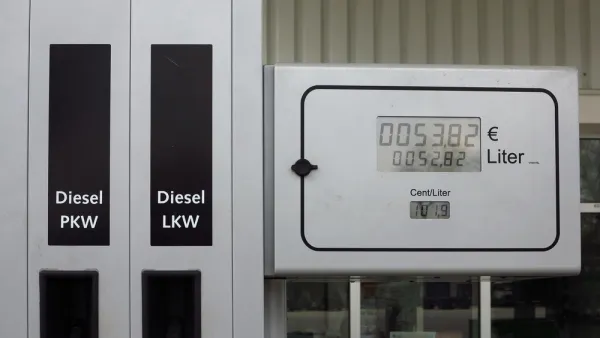
German Cities to Breathe Easier After Court Ruling on Diesel Car Bans
Unlike banning sales of new internal combustion vehicles at a future date, the German court ruling applies to the operation of older, diesel-powered cars in the country's most polluted cities. It's up to the cities, though, to enact the bans.
Inadequate Diesel Vehicle Testing Results in 38,000 Global Fatalities Annually
While the study stems from research that found Volkswagen diesel cars had used 'defeat devices' to pass emissions tests, the new study points to inadequacies in the tests themselves, resulting in 50 percent higher pollution than testing permits.
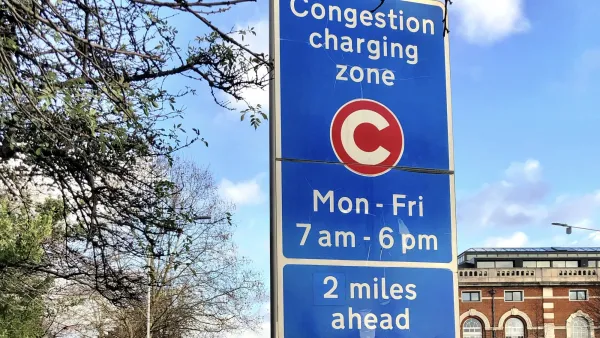
Report from London: Pollution Pricing Reduces Tailpipe Emissions
A new report shows that London's new emission fee, an additional driver charge that became operational 24/7 in April for all motor vehicles not meeting Euro standards that enter the congestion charge zone, has cut nitrogen oxide emissions by 31%.

The state-sanctioned urbicide of Austin
People don’t kill cities. Freeways do.

US to reduce Colorado River water deliveries to Mexico
A new Colorado Treaty amendment reduces Mexico’s Colorado River water allocation by 250,000 acre feet.

New Jersey’s second-largest city bans standalone data centers
Jersey City will continue to allow co-location facilities, such as those meant for research institutions that store their own data.

Amtrak not solely to blame for New Jersey commuter rail's unreliability, report finds
A new study from the Garden State Initiative found that NJ Transit’s budget grew 20% across a 4 year period, but reliability declined significantly over the same period.

EPA erases limits on planet-warming pollution from power plants
Under Monday’s plan, power plants would still have some limits on how much mercury, arsenic and other contaminants they can emit.

Phoenix announces new on-demand transit service, more frequent RAPID buses
Both new services will launch in October, and are part of Phoenix's Project Effective Access Solutions for Easing Congestion.

FREE Course: Walkable City 1: Why Walkability?
After describing his path towards focusing on walkability as the essence of good planning, Jeff Speck marches through his five principal reasons for making more walkable places.
Reinventing Malls: Planning Alchemy—Turning Gray Fields Into Gold
The course focuses on the opportunities and imperatives that shape reinvention of mall sites.

Eagle County Government
Harvard University Graduate School of Design
Nashville Planning Department
The Architects Foundation
University of Cincinnati Online
The Pocatello Development Authority
The Urban Renewal Agency of the City of Pocatello
Journal of the American Planning Association