Regulations crafted in the wake of the Trump sign controversy of 2014 could be relaxed to let Salesforce leave its mark on the city of Chicago's skyline.


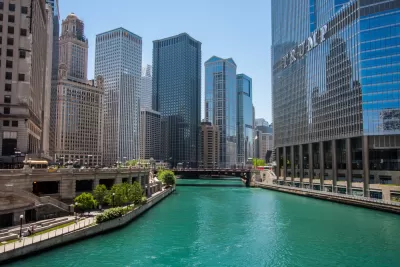
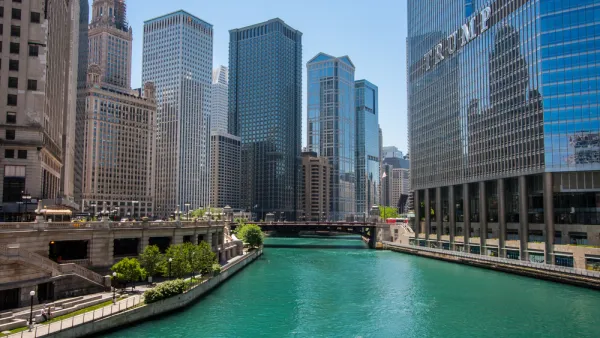
The 20-foot-tall letters spelling 'T-R-U-M-P' on the city’s second-tallest building prompted Chicago aldermen four years ago to regulate the installation of large signs on office buildings, according to an article by Ryan Ori.
"Now, Mayor Rahm Emanuel wants to tweak that ordinance to help secure a huge expansion by software firm Salesforce in a new riverfront skyscraper," adds Ori. Mire details on the proposed Salesforce development are included in the article.
Draft sign regulations were released by the Chicago Planning Department last week, and expected for review by the City Council shortly after.
Blair Kamin, the Chicago Tribune architecture critic and Pultizer Prize winner who got in a very public spat with Donald Trump in 2014 over the sign adorning the Trump International Hotel and Tower above the Chicago River, followed up the news of the proposed sign plans with a column looking for perspective on the issue.
Wondering if the Salesforce Tower sign will become a repeat of the Trump debate, Kamin offers the following: "There are more important things to worry about, like the design quality of the riverfront tower that the San Francisco-based software giant could occupy and the public spaces at its base."
FULL STORY: City looks to ease Trump-inspired sign limits as Salesforce eyes huge office lease on Chicago River

Chicago Mayor Emanuel Pondering New Sign Regulations in Trump Fallout
Mayor Rahm Emanuel announced his intentions to create ordinances that would prevent future design controversies like the maligned Trump sign above the Chicago River.
Trump's Controversial Sign of the Times in Chicago
The most conspicuous example of Chicago's recent spat of troubling signage is a 2,891-square-foot sign 200 feet above street level on the Trump International Hotel and Tower in Chicago.

These Bear Safety Signs Illustrate the Impact of Good Design
What makes a sign effective?

Planetizen Federal Action Tracker
A weekly monitor of how Trump’s orders and actions are impacting planners and planning in America.

The state-sanctioned urbicide of Austin
People don’t kill cities. Freeways do.

US to reduce Colorado River water deliveries to Mexico
A new Colorado Treaty amendment reduces Mexico’s Colorado River water allocation by 250,000 acre feet.

5 New England states march closer to 800 megawatt wind energy project
Securing federal approval for the project may be complicated under the Trump administration, which has historically been hostile towards domestic wind power.

Baltimore to break ground on $50 million Transit Priority Project
The project will bring faster bus trips, safer streets and better bike connections to Baltimore.

Airbnb launches $250 million 'last-dollar financing' housing accelerator, makes first investment in Austin
The company will put $6.4 million towards affordable housing development in Texas’ capital.

FREE Course: Walkable City 1: Why Walkability?
After describing his path towards focusing on walkability as the essence of good planning, Jeff Speck marches through his five principal reasons for making more walkable places.
Reinventing Malls: Planning Alchemy—Turning Gray Fields Into Gold
The course focuses on the opportunities and imperatives that shape reinvention of mall sites.

Eagle County Government
Harvard University Graduate School of Design
Nashville Planning Department
The Architects Foundation
University of Cincinnati Online
The Pocatello Development Authority
The Urban Renewal Agency of the City of Pocatello
Journal of the American Planning Association