Earlier this month marked the ten-year anniversary of an event that lives in infamy in the annals of the federal government.


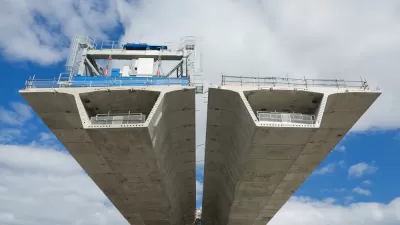
On September 5, 2008, "the U.S. Department of Transportation made the stunning announcement that the federal Highway Trust Fund had run out of money and that state governments would no longer be guaranteed speedy reimbursement for the federal-aid highway expenses that the states had already incurred," according to an article by Jeff Davis. "The announcement prompted an immediate $8 billion bailout by Congress in the form of a transfer of moneys from the general fund of the Treasury to the Trust Fund."
Since that time, Congress has not implemented a sustainable solution to the structural flaws of the Highway Trust Fund. On the contrary, explains Davis, "Congress has instead provided another $135.6 billion in bailouts, for a total of $143.6 billion ($139.9 billion from the general fund and $3.7 billion from gasoline and diesel taxes originally deposited in a different trust fund)."
The remainder of the article discusses the history and details of the beleaguered Highway Trust Fund along several threads of discussion. In a lot of detail, the post discusses "how to" bankrupt the Highway Trust Fund, the consequences of bankrupting the Highway Trust Fund, and the "path of least resistance" likely to determine the future of the Highway Trust Fund for the foreseeable future.
FULL STORY: Ten Years of Highway Trust Fund Bankruptcy: Why Did It Happen, and What Have We Learned?

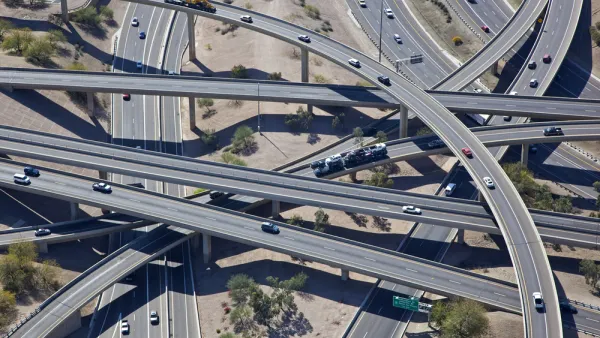
The First Highway Trust Fund Bailout
September 9 marked the 60th anniversary of a defining moment in U.S. transportation history.
Effects of Federal Shutdown Only Beginning to Show at Local and State Transportation Agencies
Effects of the partial shutdown of the federal government differ between state highway departments and local transit agencies. Some effects aren't yet apparent, but could be soon.
Over $14 Million Awarded to Eight Projects to Find Alternatives to Gas Taxes
The U.S. Department of Transportation is funding ways to transition from the gas tax to other user-based revenue mechanisms to fund transportation infrastructure. The federal gas tax hasn't keep pace with transportation expenditures since 2008.

Planetizen Federal Action Tracker
A weekly monitor of how Trump’s orders and actions are impacting planners and planning in America.

The state-sanctioned urbicide of Austin
People don’t kill cities. Freeways do.

US to reduce Colorado River water deliveries to Mexico
A new Colorado Treaty amendment reduces Mexico’s Colorado River water allocation by 250,000 acre feet.

5 New England states march closer to 800 megawatt wind energy project
Securing federal approval for the project may be complicated under the Trump administration, which has historically been hostile towards domestic wind power.

Baltimore to break ground on $50 million Transit Priority Project
The project will bring faster bus trips, safer streets and better bike connections to Baltimore.

Airbnb launches $250 million 'last-dollar financing' housing accelerator, makes first investment in Austin
The company will put $6.4 million towards affordable housing development in Texas’ capital.

FREE Course: Walkable City 1: Why Walkability?
After describing his path towards focusing on walkability as the essence of good planning, Jeff Speck marches through his five principal reasons for making more walkable places.
Reinventing Malls: Planning Alchemy—Turning Gray Fields Into Gold
The course focuses on the opportunities and imperatives that shape reinvention of mall sites.

Eagle County Government
Harvard University Graduate School of Design
Nashville Planning Department
The Architects Foundation
University of Cincinnati Online
The Pocatello Development Authority
The Urban Renewal Agency of the City of Pocatello
Journal of the American Planning Association