The EPA intends to review the rulemaking process behind the mercury rule, the subject of a landmark Supreme Court ruling in 2015, to place more value on a rule's compliance cost to industry and less to its beneficial impact on human health.


On Aug. 29, "the Trump administration took a crucial step toward de-emphasizing the life and health benefits in its [rulemaking] when the Environmental Protection Agency said it would rethink a major regulation that restricts mercury [plus arsenic and other toxic] emissions by coal [and oil] -burning power plants," report Coral Davenport and Lisa Friedman for The New York Times.
The review of the cost-benefit analysis process "fits into a far-reaching administration strategy to loosen environmental rules affecting countless other industries for years to come by adjusting the factors used to judge the benefits to human health that the rule has brought," add Davenport and Friedman.
The 2011 regulation in question, known as the mercury and air toxics standards (MATS) rule, "is among the costliest but most effective clean-air policies put forth by the Environmental Protection Agency," they add. "Utilities estimate they have spent $18 billion installing clean-air technology, and mercury pollution has fallen by nearly 70 percent [pdf]."
Central to the review will be how to, or perhaps even whether, to account for "co-benefits," a term more often applied to reducing greenhouse gas emissions.
[I]n the case of the mercury rule, the Obama administration found between $4 million to $6 million in health benefits directly from curbing mercury. But it further justified the regulation by citing an additional $80 billion in health benefits a year by, among other things, preventing as many as 11,000 premature deaths.
Those savings come from a reduction in particulate matter linked to heart and lung disease that also occurs when cutting mercury emissions.
The rule was initially resisted by industry, leading to a 5-4 landmark Supreme Court decision in 2015, Michigan v. EPA (posted here by Planetizen editor James Brasuell) in favor of the plaintiffs, ruling that the EPA had to more properly account for costs incurred by industry. The EPA rewrote that part of the rule, which went into effect the following year after the Supreme Court refused to hear an appeal by 20 states seeking to block its implementation. Now EPA wants to revisit the cost-benefit analysis aspect of the 2011 rule.
“This goes way beyond just weakening the mercury rule,” said Alan Krupnick, an economist at Resources for the Future, a nonpartisan Washington research organization. “This is part of a change that would give the Trump administration a way to more easily justify loosening many other pollution regulations, such as rules on smog, and rules on climate-change pollution.”
"Nearly all U.S. coal plants now comply with the EPA mercury rule," reported Jeff McMahon for Forbes in July 2016. However, there are some notable holdouts, such as Nebraska's largest power plant (see 1998 emissions [pdf]), the topic of a related post last month on another EPA rule known as New Source Review and EPA's newly proposed Affordable Clean Energy rule.
Revisiting the MATS rule bears similarity to the regulatory rollback of light-duty vehicle greenhouse gas emissions standards announced last month in that the Trump administration is proceeding over the concerns of the regulated industry – the auto industry.
The electric utilities that operate the nation’s coal-fired plants, and thus are heavily affected by the mercury rule, are urging the administration to leave the rule alone. They have already spent billions of dollars to become compliant, the utilities say, so changes are of little benefit to them.
The article point to two groups that pushing the administration to redo the rule: the coal industry and conservative think tanks:
- The coal industry, particularly "Robert E. Murray, the C.E.O. of Murray Energy Corp., who has donated to Mr. Trump’s inauguration fund, and has served as a chief counselor to the president on his efforts to revive the nation’s flagging coal industry."
- "Nicolas Loris, an economist with the The Heritage Foundation, a conservative think tank that has championed President Trump’s environmental deregulatory agenda, said that rewriting the mercury rule by placing different values on the health costs of mercury pollution could help end what he called the E.P.A.’s 'egregious abuse' of the way it measures winners and losers."
"Public health advocates say that the reformulation of the mercury rule, along with efforts to limit the type of scientific studies the E.P.A. will allow to inform its understanding of how pollution affects human health, will weaken the agency’s ability to write new pollution standards in the future," add Daveport and Friedman.
“All of this is leading up to a real sea change in the way this agency, which is supposed to be a public health and environment agency, thinks about the value of reducing air pollution from coal plants,” said Ann Weeks, senior counsel for the Clean Air Task Force, an environmental group.
Related posts on mercury rule and its litigation
- More Bad News for Coal: U.S. Supreme Court Won't Block Mercury Emissions Rule, June 15, 2016
For a second time, the U.S. Supreme Court chose not to hear from 20 states that sought to block implementation of a U.S. Environmental Protection Agency rule on mercury and air toxins that largely affects coal-fired power plants and public health.
- Opinion: Supreme Court Ruling on EPA's Mercury Rule Will Have Little Effect, July 5, 2015
When the Supreme Court ruled 5-4 against the Environmental Protection Agency on June 29, it appeared as a blow against mercury regulation by the EPA and a victory for coal power plants. David Roberts of Vox looks closer and finds that's not the case.
- Supreme Court Overturns EPA's Mercury Rules, June 29, 2015
In a close ruling, the Supreme Court decided the U.S. Environmental Protection Agency had not properly considered the costs of new regulations limiting mercury and other emissions.
Supreme Court to Review EPA's Mercury Standard, November 27, 2014
The top court's decision on Tuesday to review the first-ever regulation of mercury is a setback for Obama's environmental agenda, in part because it has implications for other EPA initiatives including Wednesday's proposal to tighten the ozone rule.
FULL STORY: The E.P.A.’s Review of Mercury Rules Could Remake Its Methods for Valuing Human Life and Health

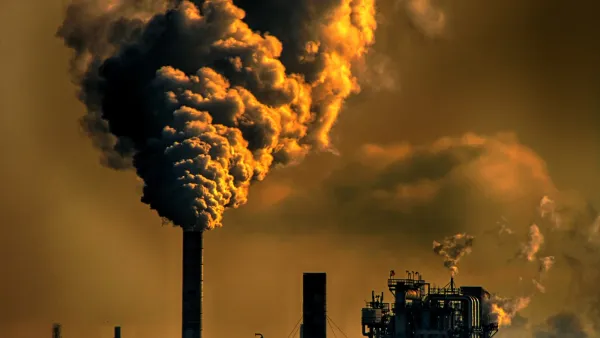
EPA Targets Co-Benefits in Rulemaking—Public Health to Suffer
The Environmental Protection Agency proposed a critical change in the cost-benefit analysis used in the mercury rule that applies to coal-fired power plants. By eliminating the principle of co-benefits, public health impacts would be severe.
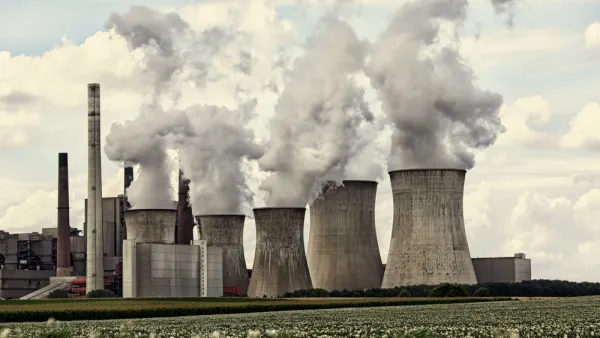
It's Official: Obama's Clean Power Plan Has Been Replaced by the Trump Administration
It took less than a year for the EPA to finalize the Affordable Clean Energy rule, which will allow older coal-burning plants to continue operating, in the Trump administration's most consequential environmental rollback accomplished to date.
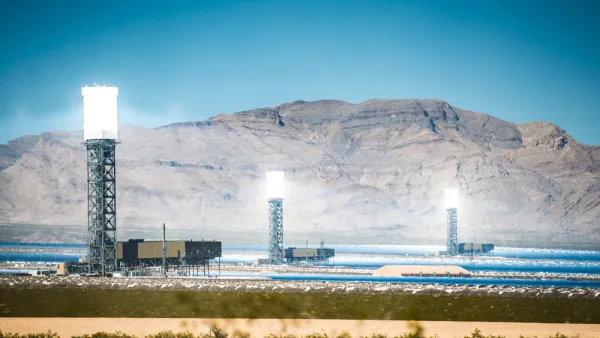
'Affordable Clean Energy Rule' Proposed to Replace Clean Power Plan
On Tuesday, EPA released its new rule to regulate emissions from existing power plants, essentially leaving it to the states to determine appropriate emissions levels rather than setting actual standards each state has to meet like the current rule.

The state-sanctioned urbicide of Austin
People don’t kill cities. Freeways do.

US to reduce Colorado River water deliveries to Mexico
A new Colorado Treaty amendment reduces Mexico’s Colorado River water allocation by 250,000 acre feet.

New Jersey’s second-largest city bans standalone data centers
Jersey City will continue to allow co-location facilities, such as those meant for research institutions that store their own data.

Amtrak not solely to blame for New Jersey commuter rail's unreliability, report finds
A new study from the Garden State Initiative found that NJ Transit’s budget grew 20% across a 4 year period, but reliability declined significantly over the same period.

EPA erases limits on planet-warming pollution from power plants
Under Monday’s plan, power plants would still have some limits on how much mercury, arsenic and other contaminants they can emit.

Phoenix announces new on-demand transit service, more frequent RAPID buses
Both new services will launch in October, and are part of Phoenix's Project Effective Access Solutions for Easing Congestion.

FREE Course: Walkable City 1: Why Walkability?
After describing his path towards focusing on walkability as the essence of good planning, Jeff Speck marches through his five principal reasons for making more walkable places.
Reinventing Malls: Planning Alchemy—Turning Gray Fields Into Gold
The course focuses on the opportunities and imperatives that shape reinvention of mall sites.

Eagle County Government
Harvard University Graduate School of Design
Nashville Planning Department
The Architects Foundation
University of Cincinnati Online
The Pocatello Development Authority
The Urban Renewal Agency of the City of Pocatello
Journal of the American Planning Association