A study by David C. Phillips, associate professor of economics at the University of Notre Dame, reveals hiring prejudice against people who would have to commute farther to work, in addition to bias against people with "black sounding" names.


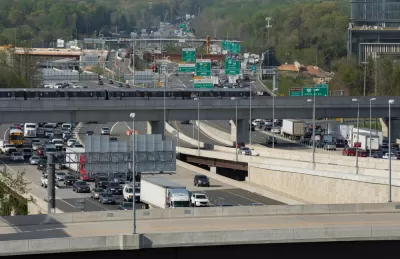
"Low-wage employers in Washington, D.C., discriminate against applicants with longer commutes and those with stereotypically “black” names," reports Denise-Marie Ordway, previewing a study [pdf] forthcoming in the Journal of Human Resources.
"The study finds that when presented with otherwise similar resumes, hiring managers who are trying to fill a position that requires only a high school diploma are less likely to call back applicants who live farther away. Applicants from distant communities get 14 percent fewer callbacks than those living nearby," according to Ordway.
The finding about a preference for hiring people with shorter commutes is separate from the study's other finding: that people with stereotypically black sounding names are also less likely to receive hiring call backs.
The author of the story, David C. Phillips, views these findings as likely to mirror similar realities in other cities. "[Phillips] suggests that policies aimed at moving lower-income adults closer to jobs or better public transportation systems may improve their chances of securing work," according to Ordwell. The article also clearly stands the new study in contrast to a 2007 study by scholars at the National Bureau of Economic Research and Harvard University finding that "public housing residents did not improve their work status after moving to higher-income areas."
Phillips also presents these findings as troubling in light of an increasing super commuters and low-income populations moving farther afield in metropolitan areas, drastically increasing commute trip lengths in the demographic.
The new study also isn't the first to find evidence of bias against super commuters. A Planetizen blog post by Shane Philips from February 2014 details the findings and implications of similar analysis conducted at Xerox Services.
FULL STORY: Some employers discriminate against applicants with longer commutes


Exurban Sprawl Picking Up Where the Great Recession Left Off
Despite the environmental effects of exurban sprawl, Northern California's housing shortage is being alleviated on the extreme edges of the San Francisco Bay Area.
Post-Recession, 'Super Commuters' Increasing in Number
The number of "super commuters"—people who commute for over 90 minutes—is still a relatively small percentage of the country, but it's a number that's growing quickly. What does that mean about the economy?

California's Inland Empire Ready to Build Again
As an article in Builder puts it: the 'Inland Empire Strike Back' with a large new masterplanned community in Riverside County. This region, hit particularly hard by the housing crash of the Great Recession looks ready pick up where it left off.

Planetizen Federal Action Tracker
A weekly monitor of how Trump’s orders and actions are impacting planners and planning in America.

The state-sanctioned urbicide of Austin
People don’t kill cities. Freeways do.

US to reduce Colorado River water deliveries to Mexico
A new Colorado Treaty amendment reduces Mexico’s Colorado River water allocation by 250,000 acre feet.

5 New England states march closer to 800 megawatt wind energy project
Securing federal approval for the project may be complicated under the Trump administration, which has historically been hostile towards domestic wind power.

Baltimore to break ground on $50 million Transit Priority Project
The project will bring faster bus trips, safer streets and better bike connections to Baltimore.

Airbnb launches $250 million 'last-dollar financing' housing accelerator, makes first investment in Austin
The company will put $6.4 million towards affordable housing development in Texas’ capital.

FREE Course: Walkable City 1: Why Walkability?
After describing his path towards focusing on walkability as the essence of good planning, Jeff Speck marches through his five principal reasons for making more walkable places.
Reinventing Malls: Planning Alchemy—Turning Gray Fields Into Gold
The course focuses on the opportunities and imperatives that shape reinvention of mall sites.

Eagle County Government
Harvard University Graduate School of Design
Nashville Planning Department
The Architects Foundation
University of Cincinnati Online
The Pocatello Development Authority
The Urban Renewal Agency of the City of Pocatello
Journal of the American Planning Association