Despite the environmental effects of exurban sprawl, Northern California's housing shortage is being alleviated on the extreme edges of the San Francisco Bay Area.


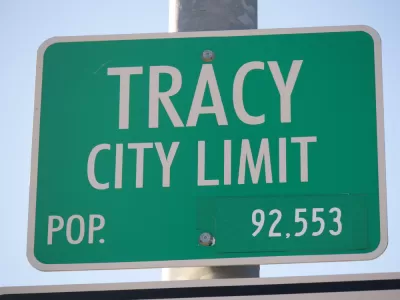
J.K. Dineen reports on a trend that has picked up where it left off with the subprime mortgage crash during the Great recession:
Even in the midst of a climate crisis, the Bay Area’s skyrocketing housing costs are pushing families into far-flung suburbs like Tracy. And the American dream of a single-family home coupled with cities’ restrictions on building multifamily rentals and condos means “exurbs” continue to thrive despite state and local officials’ recognition that they exacerbate climate change.
The example of the development Tracy Hills, located in the city of Tracy located over 60 miles east of San Francisco and 20 miles east of Livermore, is cited to exemplify the resurgence of exurban developments in the Bay Area.
The majority of buyers at Tracy Hills are families who work in the East Bay or Silicon Valley, but are priced out of those communities, said John Palmer, development manager for master developer Integral Communities Homes. Prices for the planned community of 4,700 homes start around $500,000 and top out just above $700,000 — well below the $850,000 median price of a single-family home or condo in the nine-county Bay Area.
Meanwhile the entire city of Tracy stands as a testament to the growth patterns of recent decades, according to Dineen. The population of the city has grown from 18,500 in 1980 to over 90,000 today. The population is projected to rise to 125,000 by 2035.
FULL STORY: Despite climate crisis, California continues to embrace exurban sprawl


Homebuyers Return to the Exurbs
It's been a while since 2008, and a new crop of homeowners is colonizing the far-flung exurbs. Mostly foreclosed and even abandoned last time around, the exurbs are still a risky buy.
Planning Trends for 2025: Creative Housing Solutions, Ongoing Transit Woes, and the Ever-Creeping Tentacles of AI
Urban planners have no shortage of urgent issues to delve into, from a deepening housing crisis to an increasingly unpredictable climate to a new federal administration bent on slashing key funding for everything from electric cars to housing assistance.
To Build More Housing, Cities Must Be Smarter in How They Use Land
How strategic land use policy decisions can alleviate the housing crisis and limit unsustainable sprawl.

Planetizen Federal Action Tracker
A weekly monitor of how Trump’s orders and actions are impacting planners and planning in America.

The state-sanctioned urbicide of Austin
People don’t kill cities. Freeways do.

US to reduce Colorado River water deliveries to Mexico
A new Colorado Treaty amendment reduces Mexico’s Colorado River water allocation by 250,000 acre feet.

Guerilla urbanists are building DIY bus stop benches in Chicago
A before-and-after of one of the bus stops with a new bench. The new benches are not officially sanctioned or permitted, but the residents who placed them hope they will be the start of a network of DIY benches across the city.

Mamdani overhauls NYC's Vision Zero plan with 100 new policy goals
The overhaul aims to reduce traffic deaths and make streets safer for pedestrians, cyclists and drivers through lower speed limits, new safety infrastructure and more.

Amtrak not solely to blame for New Jersey commuter rail's unreliability, report finds
A new study from the Garden State Initiative found that NJ Transit’s budget grew 20% across a 4 year period, but reliability declined significantly over the same period.

FREE Course: Walkable City 1: Why Walkability?
After describing his path towards focusing on walkability as the essence of good planning, Jeff Speck marches through his five principal reasons for making more walkable places.
Reinventing Malls: Planning Alchemy—Turning Gray Fields Into Gold
The course focuses on the opportunities and imperatives that shape reinvention of mall sites.

Eagle County Government
Harvard University Graduate School of Design
Nashville Planning Department
The Architects Foundation
University of Cincinnati Online
The Pocatello Development Authority
The Urban Renewal Agency of the City of Pocatello
Journal of the American Planning Association