The media coverage of a tragic crash in Cleveland shows how long of a leash drivers and street design get in the debate about traffic safety and the public realm.


"In downtown Cleveland Saturday night, a driver high on heroin struck and killed Jenasia Summers, 21, as she rode an electric scooter. But instead of questioning why Cleveland streets are so dangerous, the local press has responded by painting scooters as a safety hazard," writes Angie Schmitt.
Schmitt is criticizing the reporting and social media messaging of Cleveland.com, which, despite reporting in a separate article that the driver of the vehicle was on heroin, also tweeted a question about whether scooters are a cause for concern. An article earlier in the month describes the scooters as "incredibly dangerous," so there's a theme emerging in the publication's approach to electric scooters.
Schmitt is having none of it:
Scooters have been in the local headlines because the city recently told the start-up Bird to remove a fleet of 100 vehicles from public streets. Summers was not riding a Bird — she had rented an Icon scooter from a shop downtown. But whatever vehicle she was riding, it’s less relevant to this crash than Cleveland’s failure to make streets safer for walking, biking, or scooting.
The message echoes the tone of a previous article by Schmitt, which suggests that scooters are far more popular, and boring, than local media suggests. In that article, Schmitt also provides a level of nuance that's been rare in the discussion of electric scooters in that article: "Much of the scary news coverage has no doubt been motivated by fear of change — and, indeed, traveling by e-scooter in cities is a novel idea. In addition, the industry has been dominated by big tech firms who dump their products into public space first and ask for permission second (or not at all)."
Read the full story: Scooters Aren’t a Public Safety Hazard. Dangerous Streets Designed Only for Cars Are.


Cleveland Ready for Vision Zero
Cleveland is working to become the latest U.S. city to set a goal to eliminate traffic fatalities.
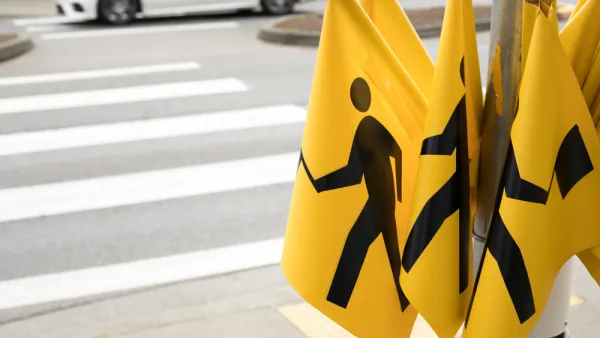
4 Proven Steps for Improved Pedestrian Safety
Experts from the National Association of City Transportation Officials (NACTO) present four steps for reducing the number of pedestrians killed by drivers.
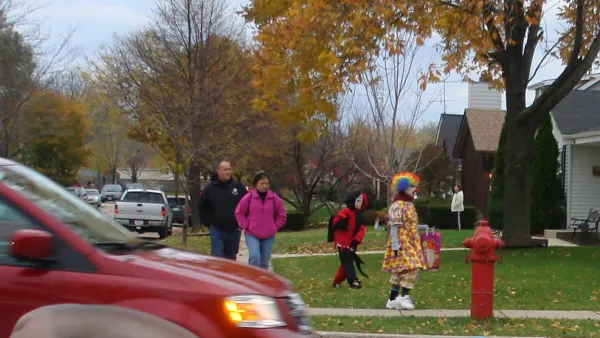
The Deadliest Day for Young Pedestrians
Children are three times more likely to be killed by a driver on Halloween than another day of the year. It's worse for kids between the ages of 4 and 8.

Planetizen Federal Action Tracker
A weekly monitor of how Trump’s orders and actions are impacting planners and planning in America.

Amtrak, CN end decades-long dispute with eight-year agreement
The new operating agreement establishes an updated framework for the companies to work together, including processes to resolve disputes.

Judges permit Denver to divert 77,000 acre feet from the Colorado River for reservoir expansion
Overuse and climate change have caused the Colorado River’s water levels to plummet.

Philadelphia to invest $2 billion into upgrading city airports as PHL places last in customer satisfaction
Modernizations to Philadelphia's airports will include baggage system upgrades and a new automated parking garage guidance system.

The LA housing policies making developers turn away from the city
Despite LA’s housing shortage, developers say the city’s "mansion-tax" and pandemic-era policies make it an unappealing place to build housing.

New density bill would require 7 California cities to establish regional transit hubs
The bill would also require major cities in California to permit high-rise residential buildings.

FREE Course: Walkable City 1: Why Walkability?
After describing his path towards focusing on walkability as the essence of good planning, Jeff Speck marches through his five principal reasons for making more walkable places.
Reinventing Malls: Planning Alchemy—Turning Gray Fields Into Gold
The course focuses on the opportunities and imperatives that shape reinvention of mall sites.

City of Wisconsin Rapids
Harvard University Graduate School of Design
KFH Group Inc.
The Architects Foundation
University of Cincinnati Online
The Pocatello Development Authority
The Urban Renewal Agency of the City of Pocatello