Children are three times more likely to be killed by a driver on Halloween than another day of the year. It's worse for kids between the ages of 4 and 8.


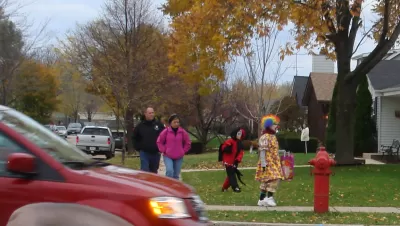
According to an article by Christopher Ingraham, "like poison and razor blades, Halloween pot candy is largely a myth. The real threat to kids on Oct. 31 is much more mundane: traffic. Children are three times more likely to be struck and killed by a car on the holiday than any other day of the year, according to the latest federal highway safety data."
"A Washington Post analysis found that 54 pedestrians younger than 18 were struck and killed by an automobile on Halloween from 2004 through 2018. That compares with 16 on a typical day."
Another study, released earlier this year in JAMA Pediatrics, "found that children ages 4 to 8 were about 10 times more likely to be killed in the evening on Halloween than they were during other autumn evenings."
According to the conclusions offered in the article, the high rates of fatalities on Halloween reflect the larger trend of increased pedestrian fatalities year round. The latter study referenced above emphasized the need for safer road design in lowering the number of childhood fatalities.
Read the full story: Here’s why Halloween is the deadliest day of the year for child pedestrians

Halloween a Deadly Reminder of the Failures of U.S. Traffic Safety
When it comes to pedestrian safety, Halloween has never been so frightening.
Audit: Portland’s Vision Zero Needs More Data, Funding
A city audit found that the program has failed to reduce traffic deaths and could benefit from a more systematic approach. Meanwhile, PBOT says it needs more state funding to support road safety projects.
Banning Right Turns on Red Just One Step Toward Vision Zero
Experts caution that blanket bans on right turns on red make only a slight contribution to reducing fatal crashes, and other interventions are needed to bring down traffic fatalities.

Planetizen Federal Action Tracker
A weekly monitor of how Trump’s orders and actions are impacting planners and planning in America.

The state-sanctioned urbicide of Austin
People don’t kill cities. Freeways do.

US to reduce Colorado River water deliveries to Mexico
A new Colorado Treaty amendment reduces Mexico’s Colorado River water allocation by 250,000 acre feet.

Nation's most wind-powered state turns to coal as data centers increase energy demand
For the first time in decades, Iowa has increased its generation of coal power.

NYC cools commuters with city's first rain garden above a bus stop
New York City officials say the plants in the rain garden can absorb 16 gallons of rainwater during heavy storms.

Brightline West’s future may rely on $6 billion federal loan
The company has until Nov. 2 to make a $400 million equity investment into its proposed high-speed rail line.

FREE Course: Walkable City 1: Why Walkability?
After describing his path towards focusing on walkability as the essence of good planning, Jeff Speck marches through his five principal reasons for making more walkable places.
Reinventing Malls: Planning Alchemy—Turning Gray Fields Into Gold
The course focuses on the opportunities and imperatives that shape reinvention of mall sites.

Eagle County Government
Harvard University Graduate School of Design
Nashville Planning Department
The Architects Foundation
University of Cincinnati Online
The Pocatello Development Authority
The Urban Renewal Agency of the City of Pocatello
Journal of the American Planning Association