The aqueduct that carries water from the reservoir to New York City has been leaking 35 million gallons of water per day since the 1990s.


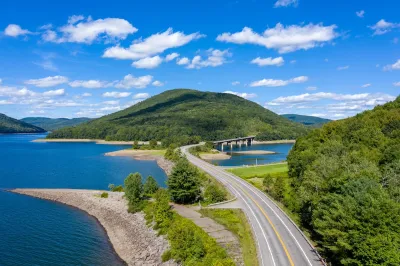
New York City is considering expanding the Cannonsville Reservoir, the source of about half the city’s drinking water, after the reservoir has been unable to bounce back from a 2024 drought that reduced its water levels to 60%. Over two decades earlier, water levels hit 3.4%, Rosemary Misdary writes for Gothamist.
Gothamist reports:
”Dry conditions in this basin can happen quickly, and conditions can change quickly,” said Kristen Bowman Kavanagh, executive director of the Delaware River Basin Commission. “Our responsibility is to make sure that we are understanding any potential changes that are happening in the basin with respect to climate change and sea level rise.”
The basin also serves New Jersey, Delaware, New York state and Pennsylvania. NYC may not even need drought conditions for the reservoir to become unreliable: The Delaware Aqueduct, which brings water from the reservoir to NYC, has been leaking up to 35 million gallons a day since the 1990s.
Read the full story: NYC weighs expanding upstate reservoir following drought


If Corpus Christi can’t revive desalination plant project, it may owe Texas $235 million
Earlier this month, city officials declined to pursue developing the plant for the second time in a year.
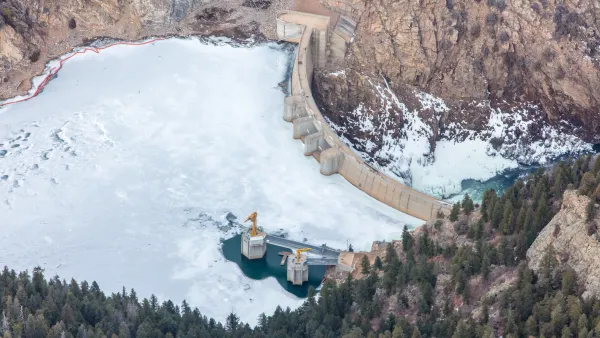
Instead of water, sediment from droughts and wildfire is choking U.S. dams
Sediment has filled 8% of dam storage capacity in the United States. Because of climate change, researchers expect it will only accumulate quicker.
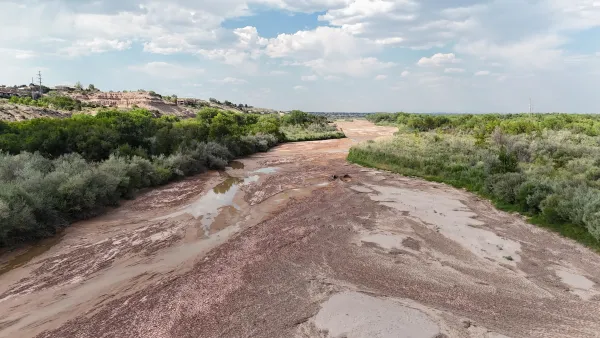
15 million people rely on the Rio Grande — in 2 years, it may run dry
The river fuels billions of dollars in agricultural production. Reducing agricultural water use may be the only way to save it.

Planetizen Federal Action Tracker
A weekly monitor of how Trump’s orders and actions are impacting planners and planning in America.

‘Going backwards:’ Baltimore mayor, students rally against state's transit funding plan
Maryland's proposed six-year plan provides no funding for Baltimore’s BMORE bus program and reduces its road maintenance funding.

Detroit to transform waterfront with $2.2 billion investment
Developers will convert about 18 acres of unused parking lot space into civic spaces.

Boston spent $765 million to lease battery-powered trains
The trains will serve Boston’s Fairmount Line for fifteen years.

NYC may expand key reservoir after devastating drought
The aqueduct that carries water from the reservoir to New York City has been leaking 35 million gallons of water per day since the 1990s.

Less housing, wasted money: study reveals impact of city parking mandates
The study found that 71% of carless households in the United States pay for a parking space they don’t use.

FREE Course: Walkable City 1: Why Walkability?
After describing his path towards focusing on walkability as the essence of good planning, Jeff Speck marches through his five principal reasons for making more walkable places.
Reinventing Malls: Planning Alchemy—Turning Gray Fields Into Gold
The course focuses on the opportunities and imperatives that shape reinvention of mall sites.

One Hundred Miles
County of Mendocino
planning NEXT
The Architects Foundation
University of Cincinnati Online
Montrose County
Northern Illinois Transit Authority (NITA)
The Pocatello Development Authority