The study found that 71% of carless households in the United States pay for a parking space they don’t use.


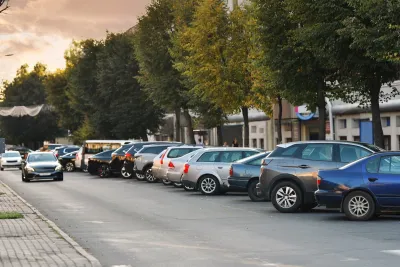
Most cities in the United States require new homes and businesses to also provide parking spaces — a new study from UCLA has revealed the high financial impact of these requirements. The study found that 71% of carless households in the United States pay for a parking space they don’t use, and that required parking spaces can raise construction costs for small apartments by 38%.
“Underground parking costs $73,000 per space, on average, nationwide. At UCLA’s Weyburn Terrace, it added $35,000 to each apartment,” California YIMBY reports. “After Oakland required one parking space per apartment in 1961, new homes per project fell 36%, even though the zoning code still allowed the same density. The pattern holds in other cities. In New York, every 10% increase in parking requirements corresponds with a 6% drop in housing density.”
The study also found that when dense cities with public transit repealed parking mandates, cities built 40 to 70% less parking. Seattle’s repeal of the mandate saved the city “an estimated $537 million in construction spending on parking over five years,” California YIMBY writes.
Read the full story: Cars vs People: The Hard Trade-Off of Parking Mandates
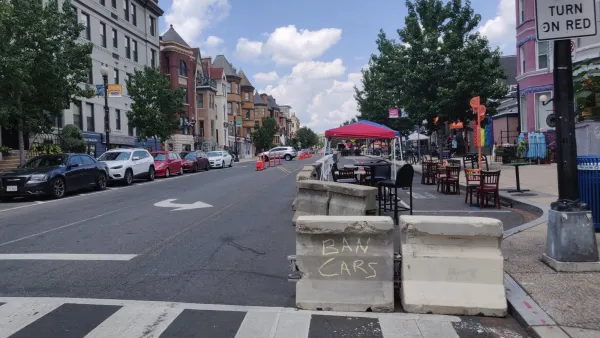
The Slow Streets Reckoning
Slow streets programs provided a quick short-term solution and paved the way for some permanent street closures and realignments. Now, these programs are getting a second look as community groups react to the changes.
Seattle Beats San Francisco to Plastic Straw and Utensil Ban
Seattle's ban took effect Sunday, while San Franciso's proposed legislation, if successful, would begin July 1, 2019. Other cities have plastic straw restrictions, but Seattle's is the first outright ban. Compostable alternatives are permitted.
Successful Ballot Measures Spell Doom for Transit Funding in Trump's 2018 Budget
President Trump points to the passage of multi-billion ballot measures last November as proof that federal funding isn't needed to fund transit, justifying elimination of a major grants program. The CEOs of two large transit agencies fight back.

Planetizen Federal Action Tracker
A weekly monitor of how Trump’s orders and actions are impacting planners and planning in America.

Washington state to charge fee to drivers with fuel-efficient cars
Revenue from the fee will go towards supporting the state’s highways.

Trump to blast ‘hydrocarbon highway’ through ‘world’s longest art gallery’
Environmental and historic preservation groups are suing to stop the project.

MBTA Green Line project moved to next phrase of CIG program
The modernization effort will cost $4.08 billion.

22-mile pedestrian and bike path to encircle Atlanta by 2030
The project will also support affordable housing.

Army detonates nearly 5 tons of lead in Iowa
The detonation comes after days of delays and public outcry.

FREE Course: Walkable City 1: Why Walkability?
After describing his path towards focusing on walkability as the essence of good planning, Jeff Speck marches through his five principal reasons for making more walkable places.
Reinventing Malls: Planning Alchemy—Turning Gray Fields Into Gold
The course focuses on the opportunities and imperatives that shape reinvention of mall sites.

City of Charlotte
City of Rosemead
Rutgers University, Edward J. Bloustein School of Planning and Public Policy
University of Michigan School for Environment and Sustainability (SEAS)
Hunter College, City University of New York (CUNY)
The Architects Foundation
University District Partnership