Earlier this month, city officials declined to pursue developing the plant for the second time in a year.



Corpus Christi received $235 million from Texas for a seawater desalination plant — and never built the facility. Now, the city may have to return the money to the state, including the $50 million already spent and $72 million in interest, Dylan Baddour writes for Inside Climate News.
Earlier in September, city officials declined to pursue developing the desalination plant for the second time in a year, citing cost concerns. Corpus Christi has been mulling over building a desalination plant for over a decade, debating the project's location, cost, environmental impact and benefits to residents “even as a regional water shortage grew increasingly likely,” Baddour writes.
Inside Climate reports:
“That’s going to be a painful experience if the State of Texas calls our notes due,” said City Council member Mark Scott at the Sept. 1 meeting before the vote that rejected the desalination project. “I think we are dangerously close.”
Returning the money would “seriously damage our relationship with state leadership, negatively impact any future loan applications and continue to put downward pressure on our credit ratings,” Scott said in a follow-up statement.
Read the full story: Corpus Christi Could Owe Texas $235M for Failed Desalination Plant
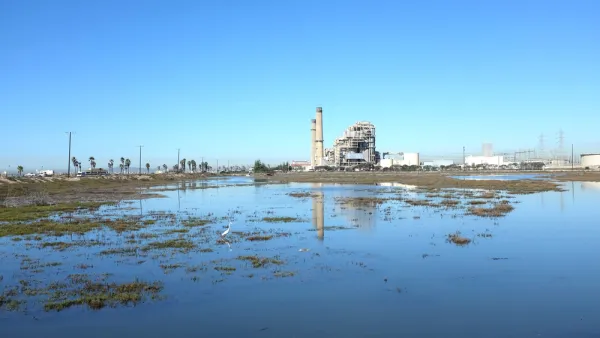
Controversy Follows California's Massive Desalination Plant Proposal
Poseidon Water, a massive desalination project proposed for the Pacific coast in Huntington Beach, has been in the works for more than two decades. A critical vote is expected for the project next month.

Desperate measures: Advocates weigh draining Lake Powell to fill Colorado River
Draining the reservoir could reduce evaporation losses by a couple hundred thousand acre-feet.
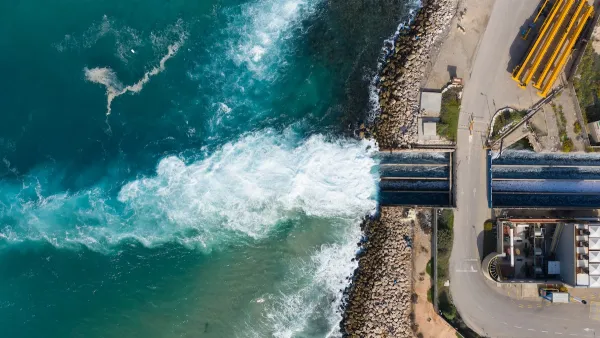
Texas may pay Israeli company billions to ease water woes
Texas awarded IDE Technologies the contract for its Harbor Island project, which is slated to become the Western Hemisphere's largest desalination plant.
Desperate measures: Advocates weigh draining Lake Powell to fill Colorado River
Draining the reservoir could reduce evaporation losses by a couple hundred thousand acre-feet.

Eastern Nebraska is running out of electricity
Data centers and electrification are straining eastern Nebraska’s grid, throttling economic development.

Malls are becoming the midtowns of the future
Mall and office park redevelopments are a generational opportunity to create new nodes of urbanity.

Officials claim feds 'rushed' Amtrak environmental review
Amtrak plans to move their Chicago maintenance facility from an industrial area to a residential one.

NYC breaks ground on anti-flooding infrastructure project
New York City's new system will reduce stormwater flows to local sewers by 90%.

One Kentucky town’s secret to affordable housing
The Smoketown Community Land Trust has already built seven affordable homes for community members.

FREE Course: Walkable City 1: Why Walkability?
After describing his path towards focusing on walkability as the essence of good planning, Jeff Speck marches through his five principal reasons for making more walkable places.
Reinventing Malls: Planning Alchemy—Turning Gray Fields Into Gold
The course focuses on the opportunities and imperatives that shape reinvention of mall sites.

City of Rosemead
Rutgers University, Edward J. Bloustein School of Planning and Public Policy
One Hundred Miles
University of Michigan School for Environment and Sustainability (SEAS)
Hunter College, City University of New York (CUNY)
The Architects Foundation
City of Cambridge
Montrose County
The Pocatello Development Authority