The trains will serve Boston’s Fairmount Line for fifteen years.


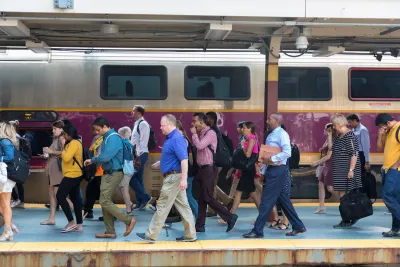
Boston is taking the first steps towards electrifying its trains: the city is leasing seven battery-powered trains, which will serve passengers on the Fairmont Line for fifteen years. The deal is expected to cost $765 million.
“The trains, built by the Swiss company Stadler, are slated for 2030. They will boost frequency of stops along the 10-mile route from every 30 minutes to every 20 and save 17,700 tons of carbon dioxide emissions annually compared to the diesels they will replace, according to the T,” Benton Graham writes for Grist.
With battery-powered trains, transit agencies can electrify without the expense or complexity of installing overhead power lines. Caltrain and Metra are also electrifying, and plan to launch battery-operated trains in 2028.
Read the full story: The future of commuter rail could be taking shape in Boston


Rail Electrification: Caltrain adds BEMUs to its EMU Order
Caltrain, the San Francisco-to-San Jose commuter railroad, plans to begin electrified operation next year on its 49-mile mainline. A 28-mile extension south to Gilroy would continue to be served by diesel trains, with one train powered by battery.
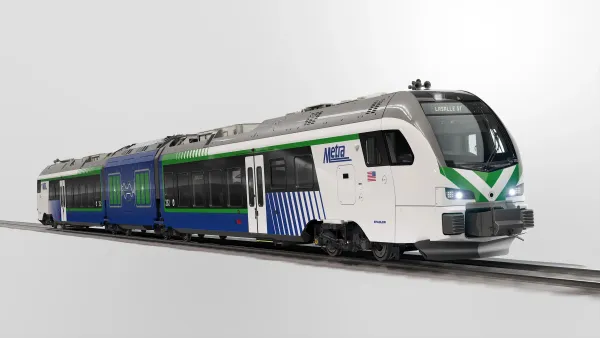
Chicago to showcase country’s first battery-operated passenger train
Metra estimates the trains will be ready for passenger use around the start of 2028.
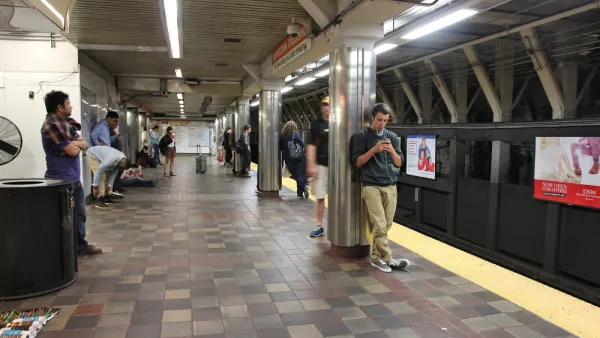
Opinion: Funding The T Should Be a Massachusetts State Priority
With ridership revenue still lagging and fatal incidents plaguing the Boston-area transit agency, one writer argues that state lawmakers must step in to fund upgrades for the aging system.

Planetizen Federal Action Tracker
A weekly monitor of how Trump’s orders and actions are impacting planners and planning in America.

‘Going backwards:’ Baltimore mayor, students rally against state's transit funding plan
Maryland's proposed six-year plan provides no funding for Baltimore’s BMORE bus program and reduces its road maintenance funding.

Detroit to transform waterfront with $2.2 billion investment
Developers will convert about 18 acres of unused parking lot space into civic spaces.

Boston spent $765 million to lease battery-powered trains
The trains will serve Boston’s Fairmount Line for fifteen years.

NYC may expand key reservoir after devastating drought
The aqueduct that carries water from the reservoir to New York City has been leaking 35 million gallons of water per day since the 1990s.

Less housing, wasted money: study reveals impact of city parking mandates
The study found that 71% of carless households in the United States pay for a parking space they don’t use.

FREE Course: Walkable City 1: Why Walkability?
After describing his path towards focusing on walkability as the essence of good planning, Jeff Speck marches through his five principal reasons for making more walkable places.
Reinventing Malls: Planning Alchemy—Turning Gray Fields Into Gold
The course focuses on the opportunities and imperatives that shape reinvention of mall sites.

One Hundred Miles
County of Mendocino
planning NEXT
The Architects Foundation
University of Cincinnati Online
Montrose County
Northern Illinois Transit Authority (NITA)
The Pocatello Development Authority