What's the great 'fix' for the flawed Highway 101 carpool lanes in Marin and Sonoma counties in the Bay Area? Reduce the HOV time by two and a half hours during the peak commutes to enable solo drivers greater access to 52 miles of widened freeway.


Contributor's note: This is an update to the October 24, 2025, blog post, "When Carpool Lanes Cause Mayhem."
Rachel Swan, the San Francisco Chronicle's transportation reporter, framed the change in carpool hours on Highway 101 in Marin and Sonoma counties in the San Francisco Bay Area as a win for solo drivers.
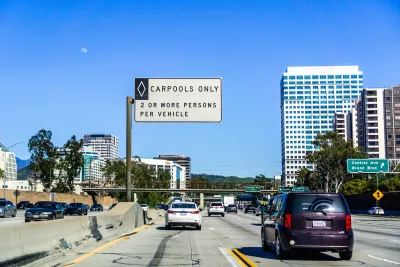
Following a torrent of complaints, Caltrans has reduced the hours for a 52-mile carpool lane on Highway 101 through Marin and Sonoma counties. As of Monday [March 2], new signs along the freeway show the lane will be reserved for high-occupancy vehicles heading south between 6 and 9 a.m., and for those heading north from 3 to 6:30 p.m.
That’s a two-hour reduction for the morning rush hour, given that Caltrans had set the carpool period from 5 to 10 a.m. when officials opened the lanes in October. During the evenings, agency staff shrank the carpool schedule by half an hour. It had previously ended at 7 p.m.
The 16-mile stretch of new carpool, aka high occupancy vehicle or HOV lanes, known as the Marin-Sonoma Narrows Project, opened on Sept. 29, 2025 "after nearly 30 years of work," according to the 4-page Caltrans 'Marin-Sonoma US 101 Corridor Briefer' [pdf] on the project.
[In his piece in The Press Democrat published on opening day, Austin Murphy describes the time-frame differently based on segments of the corridor. His reporting was the basis for the aforementioned blog post].
The opening of those lanes, and closing of those chokepoints, marks the completion of the Marin-Sonoma Narrows project, which focused on a 16-mile stretch of the highway between Novato [Marin Co.] and Petaluma [Sonoma Co.]. Work on that project began in 2011 and has cost an estimated $762 million.
That undertaking was part of an even larger, roughly $1.5 billion public works project designed to create a continuous carpool lane from Sausalito to Windsor – a vision which, as of Monday, has now been realized.
The 52-miles of continuous carpool lanes is the second longest in the Golden State after the 70-mile northbound HOV lane on Interstate 405 in Los Angeles, "the longest in the nation," as of May 23, 2014.
Swan attributes the change of carpool hours to angry motorists airing their frustration with the Bay Area's regional transportation planning agency.
Scores of people called or emailed the Metropolitan Transportation Commission throughout the fall to express their misgivings about the new carpool lane hours, according to commission spokesperson John Goodwin. The criticism tapered off after Caltrans reneged, and now that the new signs are up, North Bay residents seem mollified.
FULL STORY: Highway 101 carpool hours sparked an uproar. Now they are changing

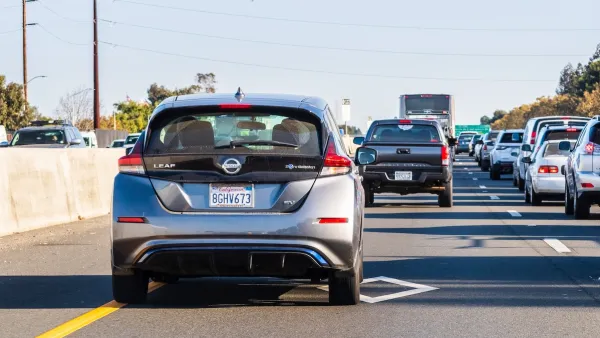
When Carpool Lanes Cause Mayhem
A newly widened Bay Area freeway serves as a reminder of the futility of HOV lanes. There are better ways to manage and mitigate traffic.
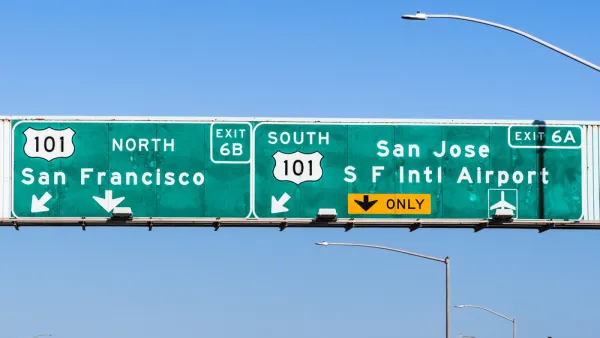
101 Freeway in California Slower Than Ever After Widening, Locals Say
Induced demand strikes again.
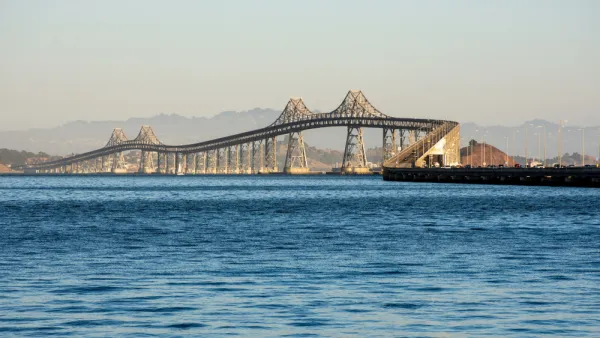
Crowdsourcing Ideas for Richmond-San Rafael Bridge Replacement
The Richmond-San Rafael Bridge, connecting the East Bay and the North Bay near San Francisco, is 63 years old, but a local elected official is thinking about how to replace it.

Planetizen Federal Action Tracker
A weekly monitor of how Trump’s orders and actions are impacting planners and planning in America.

The state-sanctioned urbicide of Austin
People don’t kill cities. Freeways do.

US to reduce Colorado River water deliveries to Mexico
A new Colorado Treaty amendment reduces Mexico’s Colorado River water allocation by 250,000 acre feet.

Mamdani overhauls NYC's Vision Zero plan with 100 new policy goals
The overhaul aims to reduce traffic deaths and make streets safer for pedestrians, cyclists and drivers through lower speed limits, new safety infrastructure and more.

Amtrak not solely to blame for New Jersey commuter rail's unreliability, report finds
A new study from the Garden State Initiative found that NJ Transit’s budget grew 20% across a 4 year period, but reliability declined significantly over the same period.

EPA erases limits on planet-warming pollution from power plants
Under Monday’s plan, power plants would still have some limits on how much mercury, arsenic and other contaminants they can emit.

FREE Course: Walkable City 1: Why Walkability?
After describing his path towards focusing on walkability as the essence of good planning, Jeff Speck marches through his five principal reasons for making more walkable places.
Reinventing Malls: Planning Alchemy—Turning Gray Fields Into Gold
The course focuses on the opportunities and imperatives that shape reinvention of mall sites.

Eagle County Government
Harvard University Graduate School of Design
Nashville Planning Department
The Architects Foundation
University of Cincinnati Online
The Pocatello Development Authority
The Urban Renewal Agency of the City of Pocatello
Journal of the American Planning Association