A Democratic senator proposes to relax vehicle emissions standards in order to increase the supply of gasoline as the state's oil refinery capacity decreases, thus mitigating increases in gasoline prices in the state with the highest fuel prices.


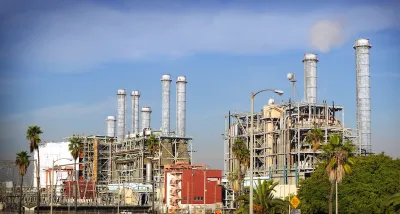
“California's affordability crisis could lead to more relaxed emissions standards, according to a plan introduced by state Democrats,” reports Steve Large for CBS News Sacramento on July 23.
[Contributor's note: Energy affordability is a component of energy security].
Leading the group is state Senator Jerry McNerney of Stockton.
McNerney said details of the proposal are being negotiated, which could include relaxed emissions if prices rise to a certain level or if fuel storage drops too low.
McNerney's emergency plan follows the announced departure and closure of several state refineries, leaving a tight supply and potential for spikes if one of the refineries left, suddenly goes off-line.
Ethan Elkind, director of the UC Berkeley Center for Law, Energy, and the Environment, observes that the legislation is another illustration of how “California's environmental priorities are now taking a backseat to its affordability crisis when it comes to gas.”
"I think it's such a reflection of how much legislators are feeling this pressure to go to their constituents and say, 'Look, we're trying to reduce prices,' " Elkind said.
However, it's not clear that the legislation will have the intended effect of reducing prices as it doesn't have the backing of the oil industry.
The Western States Petroleum Association opposes the plan, saying it doesn't address their needs for more investments in their industry.
Furthermore, McNerney is no friend of the oil industry. In an op-ed he co-wrote on July 9 for The Mercury News, he advocates suing “Big Oil and Gas” for the climate damage they've caused. How will that affect fuel prices?
Hat tip to Matt Williams.
FULL STORY: Politics California Democrats propose relaxed emissions rules amid gas price crisis


Appeals Court: California Emissions Standards Upheld
The U.S. Environmental Protection Agency and the California Air Resources Board, the nation's two most powerful environmental regulatory agencies, won an important round in federal court last week. But the emissions standards battle may not be over.

Holding Oil Companies Accountable for California's High Fuel Prices
Gov. Gavin Newsom signed into law a first-in-the-nation bill that would penalize California's oil refineries for excessive profits. Will it lower the state's highest-in-the-nation fuel prices?
EPA to Stop Considering the Cost of Lives Saved in Setting Pollution Limits
The agency will no longer quantify the monetary gains from health benefits from curbing air pollution.

Planetizen Federal Action Tracker
A weekly monitor of how Trump’s orders and actions are impacting planners and planning in America.

The state-sanctioned urbicide of Austin
People don’t kill cities. Freeways do.

US to reduce Colorado River water deliveries to Mexico
A new Colorado Treaty amendment reduces Mexico’s Colorado River water allocation by 250,000 acre feet.

5 New England states march closer to 800 megawatt wind energy project
Securing federal approval for the project may be complicated under the Trump administration, which has historically been hostile towards domestic wind power.

Baltimore to break ground on $50 million Transit Priority Project
The project will bring faster bus trips, safer streets and better bike connections to Baltimore.

Airbnb launches $250 million 'last-dollar financing' housing accelerator, makes first investment in Austin
The company will put $6.4 million towards affordable housing development in Texas’ capital.

FREE Course: Walkable City 1: Why Walkability?
After describing his path towards focusing on walkability as the essence of good planning, Jeff Speck marches through his five principal reasons for making more walkable places.
Reinventing Malls: Planning Alchemy—Turning Gray Fields Into Gold
The course focuses on the opportunities and imperatives that shape reinvention of mall sites.

Eagle County Government
Harvard University Graduate School of Design
Nashville Planning Department
The Architects Foundation
University of Cincinnati Online
The Pocatello Development Authority
The Urban Renewal Agency of the City of Pocatello
Journal of the American Planning Association