Environmental and transit advocacy groups, along with the MTA, are suing USDOT over its recent crusade to end the cordon pricing program.


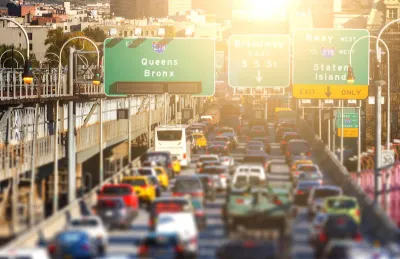
The Sierra Club joined the New York Metropolitan Transportation Authority (MTA) and other groups in filing legal action against the U.S. Department of Transportation (USDOT) for its attempt to end New York City’s congestion pricing program.
According to a press release from the Sierra Club, “The legal complaint charges that the Trump administration made serious legal mistakes in its rush to deprive New Yorkers of the benefits of Congestion Pricing, and that these mistakes suggest that the administration is acting pretextually.” The program raised $48.6 million in its first month and has been shown to reduce congestion and improve travel times.
“We’re filing today’s case because congestion relief is saving us time on buses, fixing our aging subways, and improving our health. We can’t afford to go back.” — Riders Alliance Executive Director Betsy Plum
The new lawsuit argues that the plan to end the program has a flawed legal basis. “The letter states that federal law has never contemplated ‘cordon pricing’ as a permissible congestion pricing strategy, except where toll-free options are available to drivers. In fact, cordon pricing has for decades been recognized by the Federal Highway Administration (FHWA) as a form of congestion pricing, and it authorized cordon pricing projects more than twenty years ago.”
Read the full story: New Challenge on Trump Administration’s Attempt to “Terminate” New York’s Congestion Pricing Program

Judge Extends NYC Congestion Pricing Through at Least June 9
A federal judge halted the Trump administration’s effort to kill the program, which remains in limbo as a lawsuit filed by the MTA moves forward.
USDOT Threatens to Pull New York Highway Funding
The Trump administration wants the state to kill New York City’s congestion pricing program despite its demonstrated success.
USDOT Revokes Approval for NYC Congestion Pricing
Despite the administration’s stated concern for the “working class,” 85 percent of Manhattan commuters use public transit to enter the city.

Planetizen Federal Action Tracker
A weekly monitor of how Trump’s orders and actions are impacting planners and planning in America.

Amtrak, CN end decades-long dispute with eight-year agreement
The new operating agreement establishes an updated framework for the companies to work together, including processes to resolve disputes.

Northwest rail fans eager for Sept. 30 debut of Amtrak’s Airo fleet
Get ready for that new train smell and more seats. But they won’t go faster or run more frequently on the Cascades route in Washington and Oregon.

Brightline Florida files for bankruptcy
The transit company is over $5 billion in debt.

St. Louis Metro to test if single-car trains can reduce operating costs, maintain rider satisfaction
The pilot program will run from October to spring 2027, and begin with one single-car train operating on Metrolink’s Red and Blue lines.

Pennsylvania is building data centers in abandoned mines
Housing data centers in mines provides an alternative to destroying local forests and may spare residents from data centers’ noise and air pollution.

FREE Course: Walkable City 1: Why Walkability?
After describing his path towards focusing on walkability as the essence of good planning, Jeff Speck marches through his five principal reasons for making more walkable places.
Reinventing Malls: Planning Alchemy—Turning Gray Fields Into Gold
The course focuses on the opportunities and imperatives that shape reinvention of mall sites.

City of Thousand Oaks
City of Wisconsin Rapids
Harvard University Graduate School of Design
The Architects Foundation
University of Cincinnati Online
The Pocatello Development Authority
The Urban Renewal Agency of the City of Pocatello