CapMetro officials say they wanted to start providing connectivity even though buses won’t run as frequently as planned.


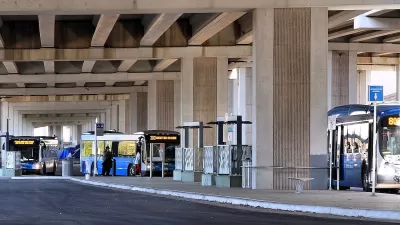
After a two-year delay, Austin’s CapMetro launched limited service on two new Rapid bus routes last weekend, with buses running every 20 to 30 minutes.
As Nathan Bernier explains in Austin Monitor, “CapMetro views this ‘introductory service’ as a way to offer increased connectivity in areas historically deprived of transit while working to get the full service up and running.”
The service will start and end at temporary stations until the adjacent park-and-ride lots are ready. CapMetro says full service, which will see buses running every 10 minutes, should begin in 12 to 18 months.
While the agency originally planned to use electric buses, a lack of charging infrastructure held back that part of the project, which now operates with diesel buses. “CapMetro’s planned switch to a Tap-to-Pay fare system, originally scheduled for March, is also facing delays. The agency says getting certification to conduct those transactions wirelessly is taking longer than expected, and could push back the rollout by one to two months or more.”
Read the full story: Austin’s new CapMetro Rapid lines debut with buses every 20 minutes


Austin Tests Self-Driving Bus
Autonomous buses could improve bus yard operations for electric fleets, according to CapMetro.

Austin’s Project Connect Funding Safe for 2025
The light rail project is moving ahead with plans to finalize its environmental impact review by late 2025.

Can Better Transit Get Austinites Out of Cars?
The city's ambitious transit plan will bring light rail and bus connections to more areas of the city.

Planetizen Federal Action Tracker
A weekly monitor of how Trump’s orders and actions are impacting planners and planning in America.

The state-sanctioned urbicide of Austin
People don’t kill cities. Freeways do.

Colorado’s Largest Data Center Could Rise Next to Homes — Without a Public Hearing
The proposed campus would consume 11 times the power of Denver International Airport; as it has across the country, opposition mounts.

Nation's most wind-powered state turns to coal as data centers increase energy demand
For the first time in decades, Iowa has increased its generation of coal power.

NYC cools commuters with city's first rain garden above a bus stop
New York City officials say the plants in the rain garden can absorb 16 gallons of rainwater during heavy storms.

Brightline West’s future may rely on $6 billion federal loan
The company has until Nov. 2 to make a $400 million equity investment into its proposed high-speed rail line.

FREE Course: Walkable City 1: Why Walkability?
After describing his path towards focusing on walkability as the essence of good planning, Jeff Speck marches through his five principal reasons for making more walkable places.
Reinventing Malls: Planning Alchemy—Turning Gray Fields Into Gold
The course focuses on the opportunities and imperatives that shape reinvention of mall sites.


Greater Baltimore Committee
Eagle County Government
Harvard University Graduate School of Design
The Architects Foundation
University of Cincinnati Online
The Pocatello Development Authority
The Urban Renewal Agency of the City of Pocatello
Journal of the American Planning Association