Solid barriers, like the dormant ones in New Orleans, are commonly used to improve road safety in Europe. Why not here?


In an article for MinnPost, Bill Lindeke describes how simple yet effective solid bollards can help save lives — both in attacks like the one in New Orleans and in everyday occurrences.
According to Lindeke, “The standard bollard costs around $700 to manufacture and install (at least according to one estimate). That’s very affordable for a modern capital expense, which is probably one reason why they’re common in many European cities.” Retractable bollards are more expensive and require maintenance. Flexible delineators, the bollard’s less robust cousins, can provide traffic calming and clarity but do little to offer physical protection.
“Compared to anything you’ll find in a public works budget, in the right context they represent an amazing investment payoff for traffic calming and safety.” The value of bollards seems well understood by the private sector, Lindeke notes. “Companies that seem to know the actuarial value of their infrastructure deploy them more literally than urban planners.”
With vehicles growing larger and more dangerous, Lindeke writes that bollards would dramatically improve safety near bus stops, schools, and other populated public places. Using more bollards could also have the side effect of encouraging more street festivals and events — “important in an era where public gatherings are disappearing.”
Read the full story: How the oft-forgotten urban pawn, the lowly bollard, can save lives

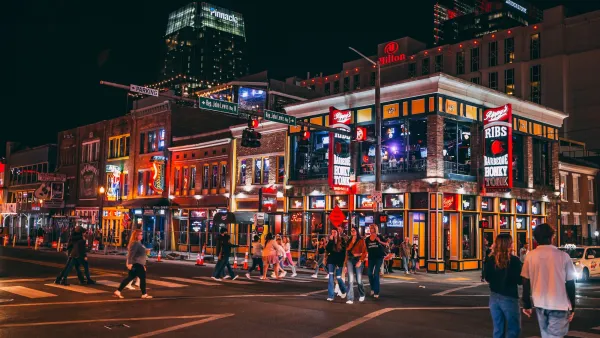
Tennessee DOT weighs making Nashville's Broadway car-free — sometimes
After a crash that killed one person and injured several others, state and city officials are in talks to consider options for closing the popular thoroughfare to cars during certain events.
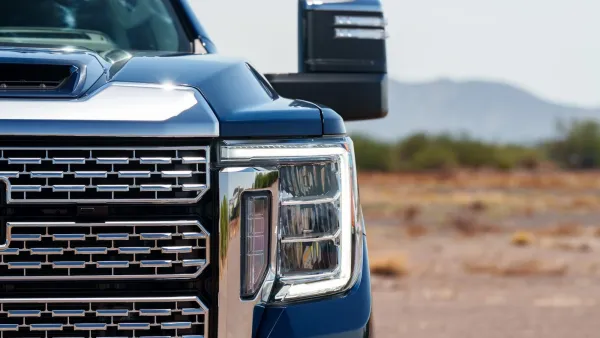
Analysis: Bigger cars are responsible for 10% of increase in pedestrian deaths
The New York Times offers a visual explanation of how larger vehicles make US roads more dangerous.
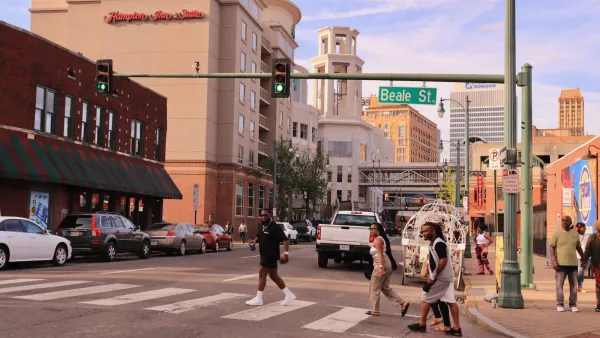
Memphis is the nation's most dangerous city for pedestrians
Memphis had the highest rate of traffic deaths for people walking in the US for two years in a row.

Planetizen Federal Action Tracker
A weekly monitor of how Trump’s orders and actions are impacting planners and planning in America.

Amtrak, CN end decades-long dispute with eight-year agreement
The new operating agreement establishes an updated framework for the companies to work together, including processes to resolve disputes.

Judges permit Denver to divert 77,000 acre feet from the Colorado River for reservoir expansion
Overuse and climate change have caused the Colorado River’s water levels to plummet.

Philadelphia to invest $2 billion into upgrading city airports as PHL places last in customer satisfaction
Modernizations to Philadelphia's airports will include baggage system upgrades and a new automated parking garage guidance system.

The LA housing policies making developers turn away from the city
Despite LA’s housing shortage, developers say the city’s "mansion-tax" and pandemic-era policies make it an unappealing place to build housing.

New density bill would require 7 California cities to establish regional transit hubs
The bill would also require major cities in California to permit high-rise residential buildings.

FREE Course: Walkable City 1: Why Walkability?
After describing his path towards focusing on walkability as the essence of good planning, Jeff Speck marches through his five principal reasons for making more walkable places.
Reinventing Malls: Planning Alchemy—Turning Gray Fields Into Gold
The course focuses on the opportunities and imperatives that shape reinvention of mall sites.

City of Wisconsin Rapids
Harvard University Graduate School of Design
KFH Group Inc.
The Architects Foundation
University of Cincinnati Online
The Pocatello Development Authority
The Urban Renewal Agency of the City of Pocatello