Some communities are turning abandoned campuses into offices, art studios, and housing.


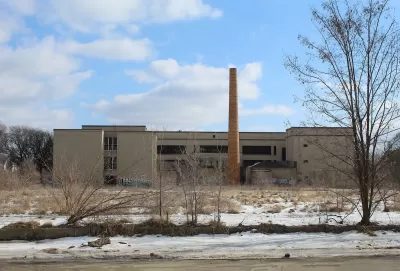
First, it was office buildings and malls. Now, schools are getting into the adaptive reuse game as some shuttered campuses are getting new lives as artist studios, restaurants, housing, and community spaces.
Writing in Smart Cities Dive, Amanda Loudin points to the example of the Bok Building, a former South Philadelphia high school now home to over 200 businesses and nonprofits. “The businesses in the Bok Building employ more than 600 people, 75% of whom live within a mile-and-a-half radius of the site, said Lindsey Scannapieco, managing partner of Scout, the development and design firm behind Bok’s revamping.”
With 755 schools closed in just the 2021-2022 season, these buildings offer a valuable new source of commercial and residential space. However, “A lack of funding and community pushback are some of the hurdles that face school-repurposing projects.” Successful projects have often relied on some combination of private financing to fund renovations.
Read the full story: Adaptive reuse breathes new life into abandoned schools

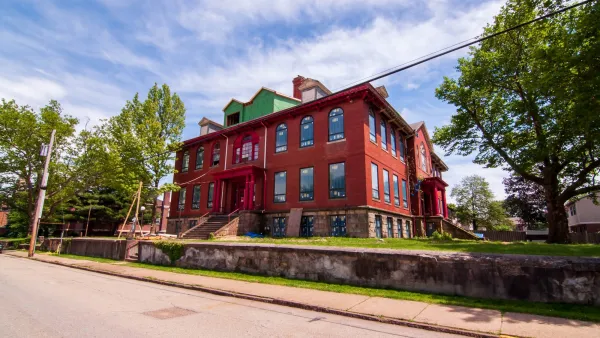
School-to-housing Conversions are the Fastest-growing Sector of Adaptive Reuse
In 2024, former schools were redeveloped into almost 2,000 apartments.
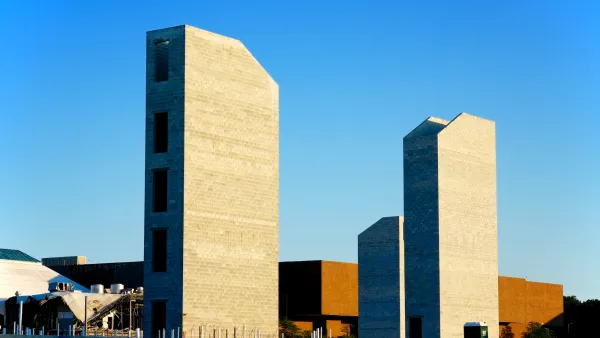
New Jersey affordable housing requirements spur infill development across the state
A 50-year-old law continues to reshape development around housing goals.

Office conversion is picking up steam in San Francisco
The city spent five years streamlining approval processes and reducing fees to encourage more adaptive reuse of vacant office buildings.

Planetizen Federal Action Tracker
A weekly monitor of how Trump’s orders and actions are impacting planners and planning in America.

‘Going backwards:’ Baltimore mayor, students rally against state's transit funding plan
Maryland's proposed six-year plan provides no funding for Baltimore’s BMORE bus program and reduces its road maintenance funding.

Detroit to transform waterfront with $2.2 billion investment
Developers will convert about 18 acres of unused parking lot space into civic spaces.

LA to transform part of water treatment facility into new park
By rebuilding some of the Los Angeles-Glendale Water Reclamation Plant’s infrastructure, the city will free up 18,000 square feet to create a new green space for the public.

San Antonio approves $1.1 billion transit agenda
The agency has also begun construction of its Via Rapid Green line, which will service passengers from the San Antonio International Airport.

Guerilla urbanists’ DIY benches joined by sanctioned seats in Chicago
The group behind the original homemade benches said they will continue installing them across bench-less bus stops in Chicago.

FREE Course: Walkable City 1: Why Walkability?
After describing his path towards focusing on walkability as the essence of good planning, Jeff Speck marches through his five principal reasons for making more walkable places.
Reinventing Malls: Planning Alchemy—Turning Gray Fields Into Gold
The course focuses on the opportunities and imperatives that shape reinvention of mall sites.

One Hundred Miles
County of Mendocino
planning NEXT
The Architects Foundation
University of Cincinnati Online
Montrose County
Northern Illinois Transit Authority (NITA)
The Pocatello Development Authority