Taking a wider view of communities could help keep schools open despite falling enrollment.


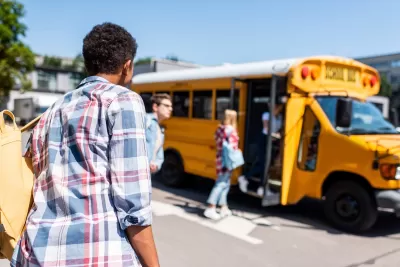
In this wide-ranging interview with Shelterforce's Editor-in-Chief Miriam Axel-Lute, Akira Drake Rodriguez, assistant professor at the University of Pennsylvania's Weitzman School of Design, discusses how school closures affect neighborhood stability and how communities are organizing to change school facilities planning processes.
Drawing from her research in Philadelphia, Rodriguez explores how school closures can lead to different outcomes in different neighborhoods — from gentrification to population decline. She examines alternatives to closing underutilized schools, such as co-location with community services, and describes how Philadelphia communities are working to make school facilities planning more participatory and equitable.
The interview highlights the deep connections between educational justice and housing justice, offering insights for planners and community developers about supporting local schools and preserving vital public infrastructure. Rodriguez argues for viewing schools as critical community anchors that provide more than just educational services.
Read the full interview at the source article in Shelterforce.
FULL STORY: A Better Way to Plan School Facilities

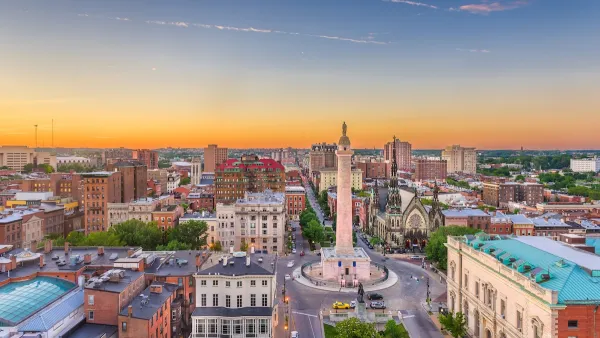
Rebuilding Together: How One Baltimore Program Advanced Education and Community Development
When Baltimore got funding for a round of school renovations, the state directed it to design schools that would also advance neighborhood revitalization — and it learned some lessons about why that's not always so simple.
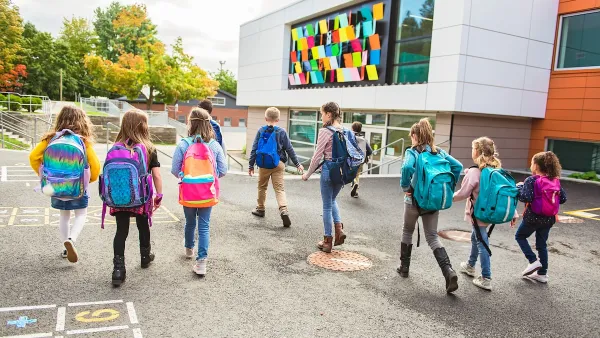
Expanding the Mission: Community Groups Serving Schools
Some community development organizations have added education to their traditional focus on housing and economic development, looking for ways to support families and children by partnering with local school districts. How is it working?

The Role of Schools in Fostering Vibrant and Inclusive Communities
Discover how schools play a crucial role in community development by fostering inclusivity, enhancing local engagement, and serving as hubs for social and cultural activities.

The state-sanctioned urbicide of Austin
People don’t kill cities. Freeways do.

US to reduce Colorado River water deliveries to Mexico
A new Colorado Treaty amendment reduces Mexico’s Colorado River water allocation by 250,000 acre feet.

New Jersey’s second-largest city bans standalone data centers
Jersey City will continue to allow co-location facilities, such as those meant for research institutions that store their own data.

Amtrak not solely to blame for New Jersey commuter rail's unreliability, report finds
A new study from the Garden State Initiative found that NJ Transit’s budget grew 20% across a 4 year period, but reliability declined significantly over the same period.

EPA erases limits on planet-warming pollution from power plants
Under Monday’s plan, power plants would still have some limits on how much mercury, arsenic and other contaminants they can emit.

Phoenix announces new on-demand transit service, more frequent RAPID buses
Both new services will launch in October, and are part of Phoenix's Project Effective Access Solutions for Easing Congestion.

FREE Course: Walkable City 1: Why Walkability?
After describing his path towards focusing on walkability as the essence of good planning, Jeff Speck marches through his five principal reasons for making more walkable places.
Reinventing Malls: Planning Alchemy—Turning Gray Fields Into Gold
The course focuses on the opportunities and imperatives that shape reinvention of mall sites.

Eagle County Government
Harvard University Graduate School of Design
Nashville Planning Department
The Architects Foundation
University of Cincinnati Online
The Pocatello Development Authority
The Urban Renewal Agency of the City of Pocatello
Journal of the American Planning Association