A December report forecasts a continued “lock-in effect” due to high mortgage rates and a low production of multifamily housing.



A press release from Fannie Mae predicts that the “lock-in effect” in the housing market will continue into 2025, “with existing home sales forecast to move only slightly upward from recent multi-decade lows, according to the December 2024 commentary from the Fannie Mae (FNMA/OTCQB) Economic and Strategic Research (ESR) Group.”
Fannie Mae economists had five key predictions for the upcoming year: average mortgage rates will decline, but remain above 6 percent; existing home sales will remain low; new home sales will offer some options to prospective homebuyers — “where they can be built;” home price growth will slow; and multifamily housing “will remain in a holding pattern,” unwelcome news for households seeking smaller, more affordable housing types.
“While we think conditions on a national basis will remain challenging, we’re seeing meaningful regional differences in market conditions, and the homebuying experience — as the adage goes — will continue to be a local one,” said Mark Palim, Fannie Mae Senior Vice President and Chief Economist.
Read the full story: Housing Market Unlikely to Thaw in 2025 Due to Affordability Challenges and 'Lock-in Effect'

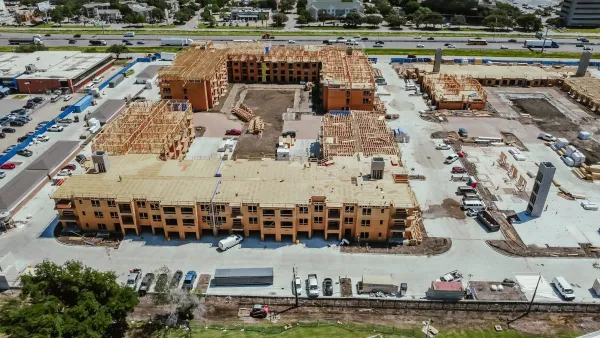
Controversial Texas housing law has 'directly facilitated' over 1,250 new homes
SB 840 allows developers to build multifamily housing by-right on lots zoned for commercial use without applying to a zoning change.

Pennsylvania Housing Action Plan Calls for $1B Fund, Expanded Renter Protections, Homebuyer Assistance
Gov. Shapiro’s proposed plan would bolster support for renters and homebuyers and reduce barriers to housing development.

Missoula Approves Zoning Reform Emphasizing More Diverse Housing, Walkability
The city’s new zoning code, map, and development standards will guide more expansive housing options and improved walkability.

Planetizen Federal Action Tracker
A weekly monitor of how Trump’s orders and actions are impacting planners and planning in America.

California plans to bury El Niño’s downpour
If the state plays its cards right, it may be able to store a billion acre-feet of El Niño’s water in aquifers.

Chicago breaks ground on $3 billion megadevelopment
The new neighborhood, titled Foundry Park, will one day host 3,700 residences.

Satanic Place Names
From streams and lakes to valleys and canyons, I mapped more than 1,000 places named after the Devil.

California High-Speed Rail Authority CEO resigns after $600,000 scandal
Under Ian Choudri, the authority used taxpayer dollars to fund first class flights and trips to nightclubs.

Want to study the Missouri River? Soon, you may need unanimous approval from 10 states
Legislation would require 10 governors’ permission to study or build projects moving water outside the basin.

FREE Course: Walkable City 1: Why Walkability?
After describing his path towards focusing on walkability as the essence of good planning, Jeff Speck marches through his five principal reasons for making more walkable places.
Reinventing Malls: Planning Alchemy—Turning Gray Fields Into Gold
The course focuses on the opportunities and imperatives that shape reinvention of mall sites.

City of Rosemead
Rutgers University, Edward J. Bloustein School of Planning and Public Policy
One Hundred Miles
Hunter College, City University of New York (CUNY)
The Architects Foundation
University of Cincinnati Online
City of Cambridge
Montrose County
The Pocatello Development Authority