The senator who introduced the legislation cited concerns about the state’s low levels of workforce participation, noting that a lack of transportation is one of the main reasons Alabama residents can’t participate in the workforce.


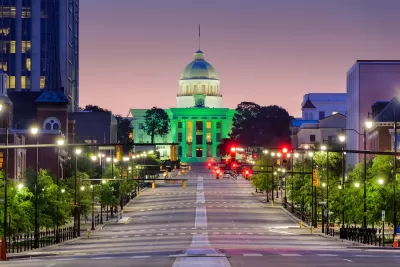
An Alabama state senator is proposing a new funding mechanism for public transit, citing concerns that many of the state’s residents don’t have access to jobs due to a lack of transportation. As Alexander Willis explains in an article for Alabama Daily News, “Alabama’s labor participation rate was 57.5% in August, among the lowest rates in the country. State lawmakers last year established a commission to investigate the root causes of the state’s low labor participation rate. A lack of reliable transportation was one of the key findings.”
Senator Linda Coleman-Madison (D-Birmingham) introduced Senate Bill 11 to improve the state’s public transit system, which frequently ranks among the least developed in the nation. The bill would add a $5 charge to vehicle license and registration fees to generate revenue for transit.
Coleman-Madison says the bill could have a transformative impact when combined with available federal matching funds. According to policy advocate Dev Wakeley, “State investment here could bring down more federal money, and if you’re talking about a good return on investment, you can’t really get much better than the four-to-one capital matching rate for federal funds.”
FULL STORY: Citing workforce needs, Alabama lawmaker pushes to fund public transportation

Opinion: Make Buses More Like Sidewalks
Sidewalks are an intuitive, low-cost, and easily accessible mobility tool. Can local buses function in the same way?

Preparing Transportation Systems for the ‘Silver Tsunami’
More Americans than ever will age beyond their safe ability to drive. How will they meet their mobility needs in a car-centric society?
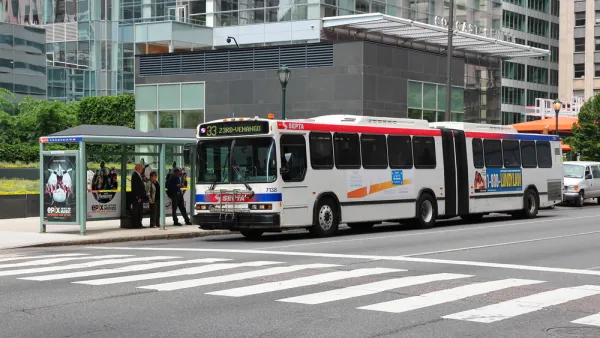
Philadelphia Councilmember Proposes Transit Access Fund
The plan would allocate 0.5 percent of the general fund toward mobility subsidies for low-income households.

The state-sanctioned urbicide of Austin
People don’t kill cities. Freeways do.

US to reduce Colorado River water deliveries to Mexico
A new Colorado Treaty amendment reduces Mexico’s Colorado River water allocation by 250,000 acre feet.

New Jersey’s second-largest city bans standalone data centers
Jersey City will continue to allow co-location facilities, such as those meant for research institutions that store their own data.

Amtrak not solely to blame for New Jersey commuter rail's unreliability, report finds
A new study from the Garden State Initiative found that NJ Transit’s budget grew 20% across a 4 year period, but reliability declined significantly over the same period.

EPA erases limits on planet-warming pollution from power plants
Under Monday’s plan, power plants would still have some limits on how much mercury, arsenic and other contaminants they can emit.

Phoenix announces new on-demand transit service, more frequent RAPID buses
Both new services will launch in October, and are part of Phoenix's Project Effective Access Solutions for Easing Congestion.

FREE Course: Walkable City 1: Why Walkability?
After describing his path towards focusing on walkability as the essence of good planning, Jeff Speck marches through his five principal reasons for making more walkable places.
Reinventing Malls: Planning Alchemy—Turning Gray Fields Into Gold
The course focuses on the opportunities and imperatives that shape reinvention of mall sites.

Eagle County Government
Harvard University Graduate School of Design
Nashville Planning Department
The Architects Foundation
University of Cincinnati Online
The Pocatello Development Authority
The Urban Renewal Agency of the City of Pocatello
Journal of the American Planning Association