A vision for the future of automated ports with AI and 5G: harnessing technology for enhanced efficiency, reliability, and safety.


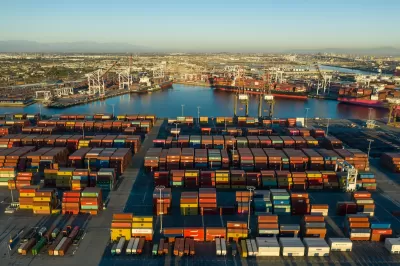
The recent dockworkers strike along the U.S. Eastern Seaboard, which halted operations at over 30 seaports and disrupted nearly half of the country’s shipments, is a stark reminder of the fragility of global supply chains. As port congestion intensifies and labor unrest threatens, industry leaders increasingly focus on automation as a long-term solution to mitigate such disruptions. At the heart of this shift is the integration of cutting-edge technologies like 5G networks, which promise to enhance operational efficiency, safety, and reliability across ports.
Private 5G networks allow for seamless, real-time data transmission between various automated systems, from cranes and robots to security drones, without the risk of network congestion. At ports like Antwerp and Tyne, 5G-connected drones operate for their ability to provide continuous, high-quality video feeds for security surveillance, drastically reducing response times to incidents. These drones, supported by AI and edge computing, offer a glimpse into the future of port security—where machines, not humans, will monitor vast terminal spaces, optimizing resource allocation and improving safety.
Read the full story: AI and 5G Could Advance Port Automation

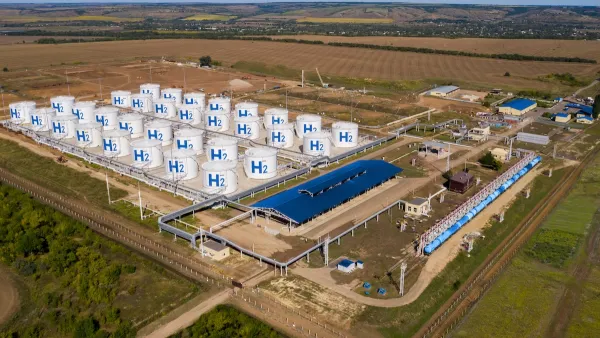
First Federal Funding for Hydrogen Hubs Awarded to California and Pacific Northwest
The U.S. Department of Energy announced on July 17 that the first grant to build the nation's seven proposed 'hydrogen hubs' would go to California. The ultimate goal is to decarbonize transportation fuels used in port operations.
The Greening of Large Trucks Begins at California's Ports
A Planetizen blog post by Casey Brazeal asks, "When will the trucking industry electrify?" Three truck manufacturers and electric truck builder BYD Motors are now in competition thanks to a $23.6 million state grant to the South Coast Air District.
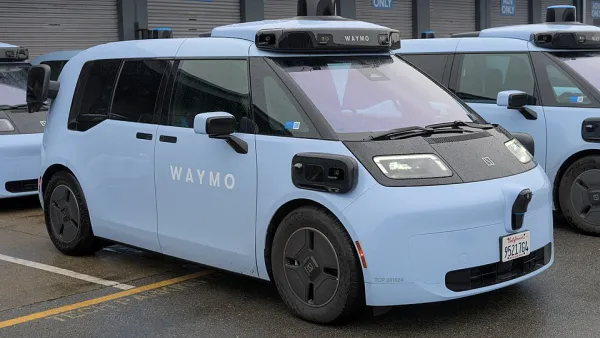
Waymo’s Ojai robotaxis from China now able to pick up all riders
Steep tariffs and tight federal laws haven’t stopped Waymo from purchasing over 3,200 vehicles from Zeekr, a Chinese manufacturer.

Planetizen Federal Action Tracker
A weekly monitor of how Trump’s orders and actions are impacting planners and planning in America.

California plans to bury El Niño’s downpour
If the state plays its cards right, it may be able to store a billion acre-feet of El Niño’s water in aquifers.

Chicago breaks ground on $3 billion megadevelopment
The new neighborhood, titled Foundry Park, will one day host 3,700 residences.

California High-Speed Rail Authority CEO resigns after $600,000 scandal
Under Ian Choudri, the authority used taxpayer dollars to fund first class flights and trips to nightclubs.

Want to study the Missouri River? Soon, you may need unanimous approval from 10 states
Legislation would require 10 governors’ permission to study or build projects moving water outside the basin.

Desperate measures: Advocates weigh draining Lake Powell to fill Colorado River
Draining the reservoir could reduce evaporation losses by a couple hundred thousand acre-feet.

FREE Course: Walkable City 1: Why Walkability?
After describing his path towards focusing on walkability as the essence of good planning, Jeff Speck marches through his five principal reasons for making more walkable places.
Reinventing Malls: Planning Alchemy—Turning Gray Fields Into Gold
The course focuses on the opportunities and imperatives that shape reinvention of mall sites.

City of Rosemead
Rutgers University, Edward J. Bloustein School of Planning and Public Policy
One Hundred Miles
Hunter College, City University of New York (CUNY)
The Architects Foundation
University of Cincinnati Online
City of Cambridge
Montrose County
The Pocatello Development Authority