Local governments are prohibited from requiring parking spaces at new developments where transit is readily available.


A new California state law, Assembly Bill 2553, will further restrict local governments’ power to require parking spaces at new developments near transit stops, reports John Donegan in Long Beach Post.
“Kurt Canfield, an organizer with Car-Lite Long Beach, explained that state law previously defined a major transit area as any intersection of at least two bus routes at a frequency of 15 minutes or less during the morning and afternoon commute periods.” The new law, which takes effect in January, extends the timeframe to 20 minutes.
Canfield says the change could have a major impact on affordable housing by lowering the cost of construction and making projects possible on smaller lots.
Parking reform that includes reducing or eliminating minimum parking requirements has been touted as a powerful tool for boosting the housing supply and bringing down housing costs. Donegan notes that “Most developers still include parking, but at an amount driven by market demand instead of a government standard.”
FULL STORY: California expands ban on local governments requiring parking spaces at developments near transit areas

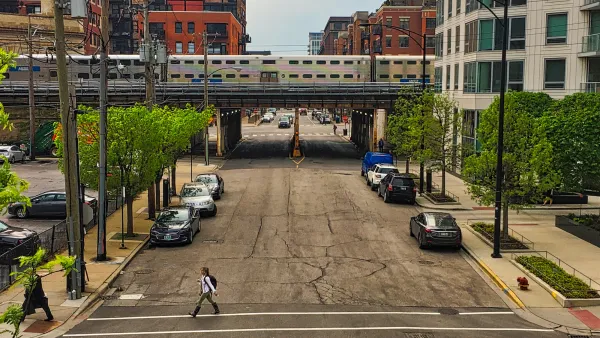
Chicago eliminates parking requirements near transit
In 2025, Illinois barred cities from mandating parking near train and bus stations.
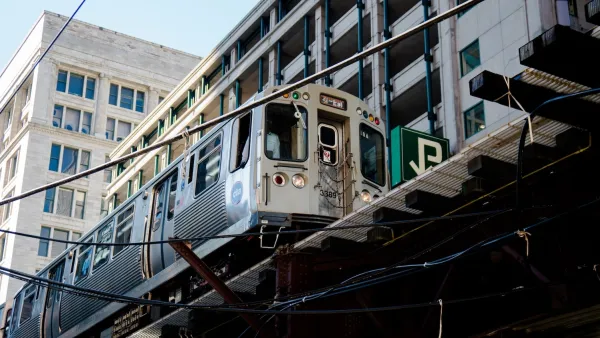
Illinois ‘People Over Parking Act’ Bans Parking Requirements Near Transit
The new law could unlock denser, more affordable housing development near train and bus lines.
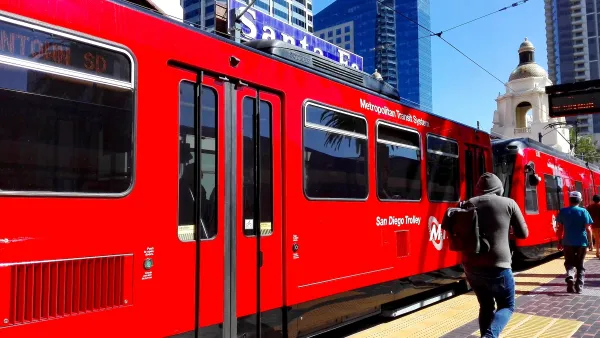
San Diego wants to limit upzoning law to just 16% of transit-adjacent parcels
The city's planning director says some areas are unfit for immediate upzoning due to a lack of resources or hazards such as wildfire risk.

Planetizen Federal Action Tracker
A weekly monitor of how Trump’s orders and actions are impacting planners and planning in America.

The state-sanctioned urbicide of Austin
People don’t kill cities. Freeways do.

US to reduce Colorado River water deliveries to Mexico
A new Colorado Treaty amendment reduces Mexico’s Colorado River water allocation by 250,000 acre feet.

5 New England states march closer to 800 megawatt wind energy project
Securing federal approval for the project may be complicated under the Trump administration, which has historically been hostile towards domestic wind power.

Baltimore to break ground on $50 million Transit Priority Project
The project will bring faster bus trips, safer streets and better bike connections to Baltimore.

Airbnb launches $250 million 'last-dollar financing' housing accelerator, makes first investment in Austin
The company will put $6.4 million towards affordable housing development in Texas’ capital.

FREE Course: Walkable City 1: Why Walkability?
After describing his path towards focusing on walkability as the essence of good planning, Jeff Speck marches through his five principal reasons for making more walkable places.
Reinventing Malls: Planning Alchemy—Turning Gray Fields Into Gold
The course focuses on the opportunities and imperatives that shape reinvention of mall sites.

Eagle County Government
Harvard University Graduate School of Design
Nashville Planning Department
The Architects Foundation
University of Cincinnati Online
The Pocatello Development Authority
The Urban Renewal Agency of the City of Pocatello
Journal of the American Planning Association