The new RapidRide G is King County Metro’s most ambitious BRT line to date.


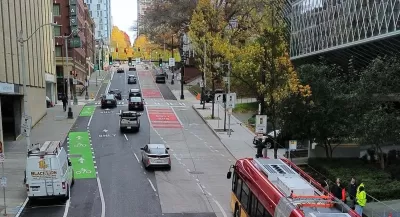
Last weekend, King County Metro launched its newest bus rapid transit (BRT) line, the 2.8-mile RapidRide G.
As Ryan Packer explains in The Urbanist, “With 2.8 miles of dedicated bus lanes covering the most congestion-prone areas of the route around Downtown and First Hill, and with many of those bus lanes occupying the center lane of the road to keep motorists out of the way of coaches, the RapidRide G will be as close to a gold-standard bus rapid transit (BRT) line that Seattle has seen to date.”
The line will feature buses with doors on both sides to speed up boarding. “With estimated trip times between 14 and 16 minutes from First Avenue to Madison Valley, the G Line will offer significant time savings over a current bus trip on the corridor, which can take 20 to 30 minutes and require a transfer.”
Passengers using wheelchairs will have access to ‘quick-deploying’ ramps, while people with bikes will be able to bring them onto the bus itself without using exterior racks.
Packer notes that the project, which creates a brand new transit corridor, also included upgrades to sidewalks, streets, traffic signals, and a water main.
Read the full story: Metro Launches RapidRide G, Seattle’s Most Ambitious Bus Rapid Transit Project

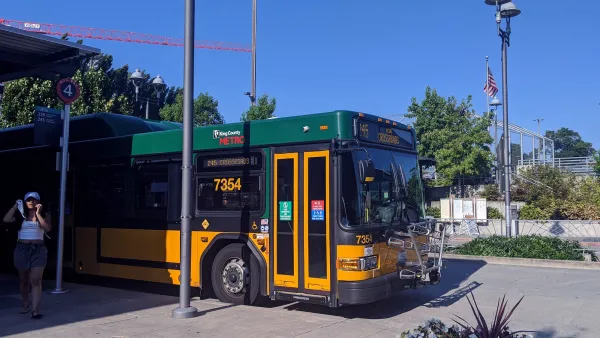
King County Metro adds 3,000 weekly bus trips, more connections to rail
King County Metro and Sound Transit are both making major adjustments to their bus networks to improve light rail connectivity across the region.
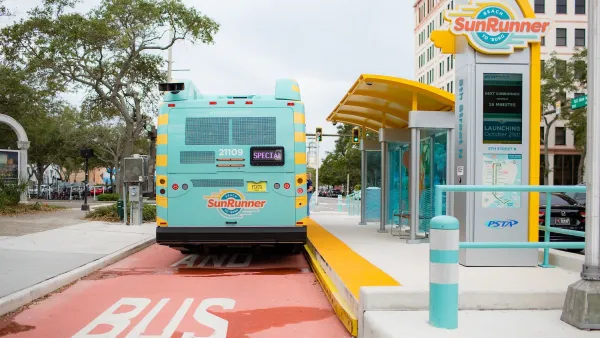
Lawsuit Claims Florida Bus Lane Removal was Illegal
The state cites an increase in crashes and congestion as reasons for eliminating a dedicated bus lane on the SunRunner BRT line, but city data tells a different story.
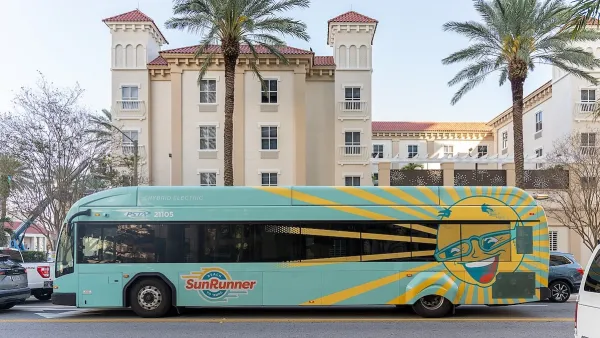
Florida DOT Orders Removal of St. Pete Bus Lane
The state says a popular BRT line has increased crashes and traffic on a state-owned portion of its corridor, prompting it to call for its reversal.

Planetizen Federal Action Tracker
A weekly monitor of how Trump’s orders and actions are impacting planners and planning in America.

California plans to bury El Niño’s downpour
If the state plays its cards right, it may be able to store a billion acre-feet of El Niño’s water in aquifers.

Chicago breaks ground on $3 billion megadevelopment
The new neighborhood, titled Foundry Park, will one day host 3,700 residences.

California High-Speed Rail Authority CEO resigns after $600,000 scandal
Under Ian Choudri, the authority used taxpayer dollars to fund first class flights and trips to nightclubs.

Want to study the Missouri River? Soon, you may need unanimous approval from 10 states
Legislation would require 10 governors’ permission to study or build projects moving water outside the basin.

Desperate measures: Advocates weigh draining Lake Powell to fill Colorado River
Draining the reservoir could reduce evaporation losses by a couple hundred thousand acre-feet.

FREE Course: Walkable City 1: Why Walkability?
After describing his path towards focusing on walkability as the essence of good planning, Jeff Speck marches through his five principal reasons for making more walkable places.
Reinventing Malls: Planning Alchemy—Turning Gray Fields Into Gold
The course focuses on the opportunities and imperatives that shape reinvention of mall sites.

City of Rosemead
Rutgers University, Edward J. Bloustein School of Planning and Public Policy
One Hundred Miles
Hunter College, City University of New York (CUNY)
The Architects Foundation
University of Cincinnati Online
City of Cambridge
Montrose County
The Pocatello Development Authority