A federal court ruling effectively prevents the Environmental Protection Agency from pursuing civil rights claims in one of the nation’s most polluted regions.



Louisiana climate activists are grappling with the repercussions of a federal court ruling that prevents the Environmental Protection Agency (EPA) from investigating civil rights claims in a heavily polluted part of the state, reports Victoria St. Martin for Inside Climate News.
“The ruling, issued earlier this month by the U.S. District Court in Western Louisiana, dealt a blow to the EPA’s use of the “disparate impact” provision of Title VI of the Civil Rights Act of 1964, which bars racial discrimination by people and organizations that receive federal funding.” The ruling makes permanent an injunction against using the disparate impact clause.
According to St. Martin, vice president of Earthjustice Patrice Simms said the ruling could have a ‘chilling effect’ on environmental justice movements around the country. “Debbie Chizewer, the managing attorney for Earthjustice’s Chicago office, said after the ruling that attorneys will be ‘considering all the strategies available to us’ to protect the health and continue the fight of community members.”

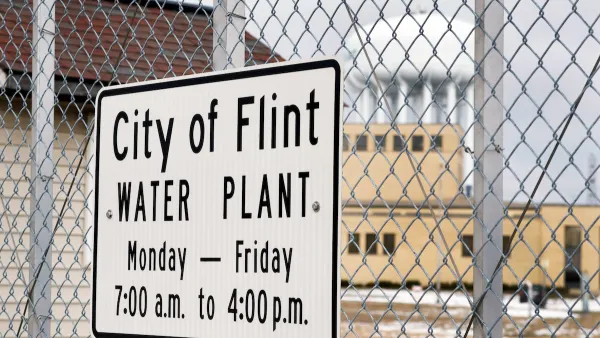
EPA Drops More Civil Rights Investigations
A lawsuit that halted an investigation in Louisiana’s ‘Cancer Alley’ is having a chilling impact on other environmental justice cases.

Judge Halts EPA Action in ‘Cancer Alley’ Civil Rights Case
EPA investigations into violations of the Civil Rights Act in Louisiana’s “Cancer Alley” were ruled as “federal overreach.”
EPA Launches Environmental Justice Grant Program
The agency says the program is designed to be more accessible to smaller and underresourced communities.

Planetizen Federal Action Tracker
A weekly monitor of how Trump’s orders and actions are impacting planners and planning in America.

The state-sanctioned urbicide of Austin
People don’t kill cities. Freeways do.

US to reduce Colorado River water deliveries to Mexico
A new Colorado Treaty amendment reduces Mexico’s Colorado River water allocation by 250,000 acre feet.

5 New England states march closer to 800 megawatt wind energy project
Securing federal approval for the project may be complicated under the Trump administration, which has historically been hostile towards domestic wind power.

Baltimore to break ground on $50 million Transit Priority Project
The project will bring faster bus trips, safer streets and better bike connections to Baltimore.

Airbnb launches $250 million 'last-dollar financing' housing accelerator, makes first investment in Austin
The company will put $6.4 million towards affordable housing development in Texas’ capital.

FREE Course: Walkable City 1: Why Walkability?
After describing his path towards focusing on walkability as the essence of good planning, Jeff Speck marches through his five principal reasons for making more walkable places.
Reinventing Malls: Planning Alchemy—Turning Gray Fields Into Gold
The course focuses on the opportunities and imperatives that shape reinvention of mall sites.

Eagle County Government
Harvard University Graduate School of Design
Nashville Planning Department
The Architects Foundation
University of Cincinnati Online
The Pocatello Development Authority
The Urban Renewal Agency of the City of Pocatello
Journal of the American Planning Association