A lawsuit that halted an investigation in Louisiana’s ‘Cancer Alley’ is having a chilling impact on other environmental justice cases.


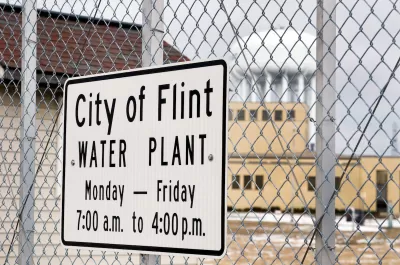
After a lawsuit killed an Environmental Protection Agency (EPA) investigation into civil rights violations in an area of Louisiana known as ‘Cancer Alley,’ environmental justice activists point out that the lawsuit is having a ‘chilling effect’ on other civil rights investigations, “effectively hamstringing what had been a historic aggressive approach from the agency on environmental justice issues under President Biden.”
As Willy Blackmore explains in Word In Black, “the very foundation of the EPA’s ability to investigate and act on” civil rights violations may be at risk, even as the agency had just begun to consider serious enforcement.
According to attorney Lisa Jordan, the lawsuit “challenges the entire regulatory program.” If it reaches the Supreme Court, it could have a major impact on the EPA’s power to investigate environmental justice claims. The agency recently also dropped an investigation in Flint, Michigan. “The investigation was dropped just days after the EPA abandoned the Cancer Alley one.”
Read the full story: The EPA Is Dropping Climate Justice Investigations Left and Right

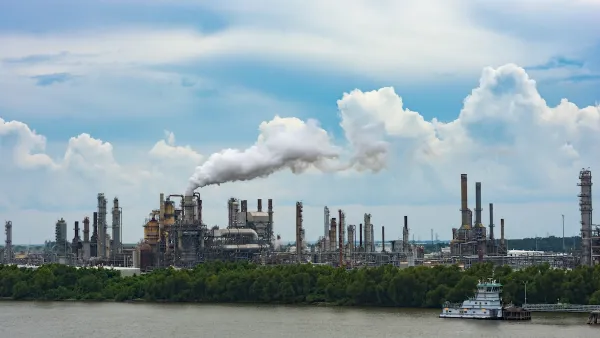
Court Bars EPA Probes in Louisiana’s ‘Cancer Alley’
A federal court ruling effectively prevents the Environmental Protection Agency from pursuing civil rights claims in one of the nation’s most polluted regions.
26-Year-Old Civil Rights Complaint Finally Ends
The legal controversy over the Genesee Power Plant in Flint, Michigan has finally ended, with a court forcing the U.S. Environmental Protection Agency to better investigate and resolve complaints of environmental discrimination.
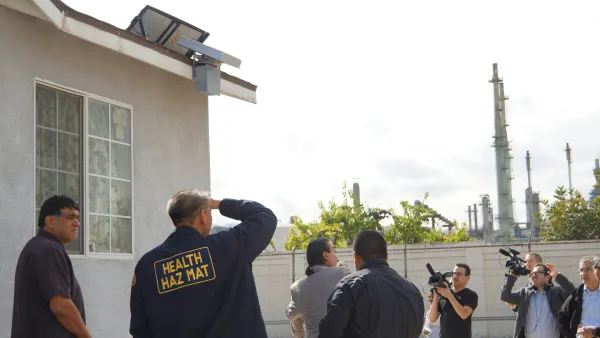
The EPA's Lackluster Environmental Justice Record
The Center for Public Integrity has released a report criticizing the EPA's environmental justice competence. In only 12 cases has the agency taken official action on behalf of communities affected disproportionately by polluters.

Planetizen Federal Action Tracker
A weekly monitor of how Trump’s orders and actions are impacting planners and planning in America.

California plans to bury El Niño’s downpour
If the state plays its cards right, it may be able to store a billion acre-feet of El Niño’s water in aquifers.

Chicago breaks ground on $3 billion megadevelopment
The new neighborhood, titled Foundry Park, will one day host 3,700 residences.

Satanic place names
From streams and lakes to valleys and canyons, I mapped more than 1,000 places named after the Devil.

California High-Speed Rail Authority CEO resigns after $600,000 scandal
Under Ian Choudri, the authority used taxpayer dollars to fund first class flights and trips to nightclubs.

Want to study the Missouri River? Soon, you may need unanimous approval from 10 states
Legislation would require 10 governors’ permission to study or build projects moving water outside the basin.

FREE Course: Walkable City 1: Why Walkability?
After describing his path towards focusing on walkability as the essence of good planning, Jeff Speck marches through his five principal reasons for making more walkable places.
Reinventing Malls: Planning Alchemy—Turning Gray Fields Into Gold
The course focuses on the opportunities and imperatives that shape reinvention of mall sites.

City of Rosemead
Rutgers University, Edward J. Bloustein School of Planning and Public Policy
One Hundred Miles
Hunter College, City University of New York (CUNY)
The Architects Foundation
University of Cincinnati Online
City of Cambridge
Montrose County
The Pocatello Development Authority