The plan calls for policies that support adaptive reuse, new housing construction, and improved public parks and facilities.


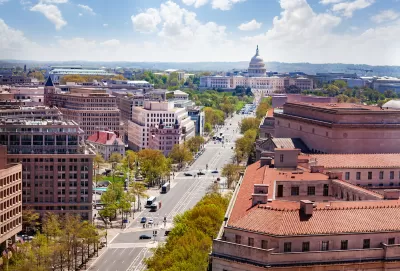
A Downtown Action Plan for Washington, D.C. provides recommendations for a $400 million, five-year project to revitalize its downtown by encouraging new housing construction and improving public facilities and safety.
As Danielle McLean explains in Smart Cities Dive, “annual tax revenue generated in the busy district has fallen by $243 million since 2019 — a downward trend that could cost D.C. another $193 million over the next five to 10 years without intervention, according to the new action plan summary.”
The plan addresses office vacancies, public safety, and other recent concerns. For one, the plan calls for changes to building height requirements that have held back adaptive reuse projects and new developments.
Additionally, “D.C. plans to support residential population growth downtown by creating a grant program that encourages amenities such as grocery stores, daycare, parks and senior services.”
The plan includes proposals for dynamic parking pricing and Vision Zero projects. “The full version of the plan is slated for release in May.”
FULL STORY: DC’s downtown revival plan, from office conversions to ‘neighborhood safety centers’


Denver Voters Approve Downtown Revitalization Bonds
The city wants to bring new projects and residents to the downtown core, where 13 million feet of vacant office and retail space await new tenants.

Office Conversions Have Increased Every Year This Decade
Since the pandemic, office vacancy rates remain high, leading many cities to adjust zoning codes to accommodate adaptive reuse.
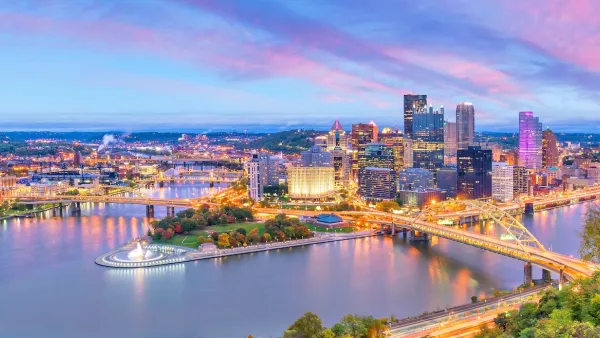
Downtown Pittsburgh Set to Gain 1,300 New Housing Units
Pittsburgh’s office buildings, many of which date back to the early 20th century, are prime candidates for conversion to housing.

Planetizen Federal Action Tracker
A weekly monitor of how Trump’s orders and actions are impacting planners and planning in America.

The state-sanctioned urbicide of Austin
People don’t kill cities. Freeways do.

US to reduce Colorado River water deliveries to Mexico
A new Colorado Treaty amendment reduces Mexico’s Colorado River water allocation by 250,000 acre feet.

5 New England states march closer to 800 megawatt wind energy project
Securing federal approval for the project may be complicated under the Trump administration, which has historically been hostile towards domestic wind power.

Baltimore to break ground on $50 million Transit Priority Project
The project will bring faster bus trips, safer streets and better bike connections to Baltimore.

Airbnb launches $250 million 'last-dollar financing' housing accelerator, makes first investment in Austin
The company will put $6.4 million towards affordable housing development in Texas’ capital.

FREE Course: Walkable City 1: Why Walkability?
After describing his path towards focusing on walkability as the essence of good planning, Jeff Speck marches through his five principal reasons for making more walkable places.
Reinventing Malls: Planning Alchemy—Turning Gray Fields Into Gold
The course focuses on the opportunities and imperatives that shape reinvention of mall sites.

Eagle County Government
Harvard University Graduate School of Design
Nashville Planning Department
The Architects Foundation
University of Cincinnati Online
The Pocatello Development Authority
The Urban Renewal Agency of the City of Pocatello
Journal of the American Planning Association