One of the nation's most prominent projects that would have tolled all lanes on two urban interstate highways may have come to an abrupt end on March 11 after Oregon Gov. Tina Kotek pulled her support for the controversial Portland area projects.


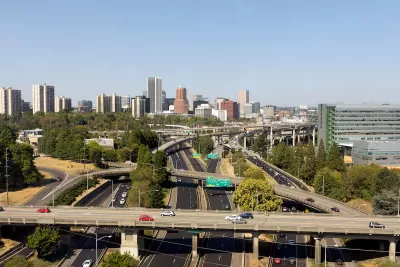
“Gov. Tina Kotek on Monday announced her intention to halt plans to toll Portland-area freeways, citing uncertainty about the costs of planned freeway projects and the revenue tolling would bring in,” reported Jayati Ramakrishnan for The Oregonian on March 11.
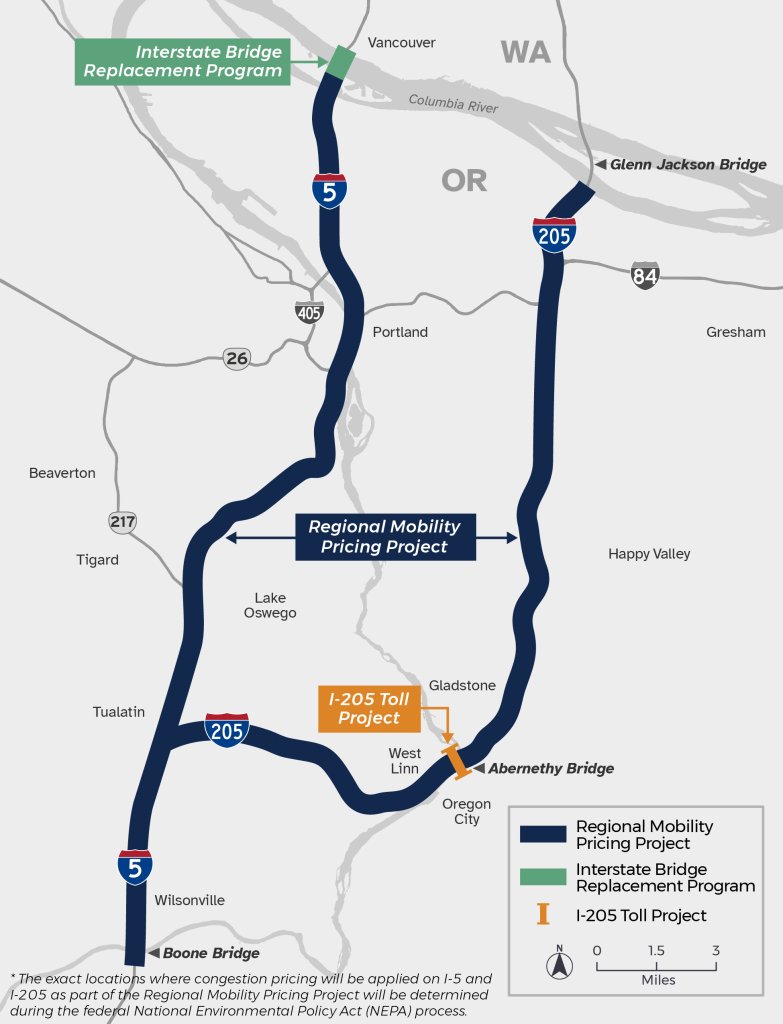
In a letter to the Oregon Transportation Commission, which sets state transportation policy, Kotek said she believed it was time to end the work on the Regional Mobility Pricing Project, the state transportation department’s plan to impose per-mile tolls on interstates 5 and 205 from Wilsonville to Portland’s northern border.
The ambitious road tolling projects were included in landmark transportation funding legislation, HB 2017, signed into law by then-Gov. Kate Brown. See Planetizen: Interstate Highway Tolling Takes Major Step Forward in Pacific Northwest, December 9, 2018:
The state that implemented the first gas tax and the first bike tax took a huge step on [Dec. 6, 2018] toward becoming the first, since 1956, to toll all lanes on an interstate highway by approving an application to the Federal Highway Administration.
Ramakrishnan continues in The Oregonian:
The state’s path toward implementing tolling is uncertain at best,” Kotek wrote in her letter to commissioners. “After years of work, the challenges of implementing the Regional Mobility Pricing Plan (RMPP) have grown larger than the anticipated benefits.”
...
The plan has been met with fierce opposition from most sides, including residents in communities along I-205 that would likely see increased traffic from drivers trying to avoid tolls, and from environmental advocates who feel that proposed tolling costs are unnecessarily high and would fund freeway-widening projects.
However, the Oregon Department of Transportation's webpage on the Regional Mobility Pricing Project as of March 19 has yet to reflect the governor's announcement:
Project Status
The Regional Mobility Pricing Project would toll I-5 and I-205 in the Portland metropolitan region. Tolling is part of ODOT's long-term strategy to help pay for transportation improvements and provide faster, more efficient trips through the Portland metro region.
The Oregon Department of Transportation did not respond to this correspondent's inquiries as of publication time.
For additional past Planetizen coverage, see tags Oregon Transportation Commission and Regional Mobility Pricing Project.
FULL STORY: Gov. Tina Kotek shelves plans for I-5, I-205 tolls in Portland area

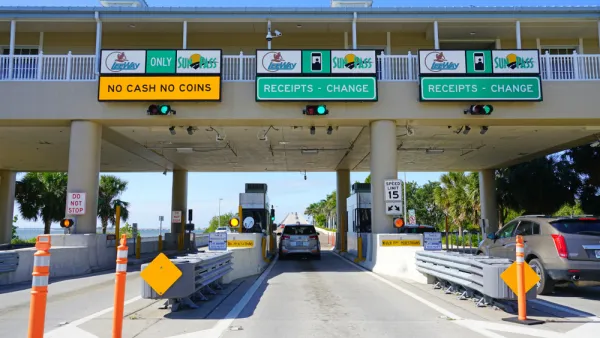
Tolling All Lanes
Bay Area transportation planners are studying a radical idea to reduce traffic congestion and fund driving alternatives: tolling all lanes on a freeway. Even more radical, the plan considers tolling parallel roads.
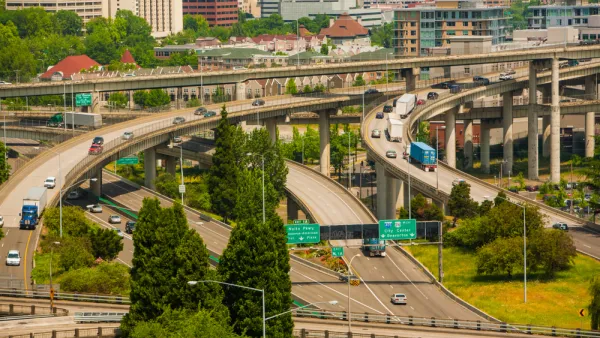
Interstate Highway Tolling Takes Major Step Forward in Pacific Northwest
The state that implemented the first gas tax and the first bike tax took a huge step on Thursday toward becoming the first, since 1956, to toll all lanes on an interstate highway by approving an application to the Federal Highway Administration.
Portland's Regional Congestion Pricing Program Widens and Advances
It might be the nation's most significant but least known congestion pricing plan. The plan originally recommended tolling all lanes on segments of two interstates. Four more roads were just added to broaden the plan.

Planetizen Federal Action Tracker
A weekly monitor of how Trump’s orders and actions are impacting planners and planning in America.

The state-sanctioned urbicide of Austin
People don’t kill cities. Freeways do.

US to reduce Colorado River water deliveries to Mexico
A new Colorado Treaty amendment reduces Mexico’s Colorado River water allocation by 250,000 acre feet.

5 New England states march closer to 800 megawatt wind energy project
Securing federal approval for the project may be complicated under the Trump administration, which has historically been hostile towards domestic wind power.

Baltimore to break ground on $50 million Transit Priority Project
The project will bring faster bus trips, safer streets and better bike connections to Baltimore.

Airbnb launches $250 million 'last-dollar financing' housing accelerator, makes first investment in Austin
The company will put $6.4 million towards affordable housing development in Texas’ capital.

FREE Course: Walkable City 1: Why Walkability?
After describing his path towards focusing on walkability as the essence of good planning, Jeff Speck marches through his five principal reasons for making more walkable places.
Reinventing Malls: Planning Alchemy—Turning Gray Fields Into Gold
The course focuses on the opportunities and imperatives that shape reinvention of mall sites.

Eagle County Government
Harvard University Graduate School of Design
Nashville Planning Department
The Architects Foundation
University of Cincinnati Online
The Pocatello Development Authority
The Urban Renewal Agency of the City of Pocatello
Journal of the American Planning Association