Transit ridership will likely remain below pre-pandemic levels through 2024, according to analysts.


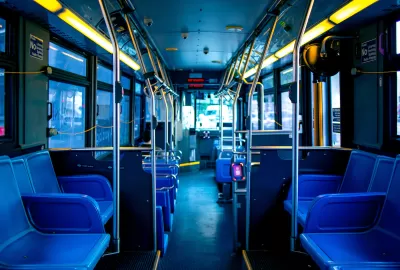
The public transit sector continues to struggle as federal emergency funding runs out and ridership in many systems remains low, reports Brett Rowland in The Daily Record.“Ridership was at 77% of pre-pandemic levels with significant variances between U.S. regions and modes of transit,” according to Rowland.
According to a report from S&P Global Ratings, “Heavy regional commuter rail-only systems still face lower ridership due to remote work trends while bus and subway systems serving cities and metropolitan areas have performed better.” The report adds, “We still expect public transit ridership will recover to only about 85% of pre-pandemic levels by 2026 under our base case and 80% under our downside case.”
Overall, transit agencies must contend with lower fare revenue and find new, sustainable funding sources. “Identifying such a model to meet operating and long-term capital needs remains an ongoing topic of debate, setting up key decisions in the coming months that will pit service levels against available resources for 2024 and beyond.”
FULL STORY: Outlook for public mass transit remains dim

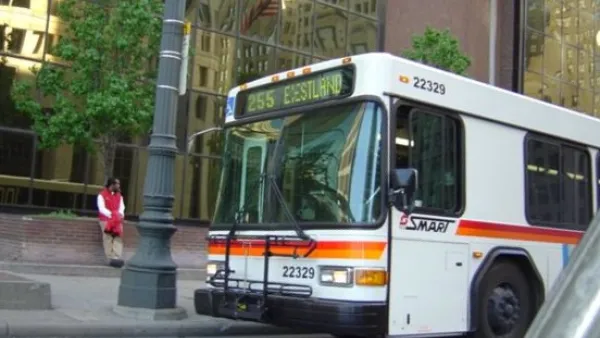
Is Fare-Free Transit Worth Reduced Transit Service?
Transit advocates worry that the movement to eliminate fares will come at a high cost to transit-dependent riders who rely on frequent, reliable service to reach jobs and services.
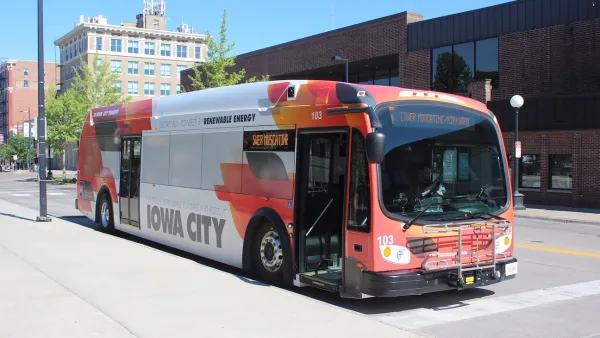
Iowa City's free bus program made ridership spike by 68%. Now, it could go away.
The bus system gained roughly 700,000 new riders since it launched free service in 2023.
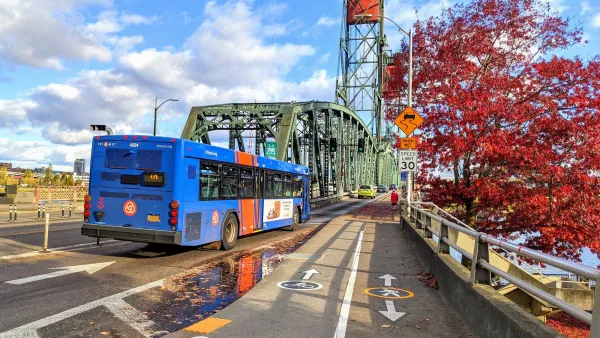
Trimet Slashes Bus Service in First of Three Rounds of Cuts
Oregon’s largest transit agency plans to cut 10% of its services in the next year.

The state-sanctioned urbicide of Austin
People don’t kill cities. Freeways do.

US to reduce Colorado River water deliveries to Mexico
A new Colorado Treaty amendment reduces Mexico’s Colorado River water allocation by 250,000 acre feet.

New Jersey’s second-largest city bans standalone data centers
Jersey City will continue to allow co-location facilities, such as those meant for research institutions that store their own data.

Amtrak not solely to blame for New Jersey commuter rail's unreliability, report finds
A new study from the Garden State Initiative found that NJ Transit’s budget grew 20% across a 4 year period, but reliability declined significantly over the same period.

EPA erases limits on planet-warming pollution from power plants
Under Monday’s plan, power plants would still have some limits on how much mercury, arsenic and other contaminants they can emit.

Phoenix announces new on-demand transit service, more frequent RAPID buses
Both new services will launch in October, and are part of Phoenix's Project Effective Access Solutions for Easing Congestion.

FREE Course: Walkable City 1: Why Walkability?
After describing his path towards focusing on walkability as the essence of good planning, Jeff Speck marches through his five principal reasons for making more walkable places.
Reinventing Malls: Planning Alchemy—Turning Gray Fields Into Gold
The course focuses on the opportunities and imperatives that shape reinvention of mall sites.

Eagle County Government
Harvard University Graduate School of Design
Nashville Planning Department
The Architects Foundation
University of Cincinnati Online
The Pocatello Development Authority
The Urban Renewal Agency of the City of Pocatello
Journal of the American Planning Association