The 2020 federal law has helped fund park maintenance projects and improve access to public lands.


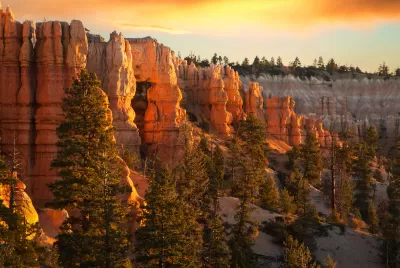
An article by Susan Shain in High Country News assesses the impact of the 2020 Great American Outdoors Act, a federal law that purported to be the “single largest investment in public lands in U.S. history.”
According to Shain, the two-part law aims to improve access to public lands for recreation and other purposes and funds the National Parks and Public Land Legacy Restoration Fund, which supports maintenance and repairs of national parks infrastructure.
According to Myke Bybee of the Trust for Public Land, the law is working. “Since 2021, the Legacy Restoration Fund has funded a slew of delayed maintenance projects, both large and small — rehabilitating the Hurricane Ridge day lodge at Olympic National Park ($7 million); replacing a wastewater plant at Grand Canyon National Park ($40.5 million); and rebuilding roads, bridges and water treatment plants at Yellowstone National Park ($317.7 million), among many others.” These initiatives have created roughly 17,000 jobs, according to the Department of the Interior. “In the future, Bybee hopes to see more funding for the Land and Water Conservation Fund — the $900 million annual allocation has been the same since 1964, when land was much cheaper — as well as permanent funding for the Legacy Restoration Fund.”
FULL STORY: What happened to the Great American Outdoors Act?

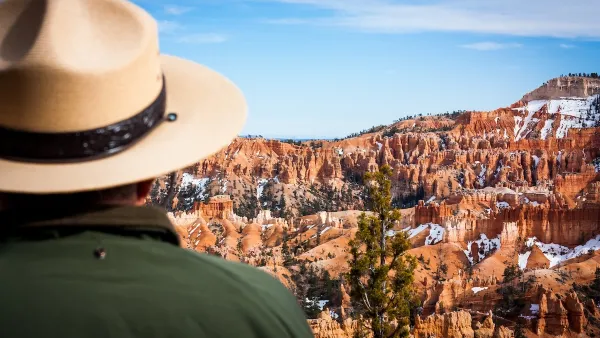
National Parks Layoffs Will Cause Communities to Lose Billions
Thousands of essential park workers were laid off this week, just before the busy spring break season.
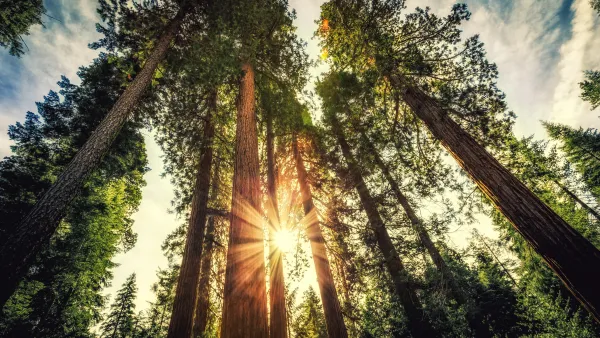
Public Lands in the United States, Part One: “Redeemed From Wilderness”
This is part one in a blog series examining the history of public lands in the United States and their shifting role in the American psyche.
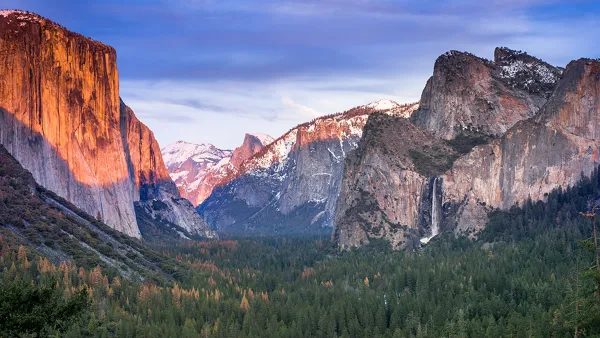
Opinion: We're Loving Our National Parks to Death
A reservation system could help the struggling national parks system manage crowds and protect our public lands from overuse, according to this article.

Planetizen Federal Action Tracker
A weekly monitor of how Trump’s orders and actions are impacting planners and planning in America.

The state-sanctioned urbicide of Austin
People don’t kill cities. Freeways do.

US to reduce Colorado River water deliveries to Mexico
A new Colorado Treaty amendment reduces Mexico’s Colorado River water allocation by 250,000 acre feet.

Amtrak not solely to blame for New Jersey commuter rail's unreliability, report finds
A new study from the Garden State Initiative found that NJ Transit’s budget grew 20% across a 4 year period, but reliability declined significantly over the same period.

EPA erases limits on planet-warming pollution from power plants
Under Monday’s plan, power plants would still have some limits on how much mercury, arsenic and other contaminants they can emit.

Phoenix announces new on-demand transit service, more frequent RAPID buses
Both new services will launch in October, and are part of Phoenix's Project Effective Access Solutions for Easing Congestion.

FREE Course: Walkable City 1: Why Walkability?
After describing his path towards focusing on walkability as the essence of good planning, Jeff Speck marches through his five principal reasons for making more walkable places.
Reinventing Malls: Planning Alchemy—Turning Gray Fields Into Gold
The course focuses on the opportunities and imperatives that shape reinvention of mall sites.

Eagle County Government
Harvard University Graduate School of Design
Nashville Planning Department
The Architects Foundation
University of Cincinnati Online
The Pocatello Development Authority
The Urban Renewal Agency of the City of Pocatello
Journal of the American Planning Association