State officials look to generative AI to get a five-year surge in traffic deaths under control.



Traffic deaths in California have increased 22 percent since 2019, according to a study by transportation nonprofit TRIP. “We’re losing about 12 people a day,” Timothy Weisberg with the California Office of Traffic Safety told CBS News Sacramento reporter James Taylor.
In hopes of reversing that upward trend, Taylor reports that state officials want to experiment with generative AI, the same technology used in chatbots, to manage traffic and prevent vehicle crashes.
Using data from traffic sensors, weather monitors, and cameras along the state’s more than 53,000 miles of highways, AI could one day warn drivers of dangers like dense fog or a wrong-way driver. “The messages could be sent to a phone or a car's dashboard and would be similar to the state's earthquake warning system which gives people a few seconds to prepare,” writes Taylor.
It also has the potential to adjust signal lights to predict and prevent high-risk situations like traffic jams or fixed-route transportation intersection crossings.
The state is seeking proposals from the tech sector and hopes to launch demonstration projects later this year. “We want to be diligent about it," Amy Tong, secretary of California's Government Operations agency, told CBS News Sacramento. "Let's test it out, see if it works. If it works, then let's take the next step."
Read the full story: California turns to artificial intelligence to make roadways safer

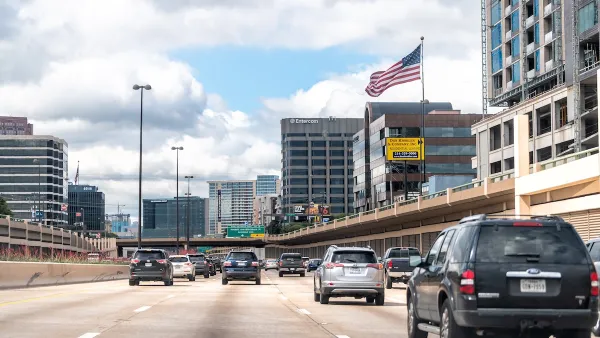
Traffic Tech is Helping Texas Curb Road Deaths
The state is deploying AI-assisted technology to identify dangerous road segments and improve signal timing.
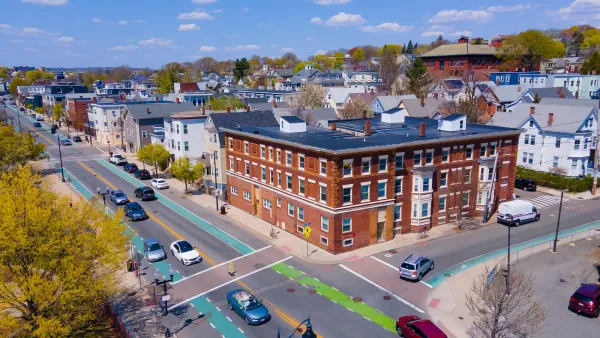
Massachusetts town celebrates 3 years with no traffic deaths
Somerville is following Hoboken's Vision Zero playbook with impressive results.
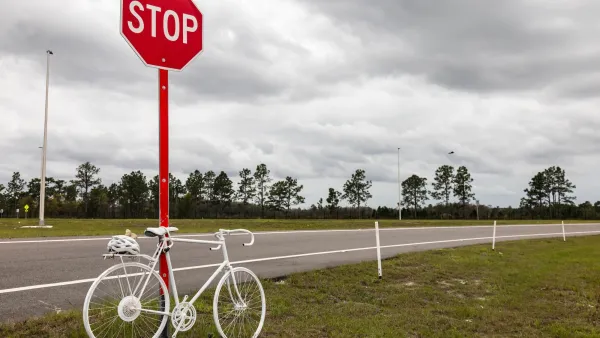
Landscapes of love and loss
As urban planners, every piece of infrastructure we build is a memorial — whether we know it or not.

Planetizen Federal Action Tracker
A weekly monitor of how Trump’s orders and actions are impacting planners and planning in America.

The state-sanctioned urbicide of Austin
People don’t kill cities. Freeways do.

US to reduce Colorado River water deliveries to Mexico
A new Colorado Treaty amendment reduces Mexico’s Colorado River water allocation by 250,000 acre feet.

Nation's most wind-powered state turns to coal as data centers increase energy demand
For the first time in decades, Iowa has increased its generation of coal power.

NYC cools commuters with city's first rain garden above a bus stop
New York City officials say the plants in the rain garden can absorb 16 gallons of rainwater during heavy storms.

Brightline West’s future may rely on $6 billion federal loan
The company has until Nov. 2 to make a $400 million equity investment into its proposed high-speed rail line.

FREE Course: Walkable City 1: Why Walkability?
After describing his path towards focusing on walkability as the essence of good planning, Jeff Speck marches through his five principal reasons for making more walkable places.
Reinventing Malls: Planning Alchemy—Turning Gray Fields Into Gold
The course focuses on the opportunities and imperatives that shape reinvention of mall sites.

Eagle County Government
Harvard University Graduate School of Design
Nashville Planning Department
The Architects Foundation
University of Cincinnati Online
The Pocatello Development Authority
The Urban Renewal Agency of the City of Pocatello
Journal of the American Planning Association