The move to deny requested funds signals a shift in mindset away from rubber-stamping road projects.


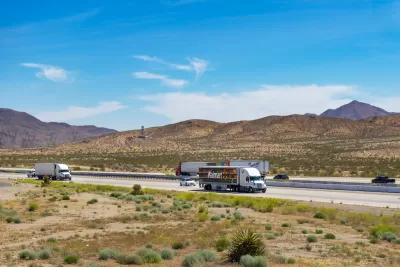
In an uncommon move, the California Transportation Commission (CTC) denied funding to a Southern California highway expansion project, reports Melanie Curry in Streetsblog California, serving as “a warning to highway builders that they need to stop fooling around with the California Environmental Quality Act and state climate policy requirements.”
The I-15 Freight Corridor Improvement project in San Bernardino and Riverside Counties, already under construction, was asking for $200 million from the CTC and “adds auxiliary lanes and express lanes with ‘price managed/toll facilities’ to the I-15.”
CTC Commissioner Joseph Lyou, who opposed the funding, said the project would add between 152 million and 300 million vehicle miles traveled (VMT) annually through induced demand, adding, “It's very troubling that, despite knowing better, we continue to approve project after project after project.” Two other commissioners voted against the funding, signaling a new willingness at the CTC to question the rationale behind road-building projects.
FULL STORY: Highway Expansion Project Not Approved by California Transportation Commission


States Claim Highway Expansions Reduce Emissions
The argument is being used to channel climate funding to projects that expand automobile infrastructure, according to an analysis from Transportation for America.

Texas Approves $100 Billion Road Building Plan
The state is making a record investment in expanding and maintaining roads and highways, including an expansion of Interstate 10 and new managed lanes in Houston.
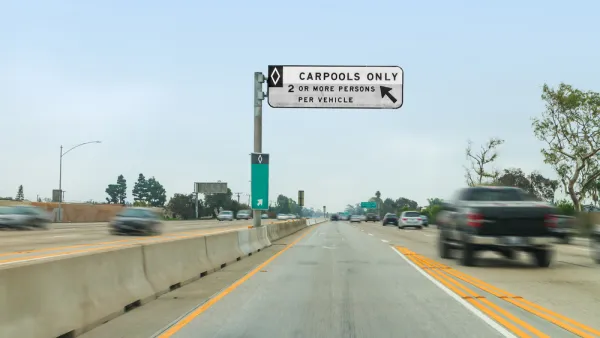
Converting a Carpool Lane to a High Occupancy Toll Lane No Easy Task
Supervisors of California's fourth-largest county declared their formal opposition to the conversion of carpool lanes on the Riverside Freeway to high occupancy toll (HOT) lanes, but they are open to toll lanes, under the right conditions.

Planetizen Federal Action Tracker
A weekly monitor of how Trump’s orders and actions are impacting planners and planning in America.

The state-sanctioned urbicide of Austin
People don’t kill cities. Freeways do.

US to reduce Colorado River water deliveries to Mexico
A new Colorado Treaty amendment reduces Mexico’s Colorado River water allocation by 250,000 acre feet.

5 New England states march closer to 800 megawatt wind energy project
Securing federal approval for the project may be complicated under the Trump administration, which has historically been hostile towards domestic wind power.

Baltimore to break ground on $50 million Transit Priority Project
The project will bring faster bus trips, safer streets and better bike connections to Baltimore.

Airbnb launches $250 million 'last-dollar financing' housing accelerator, makes first investment in Austin
The company will put $6.4 million towards affordable housing development in Texas’ capital.

FREE Course: Walkable City 1: Why Walkability?
After describing his path towards focusing on walkability as the essence of good planning, Jeff Speck marches through his five principal reasons for making more walkable places.
Reinventing Malls: Planning Alchemy—Turning Gray Fields Into Gold
The course focuses on the opportunities and imperatives that shape reinvention of mall sites.

Eagle County Government
Harvard University Graduate School of Design
Nashville Planning Department
The Architects Foundation
University of Cincinnati Online
The Pocatello Development Authority
The Urban Renewal Agency of the City of Pocatello
Journal of the American Planning Association