High-speed rail may still be a distant vision in the United States, but conventional passenger rail is having a resurgence.


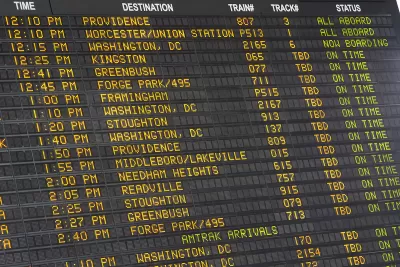
Writing in Fast Company, Benjamin Schneider offers a hopeful vision of U.S. passenger rail, which is being infused with historic levels of federal funding. Schneider admits that the $66 billion federal investment in trains “will not yield revolutionary changes to passenger rail,” it will help improve and expand service for many U.S. train riders. “On several rail-friendly corridors—big city pairs less than 300 miles apart—train travel will go from an eccentric travel option to a perfectly logical one.”
Pointing to new train cars on Amtrak’s Midwestern lines, Schneider writes, “State-of-the-art rolling stock is the most vivid sign that train travel is no nostalgia trip. It’s modern, it’s efficient, it’s comfortable, and it’s only getting better.”
Schneider points out that improvements to conventional rail—rather than the more glamorous high-speed rail—“will cumulatively impact the lives of many more Americans, much sooner, than multigenerational infrastructure projects like California High-Speed Rail.”
The article lists several impactful projects in states across the country, such as Colorado’s new Front Range Line, expanded service between St. Paul and Chicago, and improvements to a popular Southern California train line threatened by coastal erosion.
FULL STORY: Amtrak is having a renaissance across the United States

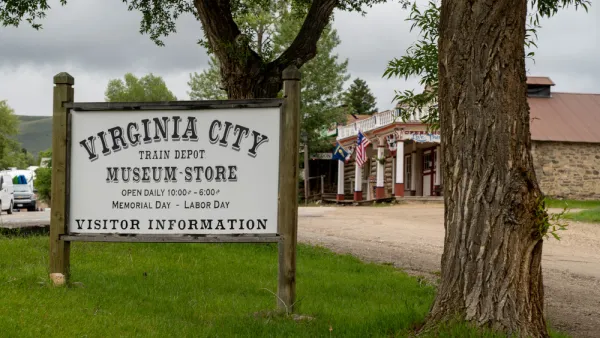
Montana Coalition Wants to Revive Passenger Rail
Supporters of the Big Sky Passenger Rail Authority argue that a new train could spur economic development and provide a valuable service for the state's non-driving residents.
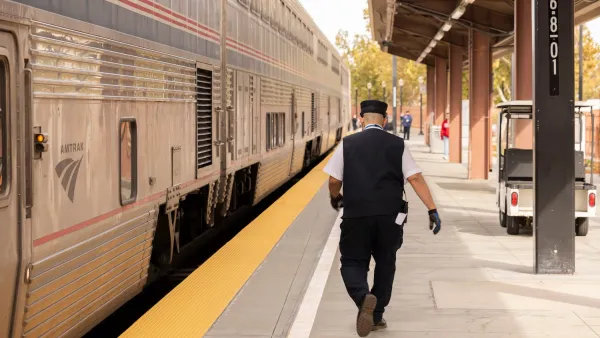
Op-Ed: Why an Effective Passenger Rail Network Needs Government Involvement
An outdated rail network that privileges freight won’t be fixed by privatizing Amtrak.
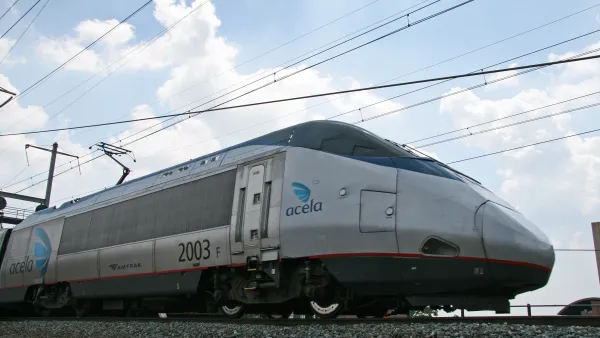
How to Make US Trains Faster
Changes to boarding platforms and a switch to electric trains could improve U.S. passenger rail service without the added cost of high-speed rail.

The state-sanctioned urbicide of Austin
People don’t kill cities. Freeways do.

US to reduce Colorado River water deliveries to Mexico
A new Colorado Treaty amendment reduces Mexico’s Colorado River water allocation by 250,000 acre feet.

New Jersey’s second-largest city bans standalone data centers
Jersey City will continue to allow co-location facilities, such as those meant for research institutions that store their own data.

Amtrak not solely to blame for New Jersey commuter rail's unreliability, report finds
A new study from the Garden State Initiative found that NJ Transit’s budget grew 20% across a 4 year period, but reliability declined significantly over the same period.

EPA erases limits on planet-warming pollution from power plants
Under Monday’s plan, power plants would still have some limits on how much mercury, arsenic and other contaminants they can emit.

Phoenix announces new on-demand transit service, more frequent RAPID buses
Both new services will launch in October, and are part of Phoenix's Project Effective Access Solutions for Easing Congestion.

FREE Course: Walkable City 1: Why Walkability?
After describing his path towards focusing on walkability as the essence of good planning, Jeff Speck marches through his five principal reasons for making more walkable places.
Reinventing Malls: Planning Alchemy—Turning Gray Fields Into Gold
The course focuses on the opportunities and imperatives that shape reinvention of mall sites.

Eagle County Government
Harvard University Graduate School of Design
Nashville Planning Department
The Architects Foundation
University of Cincinnati Online
The Pocatello Development Authority
The Urban Renewal Agency of the City of Pocatello
Journal of the American Planning Association