Two Virginia transit companies launched pilot projects for on-demand microtransit services in 2021, spurring record growth in ridership as a result.


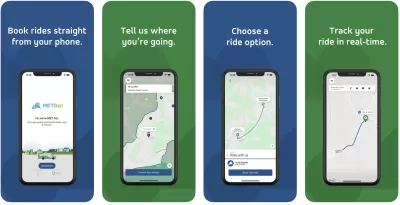
Public transit won’t work in rural settings like it does in urban areas—but that doesn’t mean it won’t work at all.
Two rural Virginia transit agencies, Bay Transit on the Northern Neck and Mountain Empire Transit in the Southwest, are proving that point after launching on-demand microtransit services in 2021 and achieving significant ridership growth in 2022.
An article by Wyatt Gordon tells the story of the two transit agencies’ foray into on-demand microtransit, from an inception that was enabled by the state’s Department of Rail and Public Transportation (DRPT) applying for an Integrated Mobility Innovation grant from the Federal Transit Administration.
The pilot project launched by Mountain Empire Transit (METGo) with that funding provides a fare-free alternative to traditional Medicaid-sponsored transportation that previously was the only option for seniors living in the METGo service area.
“In 2022, METGo riders comprised 38% of the system’s total ridership, helping Mountain Empire Transit to set a new ridership record,” reports Gordon.
In the Northern Neck, “Bay Transit eliminated two underperforming fixed routes that served the Gloucester County courthouse and replaced them with the Bay Transit Express-branded microtransit service,” reports Gordon. “The result was a 222% increase in ridership compared to the cut routes.”
The Bay Transit pilot project was so popular that the county is now paying for the service “via a combination of regular operating dollars and a matching grant from the locality.”
Read the full story: New microtransit service more than doubled ridership in rural regions

The Importance of Rural Transit
On Transit Equity Day, reminding policymakers that rural communities need access to transit too.

Developing a Common Language for Microtransit Providers
New data specification technology could help rural agencies streamline their operations and coordinate efforts to improve service delivery.
Congress Hears Rural Transportation Challenges
A Congressional subcommittee heard testimony from rural transportation officials, transit providers, and lawmakers.

Planetizen Federal Action Tracker
A weekly monitor of how Trump’s orders and actions are impacting planners and planning in America.

California plans to bury El Niño’s downpour
If the state plays its cards right, it may be able to store a billion acre-feet of El Niño’s water in aquifers.

Chicago breaks ground on $3 billion megadevelopment
The new neighborhood, titled Foundry Park, will one day host 3,700 residences.

Satanic place names
From streams and lakes to valleys and canyons, I mapped more than 1,000 places named after the Devil.

California High-Speed Rail Authority CEO resigns after $600,000 scandal
Under Ian Choudri, the authority used taxpayer dollars to fund first class flights and trips to nightclubs.

Want to study the Missouri River? Soon, you may need unanimous approval from 10 states
Legislation would require 10 governors’ permission to study or build projects moving water outside the basin.

FREE Course: Walkable City 1: Why Walkability?
After describing his path towards focusing on walkability as the essence of good planning, Jeff Speck marches through his five principal reasons for making more walkable places.
Reinventing Malls: Planning Alchemy—Turning Gray Fields Into Gold
The course focuses on the opportunities and imperatives that shape reinvention of mall sites.

City of Rosemead
Rutgers University, Edward J. Bloustein School of Planning and Public Policy
One Hundred Miles
Hunter College, City University of New York (CUNY)
The Architects Foundation
University of Cincinnati Online
City of Cambridge
Montrose County
The Pocatello Development Authority