Heat waves are causing damage and delays on commuter trains from New Jersey to Dallas.



Delays on Dallas Area Rapid Transit (DART) trains last week were potentially caused by heat, reports Zaeem Shaikh in The Dallas Morning News. “DART spokesman Gordon Shattles said that a damaged overhead catenary line near the station was to blame, and that it was harmed by the excessive heat.”
According to Shaikh, “The damaged line caused delays throughout the central business district, he said, and shuttle buses and a train shuttle are in place for passengers.” Service was back on track on Wednesday.
As Shaikh explains, “Catenary lines are a system of overhead wires used to supply electricity to the light rail vehicles, which are equipped with a pantograph. The pantograph, attached to the roof of the vehicle, presses against the underside of the lowest overhead wire, the contact wire, according to the Southeastern Pennsylvania Transportation Authority.”
The implications for public transit as extreme heat becomes more common could be vast. In New Jersey, a similar problem has been affecting NJ Transit and Amtrak trains, stopping trains and delaying thousands of commuters.
Read the full story: Heat may have played a role in DART rail delays in downtown Dallas, agency says

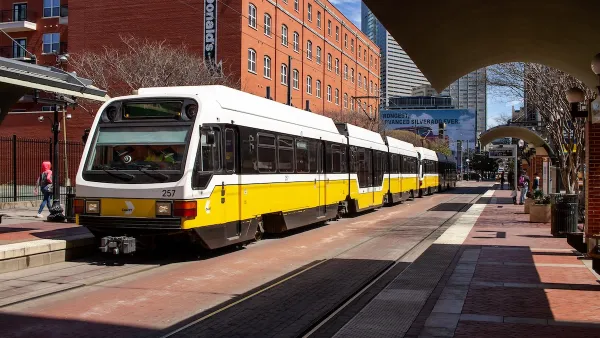
DARTSpace Platform Streamlines Dallas TOD Application Process
The Dallas transit agency hopes a shorter permitting timeline will boost transit-oriented development around rail stations.
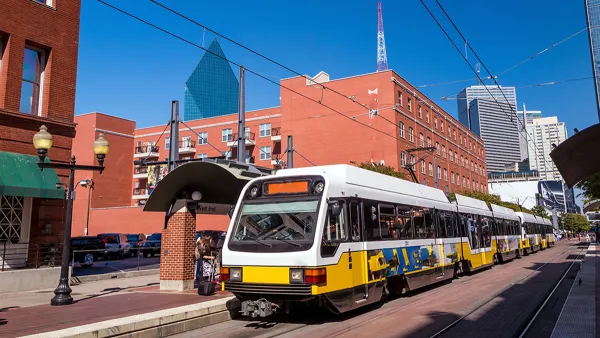
New DART Board Members Actually Ride Transit
Dallas rapid transit organization takes the rare step of bringing riders and transit advocates onto their board.
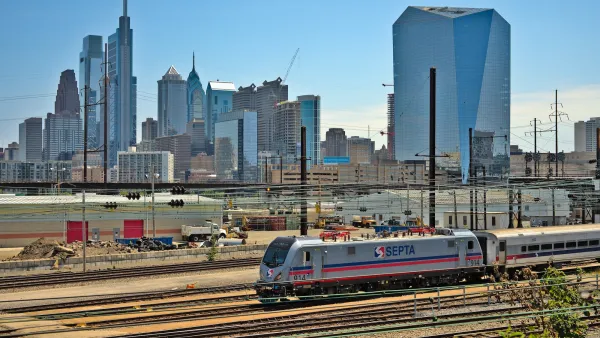
Extreme heat forces Amtrak, SEPTA to slow trains
High temperatures affect train tracks, electrical equipment and other key infrastructure.

Planetizen Federal Action Tracker
A weekly monitor of how Trump’s orders and actions are impacting planners and planning in America.

California plans to bury El Niño’s downpour
If the state plays its cards right, it may be able to store a billion acre-feet of El Niño’s water in aquifers.

Desperate measures: Advocates weigh draining Lake Powell to fill Colorado River
Draining the reservoir could reduce evaporation losses by a couple hundred thousand acre-feet.

California city breaks ground on transit connector
The project includes three mobility hubs and a pedestrian bridge.

After public outcry, Massachusetts city releases housing development tracker
Cambridge’s tracker currently shows 250 housing projects in various stages of development.

40 years after approval, Chicago breaks ground on new park
The park honors Jean Baptiste Point du Sable, the city’s first permanent non-native settler.

FREE Course: Walkable City 1: Why Walkability?
After describing his path towards focusing on walkability as the essence of good planning, Jeff Speck marches through his five principal reasons for making more walkable places.
Reinventing Malls: Planning Alchemy—Turning Gray Fields Into Gold
The course focuses on the opportunities and imperatives that shape reinvention of mall sites.

City of Rosemead
Rutgers University, Edward J. Bloustein School of Planning and Public Policy
One Hundred Miles
Hunter College, City University of New York (CUNY)
The Architects Foundation
University of Cincinnati Online
City of Cambridge
Montrose County
The Pocatello Development Authority