How the Texas capital quickly became one of the country’s hottest—and least affordable—housing markets.


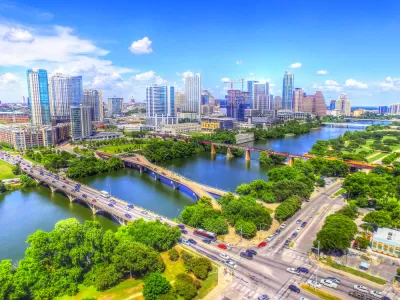
An article by Ryan Cavataro in Bloomberg CityLab analyzes the causes of Austin’s growing housing crisis, which is making it harder for longtime residents to afford housing in the city. Chief among them are outdated zoning codes and an influx of new residents and major employers.
According to Cavataro, “Austin's citywide zoning code hasn’t been updated since 1984, when the city was less than half its current population. And rules around single-family lots, which make up much of the city’s residential neighborhoods, are considered some of the more restrictive in the country.”
There is hope, however: “The city adopted a Strategic Housing Blueprint in 2017, which lays out a 10-year plan to create 60,000 affordable housing units. In 2021, the city exceeded its goal of building new housing units within a half-mile of targeted neighborhoods for the fourth year in a row.”
Read the full story: Why Doesn't Austin Have More Affordable Housing?

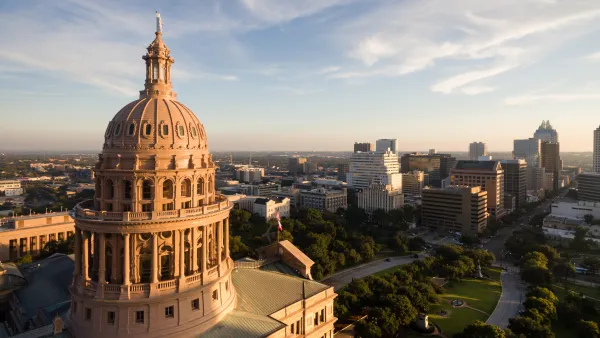
Zoning Reform Proposed in Austin
Proposed changes would create more room for mid-density housing and shift away from single-family homes on large lots.
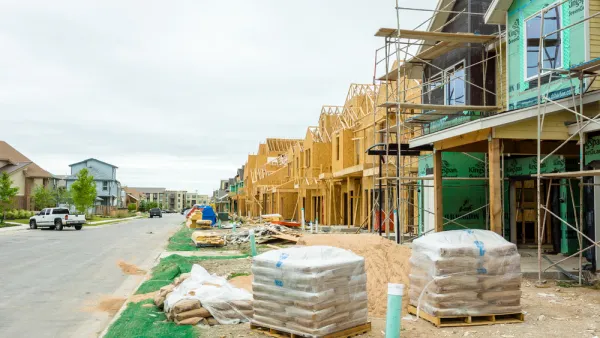
Early Returns on Austin's New Density Bonus Program: 2,337 Affordable Housing Units
Since late 2019, developers who deliver affordable housing units in Austin have received bonuses in height, density, parking, and other regulatory metrics, leading to a large number of new affordable housing units in the pipeline.

Defeating SB 827 Did Not Discourage the YIMBY Movement
Though the California housing bill was a high-profile failure for pro-development activists, there are initiatives all over the country that carry its spirit.

Planetizen Federal Action Tracker
A weekly monitor of how Trump’s orders and actions are impacting planners and planning in America.

The state-sanctioned urbicide of Austin
People don’t kill cities. Freeways do.

US to reduce Colorado River water deliveries to Mexico
A new Colorado Treaty amendment reduces Mexico’s Colorado River water allocation by 250,000 acre feet.

Nation's most wind-powered state turns to coal as data centers increase energy demand
For the first time in decades, Iowa has increased its generation of coal power.
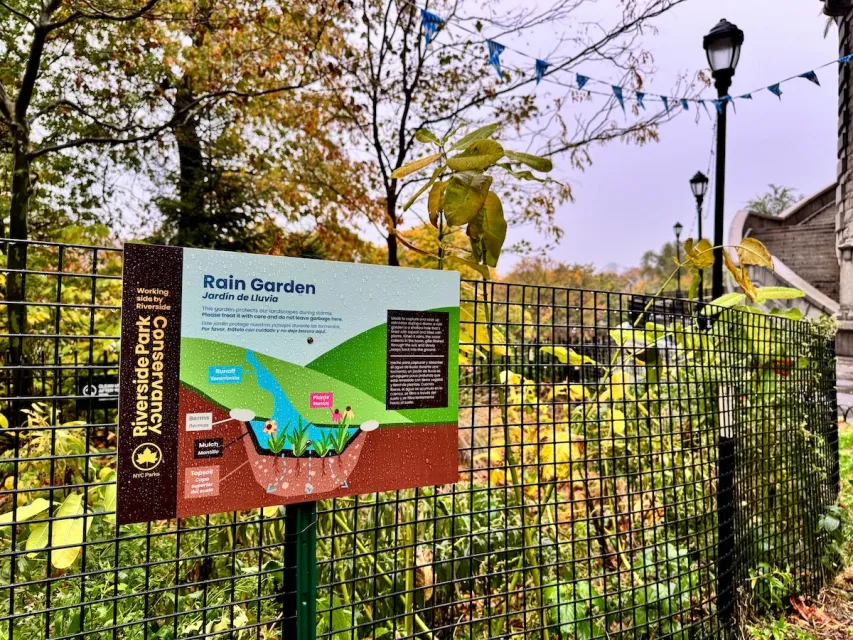
NYC cools commuters with city's first rain garden above a bus stop
New York City officials say the plants in the rain garden can absorb 16 gallons of rainwater during heavy storms.

Brightline West’s future may rely on $6 billion federal loan
The company has until Nov. 2 to make a $400 million equity investment into its proposed high-speed rail line.

FREE Course: Walkable City 1: Why Walkability?
After describing his path towards focusing on walkability as the essence of good planning, Jeff Speck marches through his five principal reasons for making more walkable places.
Reinventing Malls: Planning Alchemy—Turning Gray Fields Into Gold
The course focuses on the opportunities and imperatives that shape reinvention of mall sites.

Greater Baltimore Committee
Eagle County Government
Harvard University Graduate School of Design
The Architects Foundation
University of Cincinnati Online
The Pocatello Development Authority
The Urban Renewal Agency of the City of Pocatello
Journal of the American Planning Association