Highway widenings still attract support from both sides of the political aisle, despite the inadequacies of the approach in solving the problems it intends to solve.


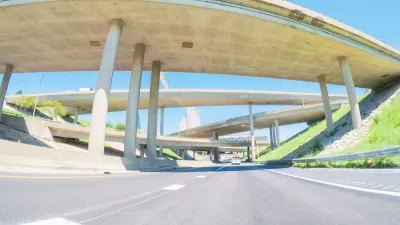
Missouri Governor Mike Parson proposed a widening of Interstate 70 near Kansas City for an estimated cost of $859 million during a recent State of the State address. As reported by Jonathan Shorman and Kacen Bayless for the Kansas City Star, the proposal drew applause from both sides of the political aisle in the Missouri State Legislature.
“Politicians across the political spectrum have long been drawn to highway expansions, with orange cones and fresh asphalt a time-tested way to demonstrate they can deliver for constituents,” write Shorman and Bayless.
The article explores the idea that the project will not deliver for constituents as promised, citing the authority of Jonathan Levine, a professor of urban and regional planning at the University of Michigan, who explains the concept of induced demand—that widening roads will encourage more driving and quickly overwhelm the added capacity of the road.
Not everyone in Kansas City thinks widening I-70 would be a good idea. In 2017, local writer Eric Bunch argued for removing a section of I-70 where it passes through downtown Kansas City altogether.
FULL STORY: Will Parson’s proposed expansion of I-70 reduce congestion? Here’s what research shows

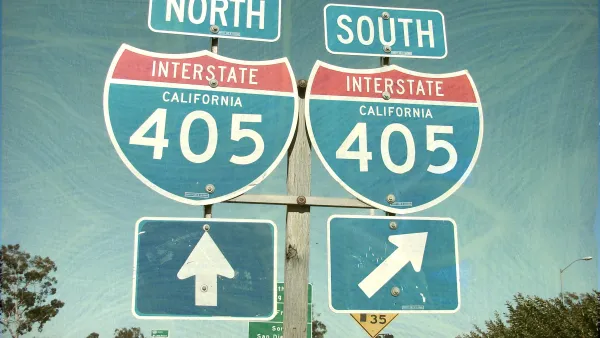
Toll Lane Rebellion Fails to Materialize in Southern California
The 405 Express Lanes will open in Orange County later this year despite the warnings from a former Huntington Beach mayor of a resident-led rebellion in response to road pricing. But will the toll lanes mitigate congestion? Academics weigh in.
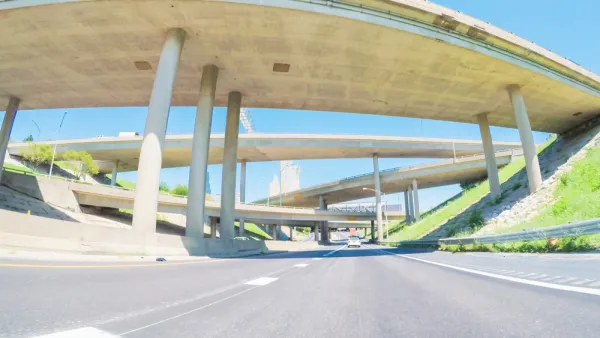
Missouri to Spend $2.8 Billion Widening I-70
Missouri Gov. Mike Parson had a $859 million vision to expand I-70 in key parts of the state. State legislators had an even more ambitious vision.
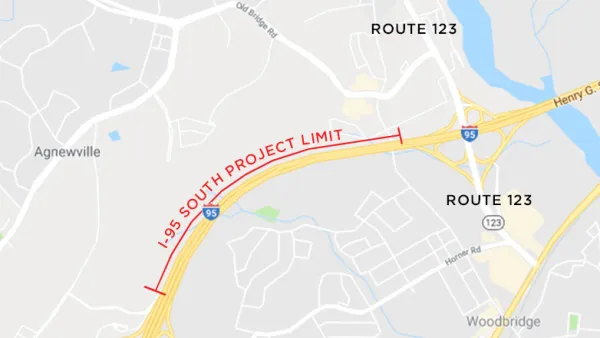
I-95 Widening Breaks Ground in Virginia
A mile-and-a-half-long section of Interstate 95, which handles 80,000 vehicle trips a day, will be expanded in Virginia. The project includes a new shoulder, lighting, and noise walls.

Planetizen Federal Action Tracker
A weekly monitor of how Trump’s orders and actions are impacting planners and planning in America.

The state-sanctioned urbicide of Austin
People don’t kill cities. Freeways do.

US to reduce Colorado River water deliveries to Mexico
A new Colorado Treaty amendment reduces Mexico’s Colorado River water allocation by 250,000 acre feet.

5 New England states march closer to 800 megawatt wind energy project
Securing federal approval for the project may be complicated under the Trump administration, which has historically been hostile towards domestic wind power.

Baltimore to break ground on $50 million Transit Priority Project
The project will bring faster bus trips, safer streets and better bike connections to Baltimore.

Airbnb launches $250 million 'last-dollar financing' housing accelerator, makes first investment in Austin
The company will put $6.4 million towards affordable housing development in Texas’ capital.

FREE Course: Walkable City 1: Why Walkability?
After describing his path towards focusing on walkability as the essence of good planning, Jeff Speck marches through his five principal reasons for making more walkable places.
Reinventing Malls: Planning Alchemy—Turning Gray Fields Into Gold
The course focuses on the opportunities and imperatives that shape reinvention of mall sites.

Eagle County Government
Harvard University Graduate School of Design
Nashville Planning Department
The Architects Foundation
University of Cincinnati Online
The Pocatello Development Authority
The Urban Renewal Agency of the City of Pocatello
Journal of the American Planning Association