In 2023, will the city’s public spaces be reclaimed by cars, or will pandemic-era interventions lead to permanent change?


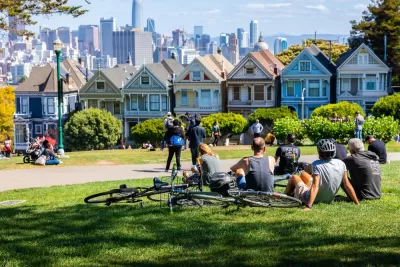
Writing in the San Francisco Chronicle, John King anticipates what 2023 holds for public spaces in the city.
San Francisco’s public realm in 2023 will likely be as contested as the city itself — profoundly different than in 2019, and still in a state of turbulent flux. This year won’t bring dramatic new spaces a la Presidio Tunnel Tops. Instead, look for these aspects of life in the here and now … however murky that might be.
King predicts that many parklets and other pandemic-era interventions will become permanent fixtures, while the experimental spirit of the last few years will likely inspire future pilot projects. King also believes San Francisco will continue to improve its public parks and bring green spaces to more of the city.
However, King also believes “fights over movement will only grow more intense” as people in cars are pitted against pedestrians and other road users by misguided campaigns such as the de Young Museum’s opposition to closing JFK Drive to cars.
The year also bodes poorly for the city’s famous privately owned public spaces (POPOS), a policy innovation that requires developers in the central district to create publicly accessible spaces in or around their buildings. With the pandemic giving owners the opportunity to shutter these spaces, it’s likely some of them won’t come back.
FULL STORY: COVID transformed SF's public spaces. Fights over them will grow in 2023

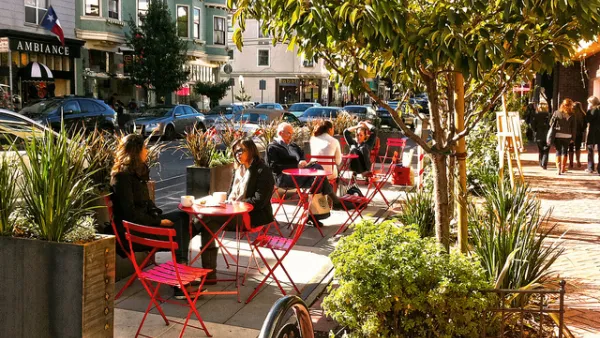
San Francisco Supervisors Vote to Keep Parklets, Close Them at Night
The pandemic-era outdoor seating arrangements can stay, but a last-minute amendment lets business owners close them overnight.
Role of S.F. Parklets as Public Space Not Always Clear
Parklets in San Francisco are available for public use, but often they serve as extensions of the dining rooms of eateries.
As Parklets Bloom, SF Stays True to its Roots
As the number of completed parklets in San Francisco nears three dozen, after debuting only two years ago, "the latest trend in urban placemaking" has entered the planning mainstream without losing its grassroots origins.

Planetizen Federal Action Tracker
A weekly monitor of how Trump’s orders and actions are impacting planners and planning in America.

The state-sanctioned urbicide of Austin
People don’t kill cities. Freeways do.

US to reduce Colorado River water deliveries to Mexico
A new Colorado Treaty amendment reduces Mexico’s Colorado River water allocation by 250,000 acre feet.

5 New England states march closer to 800 megawatt wind energy project
Securing federal approval for the project may be complicated under the Trump administration, which has historically been hostile towards domestic wind power.

Baltimore to break ground on $50 million Transit Priority Project
The project will bring faster bus trips, safer streets and better bike connections to Baltimore.

Airbnb launches $250 million 'last-dollar financing' housing accelerator, makes first investment in Austin
The company will put $6.4 million towards affordable housing development in Texas’ capital.

FREE Course: Walkable City 1: Why Walkability?
After describing his path towards focusing on walkability as the essence of good planning, Jeff Speck marches through his five principal reasons for making more walkable places.
Reinventing Malls: Planning Alchemy—Turning Gray Fields Into Gold
The course focuses on the opportunities and imperatives that shape reinvention of mall sites.

Eagle County Government
Harvard University Graduate School of Design
Nashville Planning Department
The Architects Foundation
University of Cincinnati Online
The Pocatello Development Authority
The Urban Renewal Agency of the City of Pocatello
Journal of the American Planning Association