The department expects to miss its bus lane construction target for at least 2022 and 2023, blaming staff and budget shortages for the shortfall.


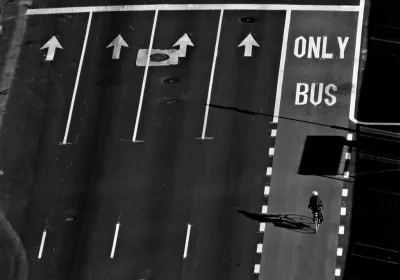
The New York City Department of Transportation admits it may not be able to meet the targets for new bus lanes mandated by law next year, reports Jesse Coburn for Streetsblog NYC.
As Coburn explains, “The Streets Plan law, passed by the City Council in 2019, requires DOT to build at least 20 miles of bus lanes this year and at least 30 miles in each of the next four years.” DOT says it already expects to miss its goal for 2022 and indicates “it expects it will be unable to build the 150 miles of new bus lanes over four years that Eric Adams promised while running for mayor.”
DOT blames the failure on staff shortages, but a DOT spokesperson declined to comment on why the close to $1 billion allocated by the city is insufficient to meet its targets. “Political meddling has also gotten in the way of the city’s efforts to redesign the public realm, as Streetsblog reported last month, with mayoral appointees slowing bus lane projects at the behest of Adams’s political allies.”
Coburn points out that the 2019 law does not contain an enforcement mechanism, and city officials have not indicated a further course of action.
FULL STORY: DOT Expects to Miss Targets for New Bus Lanes, Sources Say


New York Officials Back Down on Bus Lane Plans
Proposed bus improvements in the Bronx are the latest casualty of opposition.
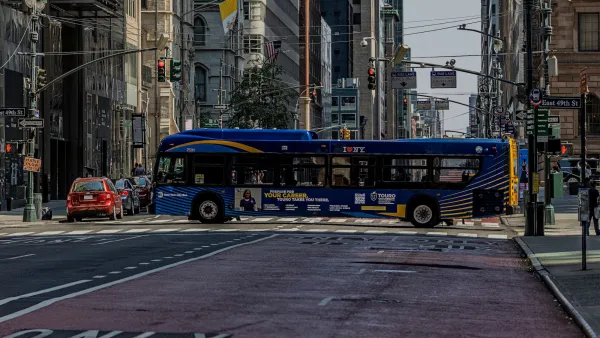
NYC Will Extend Madison Ave Bus Lane by 19 Blocks
The project support Mayor Mamdani’s promise of making New York buses ‘fast and free.’
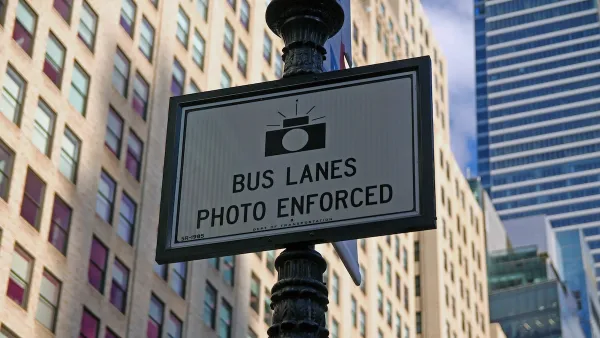
NYC Camera Program Captures 400,000 Bus Lane Violations
Bus speeds increased by as much as 25 percent on some routes after enforcement began last August.

The state-sanctioned urbicide of Austin
People don’t kill cities. Freeways do.

US to reduce Colorado River water deliveries to Mexico
A new Colorado Treaty amendment reduces Mexico’s Colorado River water allocation by 250,000 acre feet.

New Jersey’s second-largest city bans standalone data centers
Jersey City will continue to allow co-location facilities, such as those meant for research institutions that store their own data.

Amtrak not solely to blame for New Jersey commuter rail's unreliability, report finds
A new study from the Garden State Initiative found that NJ Transit’s budget grew 20% across a 4 year period, but reliability declined significantly over the same period.

EPA erases limits on planet-warming pollution from power plants
Under Monday’s plan, power plants would still have some limits on how much mercury, arsenic and other contaminants they can emit.

Phoenix announces new on-demand transit service, more frequent RAPID buses
Both new services will launch in October, and are part of Phoenix's Project Effective Access Solutions for Easing Congestion.

FREE Course: Walkable City 1: Why Walkability?
After describing his path towards focusing on walkability as the essence of good planning, Jeff Speck marches through his five principal reasons for making more walkable places.
Reinventing Malls: Planning Alchemy—Turning Gray Fields Into Gold
The course focuses on the opportunities and imperatives that shape reinvention of mall sites.

Eagle County Government
Harvard University Graduate School of Design
Nashville Planning Department
The Architects Foundation
University of Cincinnati Online
The Pocatello Development Authority
The Urban Renewal Agency of the City of Pocatello
Journal of the American Planning Association