The state is funding a $150 million effort to raze blighted buildings to accelerate revitalization.



Writing in The Center Square, J.D. Davidson reports that Ohio announced a new list of vacant buildings slated for demolition under a state program designed to eliminate blight and revitalize communities.
“The state added a large list of communities and buildings to the Ohio Building Demolition and Site Revitalization Program, announcing 2,277 additional blighted and vacant structures in 42 counties will be demolished,” Davidson explains. The effort is part of a plan to accelerate the process of transforming blighted properties into useful spaces.
“The projects are funded with grants from the $150 million set aside in the state’s two-year budget that passed in 2021. Thirteen counties will also receive an extra $35.3 million to cover expenses in excess of the initial aside grants.” Buildings on the list include two defunct hotels on property owned by the Port of Greater Cincinnati Development Authority, which the Authority plans to replace with an industrial spec building. Another 825 buildings were put on the list in October.
FULL STORY: More than 3,000 Ohio buildings to be demolished

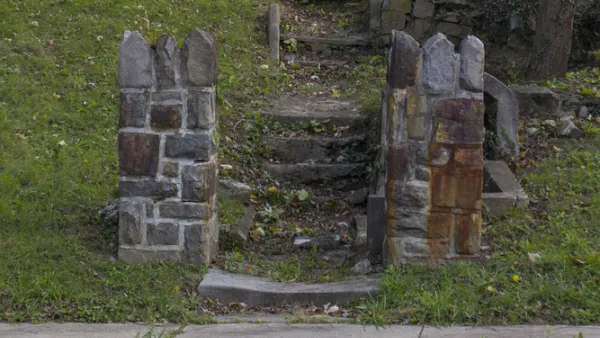
Demolitions Can't Keep Pace With Vacancies in Baltimore
As the city of Baltimore grapples with a declining population, it faces obstinate challenges in controlling the problems associated with vacant buildings, including the "vicious cycle" of vacancies causing more vacancies.

Newark Kicks Off $1 Home Sale Program
The city sold seven properties as part of an effort to revive blighted sites and encourage housing production.
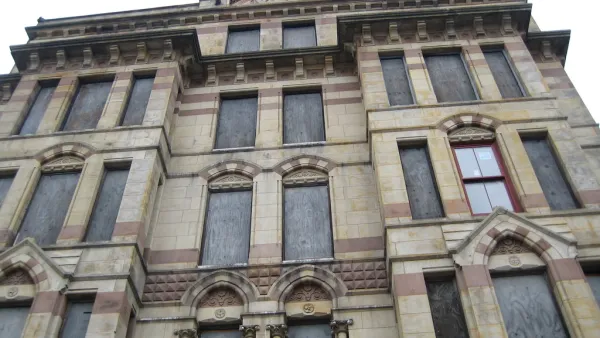
Why Are These Prime Boston Properties Sitting Vacant?
Even though they often occupy valuable real estate, some Boston properties have sat vacant in various states of limbo for years.

Planetizen Federal Action Tracker
A weekly monitor of how Trump’s orders and actions are impacting planners and planning in America.

The state-sanctioned urbicide of Austin
People don’t kill cities. Freeways do.

US to reduce Colorado River water deliveries to Mexico
A new Colorado Treaty amendment reduces Mexico’s Colorado River water allocation by 250,000 acre feet.

5 New England states march closer to 800 megawatt wind energy project
Securing federal approval for the project may be complicated under the Trump administration, which has historically been hostile towards domestic wind power.

Baltimore to break ground on $50 million Transit Priority Project
The project will bring faster bus trips, safer streets and better bike connections to Baltimore.

Airbnb launches $250 million 'last-dollar financing' housing accelerator, makes first investment in Austin
The company will put $6.4 million towards affordable housing development in Texas’ capital.

FREE Course: Walkable City 1: Why Walkability?
After describing his path towards focusing on walkability as the essence of good planning, Jeff Speck marches through his five principal reasons for making more walkable places.
Reinventing Malls: Planning Alchemy—Turning Gray Fields Into Gold
The course focuses on the opportunities and imperatives that shape reinvention of mall sites.

Eagle County Government
Harvard University Graduate School of Design
Nashville Planning Department
The Architects Foundation
University of Cincinnati Online
The Pocatello Development Authority
The Urban Renewal Agency of the City of Pocatello
Journal of the American Planning Association