The city council wants more information on how a ban on right turns on red would affect the city’s hourly workers and the details of its implementation.


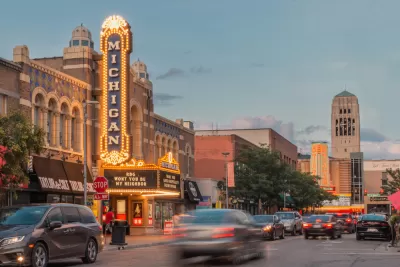
A proposal to ban right turns on red in Ann Arbor, Michigan is facing criticism from city officials who say the law could disproportionately impact low-income workers at hourly jobs. Ryan Stanton reports on the developments for M Live.
The proposal, which excepts buses, “calls for a prohibition on red-light turns in the downtown and near-downtown area bound by First Street to the west, State Street to the east, Kingsley Street to the north and Hoover Avenue to the south.” Eliminating right turns on red has been recognized as one way to improve road safety and is a low-cost way for cities to reduce fatal crashes. According to the article, “half of traffic crashes where people walking or cycling have been killed or seriously injured involved a driver failing to yield.”
The city council is postponing the proposal to address equity concerns, questions about increased congestion, as well as the issue of how to enforce the legislation on state-controlled roads. Council Member Kathy Griswold, who expressed concern about the proposal, said “It also would be helpful to have an education and enforcement component, along with a statement from the police department about how the ban would be enforced, when the proposal comes back to council.” The plan was already approved unanimously by the city’s Transportation Commission.
FULL STORY: Ann Arbor’s proposed ban on red-light turns downtown raises equity concerns


StreetVision tool pinpoints likely crash sites using mobile phone data
The tool can help cities quickly identify high-risk intersections and corridors and make an evidence-based case for safety interventions.
US Traffic Deaths Fell by 12% in One Year. How Did it Happen?
Biden-era investment in safe streets, shifts in travel patterns brought on by the pandemic, and increased traffic enforcement are all possible reasons why traffic deaths dropped significantly between 2024 and 2025.
What US States Can Learn from Canadian Road Rules
Our northern neighbor has managed to slash traffic deaths as U.S. traffic fatalities remain high. What do they do differently?

Planetizen Federal Action Tracker
A weekly monitor of how Trump’s orders and actions are impacting planners and planning in America.

The state-sanctioned urbicide of Austin
People don’t kill cities. Freeways do.

US to reduce Colorado River water deliveries to Mexico
A new Colorado Treaty amendment reduces Mexico’s Colorado River water allocation by 250,000 acre feet.

Airbnb launches $250 million 'last-dollar financing' housing accelerator, makes first investment in Austin
The company will put $6.4 million towards affordable housing development in Texas’ capital.

Guerilla urbanists are building DIY bus stop benches in Chicago
A before-and-after of one of the bus stops with a new bench. The new benches are not officially sanctioned or permitted, but the residents who placed them hope they will be the start of a network of DIY benches across the city.

Mamdani overhauls NYC's Vision Zero plan with 100 new policy goals
The overhaul aims to reduce traffic deaths and make streets safer for pedestrians, cyclists and drivers through lower speed limits, new safety infrastructure and more.

FREE Course: Walkable City 1: Why Walkability?
After describing his path towards focusing on walkability as the essence of good planning, Jeff Speck marches through his five principal reasons for making more walkable places.
Reinventing Malls: Planning Alchemy—Turning Gray Fields Into Gold
The course focuses on the opportunities and imperatives that shape reinvention of mall sites.

Eagle County Government
Harvard University Graduate School of Design
Nashville Planning Department
The Architects Foundation
University of Cincinnati Online
The Pocatello Development Authority
The Urban Renewal Agency of the City of Pocatello
Journal of the American Planning Association