Two digital tools track local spending of American Rescue Plan dollars.



Alan Berube, Peter Frosch, and Allison Bell of Brookings describe two useful tools for tracking local government distribution of State and Local Fiscal Recovery Funds (SLFRF), aprt of the American Rescue Plan Act (ARPA). The Local Government ARPA Investment Tracker “tracks data on SLFRF-supported projects in more than 300 large cities and counties around the country.” The MSP ARPA Tracker focuses on the same data in the Minneapolis-St. Paul region.
“Our organizations have used these tools to assess the rate at which local governments are committing SLFRF dollars to specific projects, the broad spending priorities they are identifying, and how these vary across cities and counties and by jurisdiction size.”
The tools are designed to inform decisionmaking in three main ways: “Increasing government transparency,” “Enhancing regional focus and collaboration,” and “Adding up investments to chart longer-run impact.” The authors hope that increasing transparency with clear, easy-to-use tools can help cities and counties collaborate, coordinate efforts, and track their success—or lack thereof—to better plan for future investments.
For example, the Twin Cities region committed close to three times the average amount to housing for low-income residents, in part because of “long-standing efforts by GREATER MSP and its partners to highlight mounting affordable housing pressures and create relationships and vehicles that could begin to address those challenges at scale.” Additionally, “For local leaders who hope to make the case for future flexible federal aid in times of economic crisis, leveraging these data can build a valuable evidence base.”
Read the full story: Two tools for tracking the American Rescue Plan’s local and national impacts

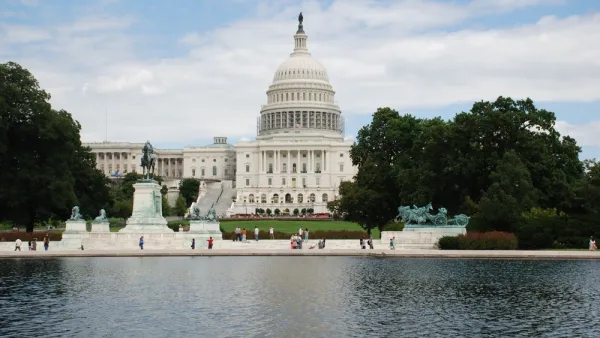
Feds Could Take Back ARPA Funding in Debt Ceiling Talks
Aid dollars not yet distributed to states and cities could be part of a Congressional ‘clawback,’ prompting concern from local leaders.

Maine county rescinded $240k in affordable housing funds after town proposed using it for data center
Lincoln County pulled the funding from the town of Wicasset, saying it was only meant to be used for housing projects.
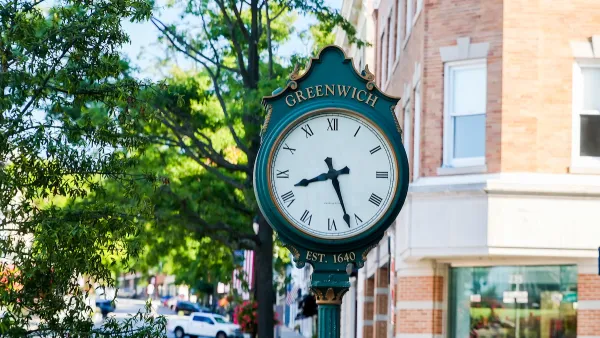
Revitalizing Connecticut’s Downtowns
An injection of federal funding is helping restore buildings and infrastructure to bring residents and businesses back to central districts.

Planetizen Federal Action Tracker
A weekly monitor of how Trump’s orders and actions are impacting planners and planning in America.

The state-sanctioned urbicide of Austin
People don’t kill cities. Freeways do.

Colorado’s Largest Data Center Could Rise Next to Homes — Without a Public Hearing
The proposed campus would consume 11 times the power of Denver International Airport; as it has across the country, opposition mounts.

Judges permit Denver to divert 77,000 acre feet from the Colorado River for reservoir expansion
Overuse and climate change have caused the Colorado River’s water levels to plummet.

Amtrak, CN end decades-long dispute with eight-year agreement
The new operating agreement establishes an updated framework for the companies to work together, including processes to resolve disputes.

Raised interest rates may kill financially vulnerable construction projects
The chief economist at ConstructConnect warns that if construction project owners are negatively impacted by the raised rates, it could result in delayed payments to contractors.

FREE Course: Walkable City 1: Why Walkability?
After describing his path towards focusing on walkability as the essence of good planning, Jeff Speck marches through his five principal reasons for making more walkable places.
Reinventing Malls: Planning Alchemy—Turning Gray Fields Into Gold
The course focuses on the opportunities and imperatives that shape reinvention of mall sites.

KFH Group Inc.
Greater Baltimore Committee
Eagle County Government
The Architects Foundation
University of Cincinnati Online
The Pocatello Development Authority
The Urban Renewal Agency of the City of Pocatello