Research from the Insurance Institute for Highway Safety paints a damning picture of the behavior of men behind the wheel of automobiles.



An article by Ladd Egan for KSL TV (link also includes a video of TV coverage of the story) , details the disparities in fatal crash data between men and women.
“An analysis by the Insurance Institute for Highway Safety found that in nearly every year from 1975 to 2020 the number of U.S. men killed in crashes was more than twice that of women,” reports Egan. The IIHA study was published iN May 2022.
“In 2020, males accounted for 72% of all motor vehicle crash deaths and 92% of motorcyclist deaths, according to the institute’s analysis of data from the U.S. Department of Transportation.”
In Utah, where Egan files this report, 85% of motorcycle crashes from 2017 to 2021 involved males, according to data from the Utah Department of Public Safety.
The Insurance Institute for Highway Safety identified risky behavior like speeding, drunk driving, and driving without a seatbelt as contributing to the gender disparities in traffic safety.
The focus on gender emerges the same week as a new batch of traffic safety data from the National Highway Traffic Safety Administration (NHTSA) finding that the first quarter of 2022 was the most dangerous period on U.S. roads in 20 years. The news of the connections between gender and traffic safety is not new. Data from 2019 also revealed a connection between men, SUVs, and traffic fatalities in New York City.
Read the full story: Road To Zero Fatalities: Male vs. female drivers
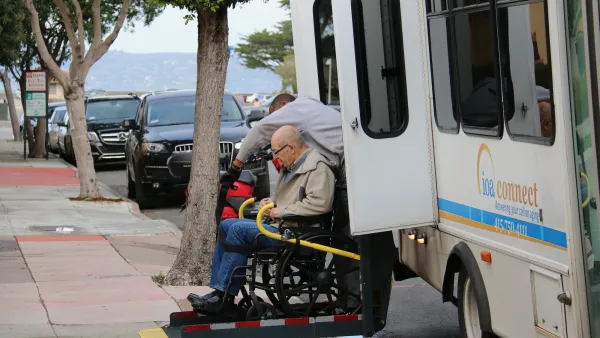
Seniors Account for 32% of Traffic Deaths in the Bay Area
Road safety interventions would help protect seniors and other vulnerable groups from traffic violence.

San Francisco Cut Traffic Deaths Almost in Half in 2025
The city credits its Vision Zero strategy and new traffic cameras for reducing the number of deaths and serious injuries on its roads.
After 30% Spike in 2024, New Jersey Traffic Deaths Drop by 15% in 2025
New Jersey launched the nation’s first statewide Vision Zero plan last year.

Planetizen Federal Action Tracker
A weekly monitor of how Trump’s orders and actions are impacting planners and planning in America.

Eastern Nebraska is running out of electricity
Data centers and electrification are straining eastern Nebraska’s grid, throttling economic development.

Study reveals best places in the U.S. for cycling, walking
New research from Streetlight Data examines bicycle and pedestrian miles per capita in the 100 largest U.S. cities by population.

As development costs rise, Boston moves to lessen affordable housing requirements
The Boston Zoning Commission and the City Council still need to approve Boston Mayor Michelle Wu’s proposed changes

Washington state to fine drivers with fuel-efficient cars
Revenue from the fine will go towards supporting the state’s highways.

Strained electrical grid forces San Francisco to choose: housing, or data centers?
The city is approaching its maximum grid capacity, leaving leaders with tough choices about what projects to siphon energy toward.

FREE Course: Walkable City 1: Why Walkability?
After describing his path towards focusing on walkability as the essence of good planning, Jeff Speck marches through his five principal reasons for making more walkable places.
Reinventing Malls: Planning Alchemy—Turning Gray Fields Into Gold
The course focuses on the opportunities and imperatives that shape reinvention of mall sites.

City of Charlotte
City of Rosemead
Rutgers University, Edward J. Bloustein School of Planning and Public Policy
University of Michigan School for Environment and Sustainability (SEAS)
Hunter College, City University of New York (CUNY)
The Architects Foundation
City of Cambridge
The Pocatello Development Authority
The Urban Renewal Agency of the City of Pocatello