One Atlanta neighborhood is campaigning to secede from the city as the battle over zoning reform heats up.


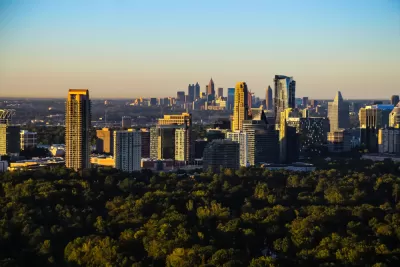
Residents in Atlanta's Buckhead neighborhood are campaigning to secede from the city, in large part because Atlanta is proposing zoning changes that would increase density and, according to the Buckhead City Committee, a pro-secession group, "decimate the tree canopy, tangle traffic, and strain resources." As Brentin Mock reports, the city is working to increase affordable housing by allowing higher density and more transit-oriented development in single-family neighborhoods.
Atlanta planning commissioner Tim Keane called the city's rezoning proposal "surgical," as it only applies to specific areas near public transit and exempts much of the Buckhead area. Around the country, other cities and states have eliminated single-family zoning altogether.
Atlanta leaders are hoping to spur more construction of small apartment buildings through a "gentle density" approach. According to the article, "The city could create an additional 11,500 new units if just 15% of single-family zoned properties could be modified to add new dwellings." In fact, many Atlanta homes are already subdivided into rental units, a practice that was legal in the city until 1982.
Proponents of zoning reform argue that Buckhead's very existence relies on historically racist policies that will take concerted efforts to undo. "There is a reason that it looks the way it does, and it's not unrelated to questions of racial equity and wealth-building through homeownership," says urban geographer Coleman Allums. And unlike other newly formed cities surrounding central Atlanta, Buckhead City, if created, would take land that is currently part of the city of Atlanta. Buckhead's wealthy, mostly white tax base makes a significant contribution to Atlanta's tax revenue, making secession potentially disastrous for the city. "Ultimately," writes Mock, "the question of secession will be decided via ballot referendum in November 2022 if state lawmakers vote to allow it next spring."
Read the full story: The Housing Proposal That’s Quietly Tearing Apart Atlanta


How Cities Are Resisting State Efforts To Increase Density
Cities are attempting to wrest back local control over land use and zoning via some ingenious—and sometimes disingenuous—strategies.

Zoning Reform: Lessons From New Zealand
The island nation is mandating mid-density zoning requirements and transit-oriented development in an effort to increase housing affordability and encourage compact development.

How Virginia Communities Are Encouraging 'Missing Middle Housing'
Local leaders hope that streamlining permit processes and eliminating restrictive zoning regulations will set the groundwork for increased production of small and mid-sized multi-family housing.

Planetizen Federal Action Tracker
A weekly monitor of how Trump’s orders and actions are impacting planners and planning in America.

California plans to bury El Niño’s downpour
If the state plays its cards right, it may be able to store a billion acre-feet of El Niño’s water in aquifers.

Chicago breaks ground on $3 billion megadevelopment
The new neighborhood, titled Foundry Park, will one day host 3,700 residences.

Satanic place names
From streams and lakes to valleys and canyons, I mapped more than 1,000 places named after the Devil.

California High-Speed Rail Authority CEO resigns after $600,000 scandal
Under Ian Choudri, the authority used taxpayer dollars to fund first class flights and trips to nightclubs.

Want to study the Missouri River? Soon, you may need unanimous approval from 10 states
Legislation would require 10 governors’ permission to study or build projects moving water outside the basin.

FREE Course: Walkable City 1: Why Walkability?
After describing his path towards focusing on walkability as the essence of good planning, Jeff Speck marches through his five principal reasons for making more walkable places.
Reinventing Malls: Planning Alchemy—Turning Gray Fields Into Gold
The course focuses on the opportunities and imperatives that shape reinvention of mall sites.

City of Rosemead
Rutgers University, Edward J. Bloustein School of Planning and Public Policy
One Hundred Miles
Hunter College, City University of New York (CUNY)
The Architects Foundation
University of Cincinnati Online
City of Cambridge
Montrose County
The Pocatello Development Authority