The Mountains Recreation and Conservation Authority has acquired the final 150 acres of the 325-acre Triangle Ranch open space in the Santa Monica Mountains.


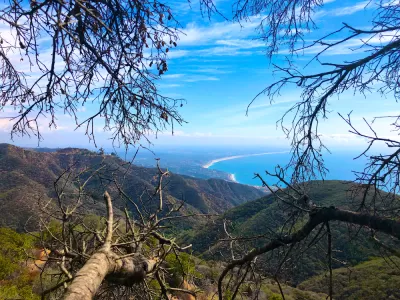
Triangle Ranch, a 325-acre Santa Monica Mountains property once earmarked for the construction of luxury homes, will now be preserved as permanent open space. The Mountains Recreation and Conservation Authority (MRCA) announced a few days ago that it closed escrow on the property in the central Santa Monica Mountains south of the city of Agoura Hills. The breathtaking landscape, visible to thousands of daily motorists on Kanan Road, has long been identified as a crucial linkage for habitat preservation, watershed protection, and wildlife movement.
This final, Phase 4 acquisition represented an effort of many years and multiple public funding sources and demonstrates the tenacity of the MRCA, the Santa Monica Mountains Conservancy, and area elected officials to preserve the ecologically significant gateway to the Santa Monica Mountains. The MRCA was able to cobble together funds to purchase the property in phases, beginning with the Phase 1 acquisition of 60 acres in 2018. The acquisition of Phases 2 and 3 (40 and 70 acres, respectively,) followed soon after. The purchase of the final 150 acres proved to be the most challenging.
At the request of State Senator Henry Stern and Assemblymember Richard Bloom, Governor Gavin Newsom’s 2021-2022 State Budget set aside $8 million for the Phase 4 acquisition. This contributes to California’s 30 x 30 initiative commitment to combat the global biodiversity and climate crises and conserve at least 30 percent of California’s land and coastal waters by the year 2030.
For more details, please read the source article by John Loesing.
Read the full story: Agencies complete 325-acre open space acquisition in heart of the Santa Monicas


Study: How Urban Parks Can Support Biodiversity
Conservation and recreation can go hand in hand in urban green spaces designed to serve both humans and local wildlife.
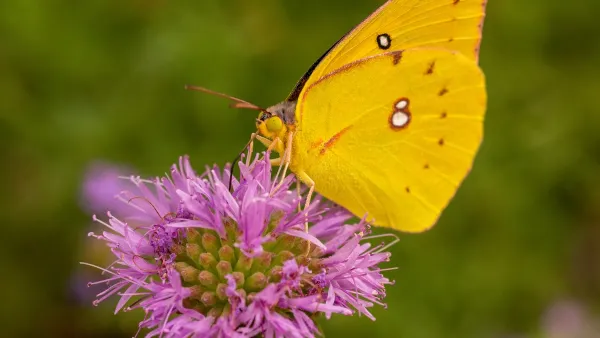
Study Reveals Los Angeles a Hotspot for Insect Diversity
A study reveals that L.A. is a surprising hotspot for insect and spider biodiversity, with diversity driven more by proximity to mountains and stable temperatures than by land value.
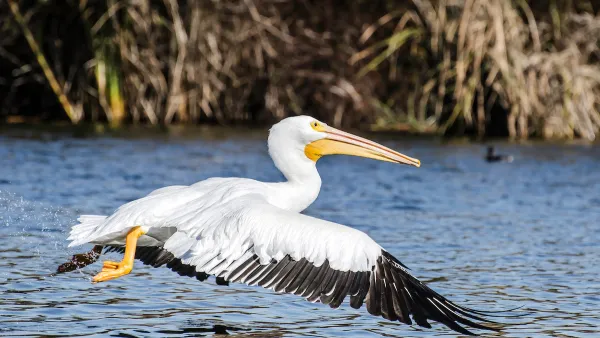
Revitalizing Sepulveda Basin: A Green Vision for An Urban Oasis
Developed through the input of thousands of community members, this is the first comprehensive plan by the City of Los Angeles for the 2,000-acre basin.

Planetizen Federal Action Tracker
A weekly monitor of how Trump’s orders and actions are impacting planners and planning in America.

The state-sanctioned urbicide of Austin
People don’t kill cities. Freeways do.

Colorado’s Largest Data Center Could Rise Next to Homes — Without a Public Hearing
The proposed campus would consume 11 times the power of Denver International Airport; as it has across the country, opposition mounts.

Nation's most wind-powered state turns to coal as data centers increase energy demand
For the first time in decades, Iowa has increased its generation of coal power.

NYC cools commuters with city's first rain garden above a bus stop
New York City officials say the plants in the rain garden can absorb 16 gallons of rainwater during heavy storms.

Brightline West’s future may rely on $6 billion federal loan
The company has until Nov. 2 to make a $400 million equity investment into its proposed high-speed rail line.

FREE Course: Walkable City 1: Why Walkability?
After describing his path towards focusing on walkability as the essence of good planning, Jeff Speck marches through his five principal reasons for making more walkable places.
Reinventing Malls: Planning Alchemy—Turning Gray Fields Into Gold
The course focuses on the opportunities and imperatives that shape reinvention of mall sites.

Greater Baltimore Committee
Eagle County Government
Harvard University Graduate School of Design
The Architects Foundation
University of Cincinnati Online
The Pocatello Development Authority
The Urban Renewal Agency of the City of Pocatello
Journal of the American Planning Association