A burgeoning movement known as 'flight shame' calls on travelers to avoid air travel when possible as a method of fighting climate change.


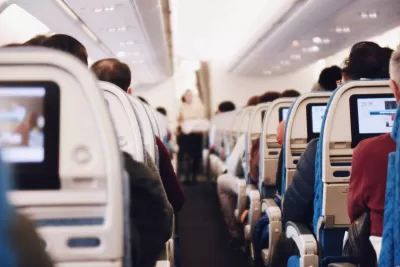
According to an article by Sara Ullström and Kimberly Nicholas, the Swedish are increasingly advocating avoiding air travel as a way to reduce greenhouse gas emissions and fight climate change.
Ullström and Nicholas analyzed media from 1950 to 2019 to assess how views on holiday travel in Sweden have changed. They found that Swedish media, which at first presented air travel as a luxury, now more often links it to debates about climate change and civic responsibility. Since 2016, the language around air travel has shifted to emphasizing its environmental impact. As Ullström and Nicholas write, "Discussions about avoiding flying became far more high profile from 2016 when celebrities, journalists, academics, and campaigners started to publicly pledge to stop flying in the Swedish news media."
The growing 'flight-free movement' in Europe questions the necessity of air travel–80 percent of which is for leisure or holiday travel in Sweden–and calls on people to seek out vacation experiences that are closer to home and accessible by train. Earlier this year, France banned air travel for trips that can be taken by train in under two and a half hours as part of its effort to reduce GHG emissions by 40 percent by 2030.
FULL STORY: Sweden’s flight-free movement: how views about holiday air travel are changing

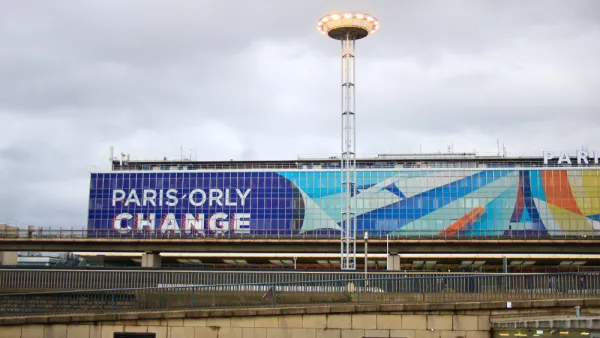
Paris to Ban Short-Haul Flights to Reduce Emissions
The country of France has been cleared by the European Union to ban specific air travel routes from the Orly Airport near Paris.

France to Ban Flights for Trips That Can Be Made by Train
One form of climate action gained major momentum in Europe over the weekend.
German Greens Want Domestic Air Travel to Be Obsolete by 2035
Alliance 90/The Greens, a political party in Germany, wants the country's domestic travel to shift completely to rail. Achieving that goal will require making air travel more expensive and rail travel cheaper and easier.

The state-sanctioned urbicide of Austin
People don’t kill cities. Freeways do.

US to reduce Colorado River water deliveries to Mexico
A new Colorado Treaty amendment reduces Mexico’s Colorado River water allocation by 250,000 acre feet.

New Jersey’s second-largest city bans standalone data centers
Jersey City will continue to allow co-location facilities, such as those meant for research institutions that store their own data.

Amtrak not solely to blame for New Jersey commuter rail's unreliability, report finds
A new study from the Garden State Initiative found that NJ Transit’s budget grew 20% across a 4 year period, but reliability declined significantly over the same period.

EPA erases limits on planet-warming pollution from power plants
Under Monday’s plan, power plants would still have some limits on how much mercury, arsenic and other contaminants they can emit.

Phoenix announces new on-demand transit service, more frequent RAPID buses
Both new services will launch in October, and are part of Phoenix's Project Effective Access Solutions for Easing Congestion.

FREE Course: Walkable City 1: Why Walkability?
After describing his path towards focusing on walkability as the essence of good planning, Jeff Speck marches through his five principal reasons for making more walkable places.
Reinventing Malls: Planning Alchemy—Turning Gray Fields Into Gold
The course focuses on the opportunities and imperatives that shape reinvention of mall sites.

.jpg)
Eagle County Government
Harvard University Graduate School of Design
Nashville Planning Department
The Architects Foundation
University of Cincinnati Online
The Pocatello Development Authority
The Urban Renewal Agency of the City of Pocatello
Journal of the American Planning Association